Posted on Leave a comment

Gurkha Ghost Connecticut vs Ghost vs Ghost Gold vs Ghost Maduro: What Are the Differences and Which Should You Choose?

Gurkha Ghost Connecticut

Note: For adults only. Tobacco products carry health risks.

Introduction – four products on the shelf, but not necessarily four completely independent blends

At Mister Tabaco, the Ghost selection includes:

Gurkha Ghost Connecticut

Gurkha Ghost

Gurkha Ghost Gold

Gurkha Ghost Maduro

To a customer, these naturally look like four steps within one family.

There is, however, an important technical detail.

Gurkha’s current official Ghost Series lists Gurkha Ghost, Ghost Connecticut and Ghost Gold, without a fourth separately listed Ghost Maduro line. The original Ghost is widely sold with a Brazilian Arapiraca Maduro wrapper, which explains why retailers sometimes use “Maduro” in individual Ghost product names.

That distinction matters.

It means we should not invent a separate blend specification for Mister Tabaco’s Ghost Maduro until its exact SKU and presentation are confirmed.

Educationally, this actually makes the family even more interesting.

It teaches us about:

wrapper, naming, strength, body and flavor.

1. What do Ghost Connecticut and Ghost Gold share?

Both are Dominican-made cigars and both are officially positioned as Medium.

Ghost Connecticut uses an Ecuadorian Connecticut wrapper, Mexican binder and Nicaraguan/Dominican/U.S. fillers. Ghost Gold uses an Ecuadorian Habano wrapper, Mexican binder and Dominican/U.S./Nicaraguan fillers.

That creates an excellent comparison.

Several variables remain similar.

The wrapper changes dramatically.

This makes the Ghost family a useful wrapper experiment.

2. Ghost Connecticut – technical profile

Wrapper: Ecuadorian ConnecticutBinder: MexicanFiller: Nicaragua / Dominican Republic / USAOrigin: Dominican RepublicStrength: Medium.

Official sizes include:

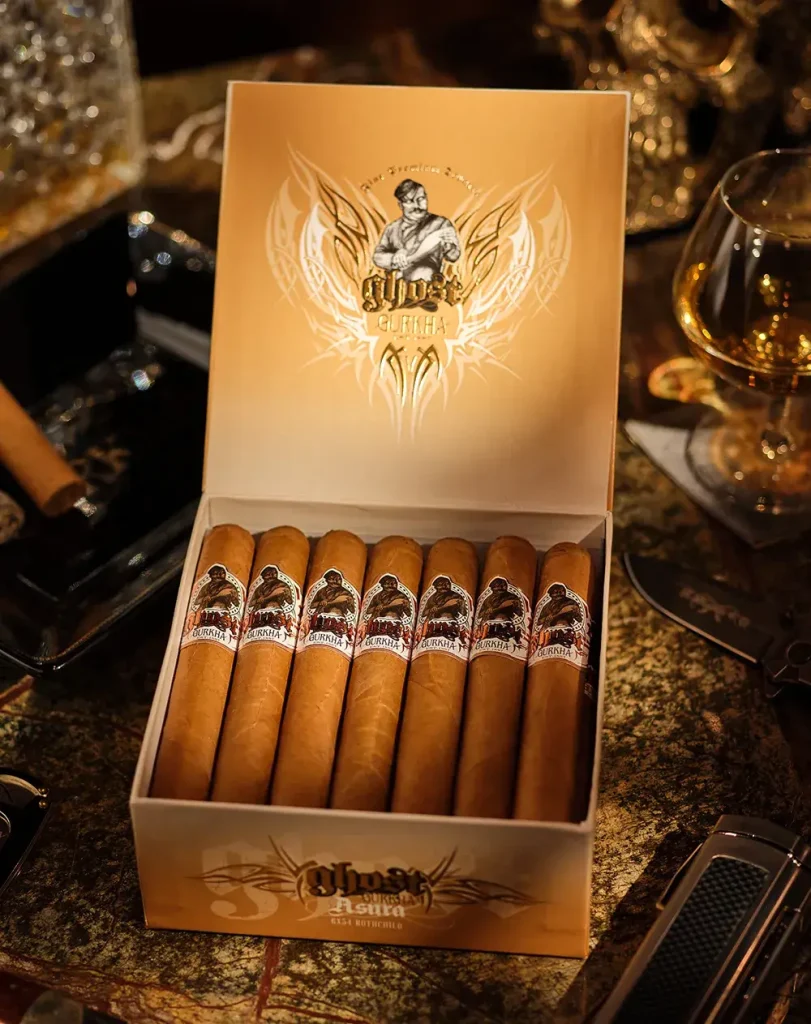
Shadow – 5 × 52Asura – 6 × 54Exorcist – 6 × 60.

The most interesting detail is the strength rating.

Despite the Connecticut wrapper:

Medium.

That immediately destroys one of the most common cigar myths.

3. Connecticut does not automatically mean mild

Connecticut refers to the wrapper in this case.

It does not define every tobacco inside the cigar.

Strength is also influenced by:

binder;

filler;

priming;

proportions;

fermentation;

vitola.

So the useful question is not:

“Is this a weak cigar?”

It is:

“How does Ecuadorian Connecticut shape a medium-strength blend?”

That is a much more sophisticated tasting question.

4. What should you observe in Ghost Connecticut?

Useful sensory families include:

cream;

cedar;

toast;

nuts;

light sweetness;

pepper;

earth;

smoke texture.

Do not use them as mandatory answers.

The most important lesson may be texture.

A cigar can feel refined and smooth without being physiologically mild.

Always separate:

smoothness

from:

strength.

5. Original Gurkha Ghost – the reference point

The original Ghost is widely documented with:

Wrapper: Brazilian Arapiraca MaduroBinder: Criollo ’98Filler: Dominican + NicaraguanOrigin: Dominican Republic.

This explains why many retailers identify individual Ghost products as “Maduro.”

The original Ghost already uses a Maduro-style Arapiraca wrapper.

That detail is essential when interpreting Mister Tabaco’s separate “Ghost Maduro” listing.

6. What does Brazilian Arapiraca change?

Compared with Connecticut, Arapiraca Maduro moves the tasting framework toward darker families.

Commercial descriptions of the original Ghost often reference:

dark chocolate;

earth;

cinnamon;

sweet spice.

These are reference families, not rules.

You may instead notice:

coffee,

wood,

leather,

or toasted characteristics.

Your palate is the final measurement tool.

7. Ghost vs Ghost Connecticut – the first comparison I would make

This is arguably the most educational pairing.

Ghost Connecticut

Ecuadorian Connecticut.

Ghost

Brazilian Arapiraca Maduro.

Now ask:

Which feels creamier?

Which feels earthier?

Where is sweetness brighter?

Where is it darker?

Which produces denser smoke?

How does pepper change?

This is much more useful than asking only:

“Which is stronger?”

8. Ghost Gold – what changes?

Ghost Gold swaps the original Brazilian Arapiraca wrapper for Ecuadorian Habano while maintaining a medium-bodied concept. Gurkha lists a Mexican binder and Dominican, U.S. and Nicaraguan filler tobacco.

Gurkha describes the profile with sweet and earthy characteristics alongside black pepper and cinnamon spice.

That makes Gold a fascinating bridge between Connecticut and the original darker Ghost.

9. Habano vs Arapiraca Maduro

The wrapper comparison becomes:

Ghost Gold → Ecuadorian Habano

Ghost Original → Brazilian Arapiraca Maduro.

Both may produce:

sweetness,

earth,

spice.

But the tone may differ.

Arapiraca Maduro may move your perception toward:

darker sweetness,

cocoa,

roasted character.

Habano may emphasize:

spice,

wood,

tobacco sweetness,

pepper.

Use those as hypotheses.

Then taste.

10. Gold does not automatically mean better

“Gold” sounds like an upgrade.

But it is a product name, not an international cigar quality grade.

So do not think:

Ghost = standard

and:

Ghost Gold = objectively superior.

Think:

two blend interpretations.

If you prefer Arapiraca, the original may win.

If you prefer Habano, Gold may win.

Preference determines the answer.

11. What about Mister Tabaco’s Ghost Maduro?

This requires technical caution.

Gurkha’s current official Ghost category lists Ghost, Connecticut and Gold, without a separately identified Ghost Maduro line.

Meanwhile, the original Ghost itself is widely sold as a Brazilian Arapiraca Maduro cigar, and individual products such as Ghost Shadow and Asura are explicitly marketed as Maduro by specialist retailers.

Therefore:

The exact Mister Tabaco Ghost Maduro SKU should be verified before publishing a separate technical blend description.

If it is the original Ghost blend in another presentation, the content should explain that rather than fabricate differences.

12. Why this matters for SEO

Two pages saying nearly the same thing about:

Gurkha Ghost

and:

Gurkha Ghost Maduro

could compete for the same search intent.

That creates possible keyword cannibalization.

A better content structure:

Ghost page

Explain the classic Arapiraca Maduro blend.

Ghost Maduro page

Explain the exact SKU/presentation and how it relates to the original family.

That creates two legitimate search purposes rather than duplicate content.

13. Which one is easiest for someone new to Gurkha?

From an educational perspective:

Ghost Connecticut.

Not because it is officially mild—it is officially Medium.

It simply gives you a bright reference before moving deeper into the family.

A logical progression:

Connecticut → Gold → Ghost.

That moves from:

brighter wrapper

to:

Habano

to:

Arapiraca Maduro.

14. Which is better for darker flavor preferences?

The original Ghost / Arapiraca Maduro is the natural starting point.

Look for possible families such as:

cocoa;

earth;

dark sweetness;

roasted character;

sweet spice.

But do not equate dark flavor with extreme nicotine strength.

The original is usually placed around medium to medium-full depending on the source’s scale.

15. Which one is most interesting for spice?

Ghost Gold deserves particular attention.

Gurkha specifically references black pepper and cinnamon spice alongside sweet and earthy notes.

The useful questions are:

Is the spice sharp?

Sweet?

Retrohale-driven?

Persistent?

Does it increase in the final third?

That analysis tells you far more than simply writing:

“spicy cigar.”

16. Which one should you try for creaminess?

Start by testing:

Ghost Connecticut.

But score all versions.

Use:

Creaminess 1–5.

You may discover that another Ghost feels equally smooth while carrying more body.

Again:

creaminess ≠ mildness.

17. Strength differences are smaller than the colors suggest

Officially:

Ghost Connecticut = Medium

Ghost Gold = Medium.

Original Ghost is commonly placed in the medium or medium-to-full area by specialist sellers.

So the family is not a simple ladder from 1/5 to 5/5.

Changes in:

wrapper,

body,

texture,

sweetness,

earth,

spice

may matter more than the nicotine scale.

18. Body may show the contrast more clearly

Body describes how dense and weighty the smoke feels.

Connecticut can present medium strength with a lighter-feeling texture.

Arapiraca Maduro may give a denser, darker sensory impression.

Habano may sit somewhere different again.

Do not assume the result.

Score:

Body 1–5.

The Ghost family is ideal for learning:

Strength vs Body.

19. Compare similar vitolas whenever possible

Ghost Connecticut officially comes in Shadow 5×52, Asura 6×54 and Exorcist 6×60.

Original Ghost is commonly available in those same general size families.

This matters.

For cleaner comparison, control geometry.

Otherwise you are changing:

wrapper,

blend

and:

ring gauge

at the same time.

20. Why Shadow is a strong educational format

A cigar around 5×52 gives enough time to study development without creating an extremely long session.

The ring gauge is also moderate compared with a 60.

When equivalent formats are available:

Ghost Connecticut Shadow → Ghost Shadow

is one of the cleanest experiments in the family.

21. Exorcist 6×60 – studying ring gauge

Both Connecticut and original Ghost appear in a 6×60 Exorcist configuration.

That provides another controlled comparison.

But:

60 ring gauge does not automatically mean stronger.

The greater filler volume changes wrapper-to-filler proportions.

The result may feel:

rounder,

slower,

more voluminous

rather than simply stronger.

22. The ideal Ghost Flight

Flight A – aromatic progression

Ghost Connecticut

Ghost Gold

Ghost Original

Logic:

bright → Habano → dark.

Flight B – contrast

Ghost Connecticut

Ghost Original

Ghost Gold

Logic:

maximum contrast → bridge.

Either works.

Use separate sessions.

23. Do not smoke all three in one evening for serious comparison

After cigar one, the palate changes.

After cigar two, fatigue and nicotine can affect perception.

A better schedule:

Day 1 – Connecticut

Day 3 – Gold

Day 5 – Ghost

Use:

the same water;

similar food;

similar storage;

the same tasting sheet.

That gives much cleaner data.

24. Pairing – use water first

For analysis:

water.

Later:

Ghost Connecticut

Try a lighter coffee.

Ghost Gold

A medium roast can interact with sweetness and spice.

Ghost Original

A darker coffee may complement cocoa/earth/roasted families if that is how your cigar presents itself.

First understand the cigar.

Then experiment with pairing.

25. Common mistakes

“Connecticut means mild”

False. Ghost Connecticut is officially Medium.

“Gold means objectively better”

False.

“Maduro means stronger”

False.

“Ghost and Ghost Maduro are definitely two completely different blends”

Not established. The original Ghost already uses Brazilian Arapiraca Maduro.

“The wrapper tells the whole story”

False.

“Dark equals full strength”

False.

“60 ring is stronger”

Not automatically.

“The most expensive is best”

False.

26. Quick comparison

Feature

Ghost Connecticut

Ghost Gold

Ghost Original

Wrapper

Ecuadorian Connecticut

Ecuadorian Habano

Brazilian Arapiraca Maduro

Binder

Mexican

Mexican

Criollo ’98

Filler

Nicaragua / DR / USA

DR / USA / Nicaragua

Dominican / Nicaraguan

Origin

Dominican Republic

Dominican Republic

Dominican Republic

Strength

Medium

Medium

Medium / medium-full depending on scale

Explore

cream, toast, cedar

sweet, earth, pepper, cinnamon

cocoa, earth, dark sweetness, spice

Flight role

bright baseline

bridge

dark reference

The Connecticut and Gold specifications are current Gurkha data; the original Ghost composition is supported by established specialist retailers because the currently indexed official Ghost page does not expose the same detail.

27. FAQ

Which Ghost is the mildest?

Do not assume Connecticut is mild; Gurkha officially rates it Medium.

What wrapper does Ghost Connecticut use?

Ecuadorian Connecticut.

What wrapper does Ghost Gold use?

Ecuadorian Habano.

What wrapper does the original Ghost use?

Brazilian Arapiraca Maduro.

Is Gold stronger than Connecticut?

Both are officially rated Medium.

What flavor notes does Gurkha mention for Gold?

Sweet and earthy notes with black pepper and cinnamon spice.

Does Maduro automatically mean full strength?

No.

Is Mister Tabaco’s Ghost Maduro a different blend?

Its exact SKU should be checked. The original Ghost already uses Arapiraca Maduro, while the current Gurkha Ghost Series does not separately list a Ghost Maduro line.

28. Mister Tabaco verdict

Choose Ghost Connecticut if you want:

Ecuadorian Connecticut;

Medium strength;

a brighter baseline;

a focus on texture and potential creaminess.

Choose Ghost Gold if you want:

Ecuadorian Habano;

Medium;

sweetness, earth and spice;

a bridge between Connecticut and the darker original.

Choose original Ghost if you want:

Brazilian Arapiraca Maduro;

darker aromatic families;

the classic reference of the Ghost line.

For the separate Ghost Maduro listing:

verify the exact SKU before treating it as a fourth independent blend.

Conclusion – Ghost is a lesson about wrapper, not a simple strength ladder

The wrong interpretation is:

Connecticut = weak

Gold = medium

Ghost = strong

Maduro = strongest.

The reality is more useful.

Ghost Connecticut and Ghost Gold are both officially Medium despite using very different wrappers.

The original Ghost shifts toward Brazilian Arapiraca Maduro and darker sensory territory.

So the family teaches us to separate:

wrapper

from:

strength

and:

strength

from:

body and flavor.

Mister Tabaco

At Mister Tabaco you’ll find a selection of Gurkha cigars, from accessible collections to rarer, long-aged editions. Explore our dedicated series on the brand to compare collections and choose the right blend for you.

Continue the Gurkha Series

The Gurkha Story: From a Forgotten Box in Goa to the “Rolls Royce of Cigars”

Gurkha Cigars: Brand History, Philosophy and Guide to the Collections Available at Mister Tabaco

Gurkha Ghost Connecticut vs Ghost vs Ghost Gold vs Ghost Maduro: What Are the Differences and Which Should You Choose?

Gurkha Cellar Reserve 15 Year: What Does 15-Year-Aged Tobacco Really Mean?

Bourbon Collection vs Grand Reserve: Two Different Interpretations of Spirits-Inspired Cigars

Black Dragon vs Green Dragon vs Red Dragon: Three Names, Three Identities

HMR vs HRH vs Maharaja vs Raja vs Sultan

GURKHA YEAR OF THE DRAGON vs YEAR OF SNAKE

Tobacco products are intended for adults only. Smoking seriously damages your health.
Posted on Leave a comment

Halfzware vs Zware Shag – Dutch Dark-Blend Tradition and the Role of Fire-Cured Tobacco

For adults only. Tobacco products are addictive and carry serious health risks.

Halfzware and Zware are blend styles, not a nicotine scale

The names are easy to misunderstand.
“Halfzware” can sound like “half strong,” while “Zware” sounds like “strong.”
That does not mean one contains half the nicotine of the other.
Scandinavian Tobacco Group describes Half Zware as normally containing Virginia, dark-fired and dark air-cured tobaccos, while Zware contains a greater proportion of dark-fired or air-cured tobacco and less Virginia.
The fundamental difference is therefore:
blend architecture.

Dutch shag tradition

Halfzware and Zware are deeply connected with Dutch shag culture.
Historical sources on the Dutch tobacco industry document the commercial production of both halfzware and zware shag, while historical tobacco references identify four classic Dutch shag categories: light, half-heavy, heavy and American.
These are not recent marketing inventions.
They belong to a long-standing European fine-cut tradition.

Halfzware – bright meets dark

Historical Dutch material describes Halfzware as a combination of light and heavy shag, sometimes approximately half-and-half in traditional formulas.
For modern educational use, however, STG's broader definition is safer:
Virginia + dark-fired + dark air-cured tobacco.
The important concept is that Halfzware creates tension between:
Virginia brightness
and:
dark tobacco character.

A modern example: Mac Baren Halfzware

Mac Baren describes its Halfzware as a traditional Dutch blend made from silk-cut Virginia mixed with dark-fired Kentucky.
The company specifically attributes the smoky character to tobacco cured over open fire.
This provides a particularly clear example of the style:
Virginia = bright side
dark-fired Kentucky = smoky/dark side.
It is an example, not a universal recipe.

What is dark fire-cured tobacco?

Dark fire-cured tobacco is a distinct tobacco category in which smoke from controlled wood fires participates directly in curing.
Modern analytical literature distinguishes dark fire-cured tobacco from flue-cured, Oriental, Burley and dark air-cured tobacco.
Curing materially changes leaf chemistry and aroma, so fire-curing is more than simply making the leaf darker.
It can contribute sensory directions such as:
smoke,
wood,
earth,
dark spice,
rustic character.

Dark air-cured tobacco

Half Zware may also contain dark air-cured tobacco.
Unlike fire-curing, air-curing uses slow drying in ventilated barns rather than direct smoke exposure.
Scientific literature describes air-cured tobacco as chemically distinct from flue-cured tobacco, including extensive loss of leaf sugars during the slow curing process.
A Halfzware blend may therefore bring together:
flue + air + fire curing.
That is a surprisingly sophisticated architecture.

Zware – dark tobacco takes the lead

Zware shifts the balance further toward dark tobacco.
STG defines it as containing a greater proportion of dark-fired or dark air-cured tobacco and less Virginia than Half Zware.
The correct interpretation is therefore not:
“twice as strong.”
It is:
more dark-tobacco dominant.

Historical Zware formulas

Historical Dutch material describes heavy shag as predominantly involving fire-cured Kentucky, fire-cured Latakia and air-cured Paraguay tobacco, with dark-brown-to-black color and smoky aroma.
This should be treated as historical context, not a universal modern recipe.
It nevertheless demonstrates the traditional direction clearly:
dark leaf + fire/air curing + smoky character.

Core comparison

Attribute
Halfzware
Zware
Philosophy
Bright + dark
Dark-dominant
Virginia
More important
Reduced
Dark-fired
Important
Greater proportion
Dark air-cured
Often present
Greater proportion
Traditional color
Light-to-dark brown
Dark brown-to-black
Aromatic direction
Balanced sweet/smoky
More dark/smoky
Style
Bridge between light and dark
Dark shag
The structural difference is supported by STG's definitions and by historical Dutch descriptions.

Does “Half” mean exactly 50 percent?

Not universally.
Historical formulas were sometimes described in approximately half-light/half-dark terms.
Modern products, however, are not required to use an exact 50/50 formula.
Halfzware is therefore better treated as:
a stylistic category rather than a mathematical recipe.

Is Zware always higher in nicotine?

No universal claim can be made from the name alone.
Curing and tobacco type can influence nicotine and smoke chemistry, and air- and fire-cured products can show high levels in some contexts.
But final strength depends on the actual leaf, blend and product design.
So:
Zware describes dark-blend orientation, not a guaranteed nicotine number.

Halfzware is not simply “stronger Virginia”

A Virginia Blend is centered on bright/flue-cured tobacco.
Halfzware makes dark-fired and/or dark air-cured tobacco structurally important.
That changes the family of aromas, not just their volume.
This is why Halfzware deserves to be treated as its own blending tradition.

Zware is not merely Halfzware turned up louder

The difference is proportional and structural.
More of the blend shifts toward dark-fired/dark air-cured tobacco and away from Virginia.
Zware is therefore better understood as:
dark tobacco becoming the protagonist.

Kentucky and Latakia

Dark-fired Kentucky is a major reference point in this tradition; Mac Baren uses it explicitly in its modern Halfzware.
Historical Dutch sources also mention fire-cured Latakia in some Zware formulas.
However, that does not mean every current Zware contains Latakia.
Historical tradition and current product specification must always be separated.

A useful tasting framework

For Halfzware, track:
Virginia BrightnessNatural SweetnessSmokeWoodEarthDrynessBodyDark SpiceBalanceFinish
For Zware:
SmokeDark WoodEarthDrynessDark SpiceBodySweetnessAromatic IntensityFinish
The key question is not which one is “stronger.”
Ask:
How much of the blend's identity still comes from Virginia, and how much comes from dark tobacco?

The Dark Blend Flight

A useful educational sequence is:
Virginia BlendBright baseline

HalfzwareBright + dark contrast

ZwareDark dominance
This should not be interpreted as:
mild → medium → strong.
The real progression is:
bright → contrast → dark.
That distinction is fundamental.

Why Halfzware matters historically

Dutch economic reporting from 1960 noted strong growth in Halfzware consumption during the late 1950s, while historical museum collections preserve Halfzware packaging from major Dutch brands such as Van Nelle and Drum.
Halfzware is therefore not a niche curiosity.
It is an important part of Dutch commercial tobacco history.

Common myths

Halfzware means half the nicotine of Zware.No.
Zware means exactly twice as strong.No.
Halfzware is simply darker Virginia.No; traditional definitions include dark-fired and dark air-cured tobacco.
Every Halfzware is exactly 50/50.No.
Every Zware contains Latakia.No.
Dark means automatically higher nicotine.Not as a universal rule.
Dutch blend means Dutch-grown leaf.No; it describes blending tradition.
Smoky means artificial smoke flavor.Not necessarily; fire-curing itself creates smoky character.

Conclusion – Contrast vs Dark Dominance
Halfzware and Zware belong to a tobacco tradition that cannot be understood through a simple mild/strong scale.
Halfzware combines a meaningful Virginia component with dark-fired and dark air-cured tobaccos.
Zware shifts the balance toward those dark tobaccos and away from Virginia.
So the most useful summary is:
Halfzware = contrast.
Zware = dark dominance.
Halfzware asks:
How do we balance Virginia brightness with smoke and dark tobacco character?
Zware asks:
What happens when dark tobacco becomes the primary voice?
That is the real difference.

Discover the rolling tobacco selection available at Mister Tabaco

Posted on Leave a comment

Gurkha Cigars: Brand History, Philosophy and Guide to the Collections Available at Mister Tabaco

Gurkha Ghost Connecticut

Type: Pillar articleRecommended length: 2,800–3,500 wordsLanguage: EnglishSEO intent: Informational + commercialAudience: Adults interested in premium cigars

Recommended Slug: /en/blog/gurkha-cigars-collections-guide/

Primary Keywords: Gurkha cigars, Gurkha Moldova, Gurkha Chisinau, Gurkha Ghost, Gurkha Cellar Reserve, Gurkha HMR, Gurkha Maharaja, Gurkha Dragon, premium cigars Moldova

Note: For adults only. Tobacco products carry health risks.

Gurkha Cigars – why is this brand so different in the world of premium cigars?

Some cigar producers build their reputation almost entirely around terroir.

Others focus on family tradition.

Some put the factory, the master blender or a specific tobacco variety at the center of the story.

And then there is Gurkha.

Gurkha has developed a much more theatrical identity. The cigar is not presented only as a tobacco product, but as part of an experience involving luxury, collecting, discovery and presentation.

The collection names already say a great deal:

Ghost.

Cellar Reserve.

Grand Reserve.

Black Dragon.

Maharaja.

Sultan.

HMR.

Year of the Dragon.

Year of the Snake.

This is a completely different vocabulary from that used by many traditional manufacturers.

But that creates a challenge for the buyer.

If there are 15 or 20 Gurkha cigars in front of you, how do you choose?

Is Ghost more intense than Ghost Gold?

What is the difference between Ghost Connecticut and Ghost Maduro?

What does Cellar Reserve 15 Year actually mean?

Why are there products called Maharaja, Raja or Sultan?

What are Bourbon Collection and Grand Reserve trying to achieve?

Most importantly:

Which Gurkha fits your own palate?

That is the purpose of this guide.

We are not trying to declare one Gurkha “the best.”

We are building a map of the Gurkha collections available at Mister Tabaco, so the choice starts with experience level, flavor profile and the type of smoking experience you want.

1. Where does the name Gurkha come from?

The brand name refers to the Gurkhas, Nepalese soldiers who developed a formidable military reputation from the nineteenth century onward.

The visual identity of the brand draws on associations with:

courage;

character;

tradition;

exoticism;

prestige.

In the modern history of the company, one of the central figures is Kaizad Hansotia, closely associated with the development of Gurkha as an international premium cigar brand.

Gurkha became known not only for blends, but also for an unusually strong branding strategy within the cigar industry.

Elaborate boxes, striking packaging, limited editions and memorable names became part of the company’s identity.

That is one reason Gurkha is so easy to recognize in a humidor.

2. Gurkha should not be judged by one collection

One of the most common mistakes is asking:

“What are Gurkha cigars like?”

That question is too broad.

The portfolio includes very different directions.

A Ghost Connecticut should not be expected to deliver the same experience as a Ghost Maduro.

A Cellar Reserve 15 Year is built around a different concept from a Year of the Dragon.

A Bourbon Collection begins from a different idea than a Black Dragon.

So Gurkha should be analyzed through:

  • Collection
  • Wrapper
  • Blend
  • Strength
  • Body
  • Vitola
  • Aging
  • Collection concept

As with premium cigars in general:

Strength ≠ Body ≠ Flavor.

A dark package or an aggressive name does not automatically tell us how strong the cigar will be.

3. What makes Gurkha different?

Four major elements stand out.

Storytelling

Gurkha is very strong at building identity around a cigar.

Ghost suggests mystery.

Dragon suggests power.

Maharaja and Sultan suggest luxury and royalty.

Cellar Reserve emphasizes maturity and aging.

Diversity

The portfolio does not follow one fixed formula.

There are more approachable cigars, as well as products aimed at experienced smokers and collectors.

Presentation

With Gurkha, the box, tube and visual design often become part of the experience.

Experimentation

The brand has explored a wide range of origins, wrappers, aging concepts and special releases.

That makes Gurkha interesting for smokers who do not want the same style every time.

4. Which Gurkha cigars are available at Mister Tabaco?

The current selection provides a strong foundation for exploring the brand.

Among the listed products are:

Gurkha Bourbon Collection

Gurkha Cellar Reserve 15 Year

Gurkha Ghost Connecticut

Gurkha Ghost Gold

Gurkha Ghost

Gurkha Grand Reserve

Gurkha Ghost Maduro

Gurkha Private Select

Gurkha Volition America

Gurkha Black Dragon Tubo

Gurkha HMR

Gurkha Maharaja

Gurkha Green Dragon

Gurkha HRH

Gurkha Raja

Gurkha Red Dragon

Gurkha Sultan

Gurkha Year of Snake

Gurkha Year of the Dragon

This selection allows several structured tasting paths.

They do not need to be purchased randomly.

They can be explored as families.

5. The Ghost family – probably the best entry point for understanding Gurkha

If we had to choose one family to explain how flavor profile can change within a brand, Ghost would be one of the best examples.

At Mister Tabaco, the selection includes:

Gurkha Ghost Connecticut – MDL 319

Gurkha Ghost – MDL 332

Gurkha Ghost Gold – MDL 384

Gurkha Ghost Maduro – MDL 505

That gives us four interpretations that can become a genuine comparative tasting exercise.

Instead of asking:

“Which one is the best?”

ask:

“What changes from one Ghost to another?”

6. Gurkha Ghost Connecticut – entering the family

Connecticut is a logical direction for smokers who generally want more elegance and a more approachable expression.

But avoid the false rule:

Connecticut = automatically very mild.

The wrapper is only one component.

Binder, filler, proportions and vitola can change the experience significantly.

Ghost Connecticut is useful precisely because it can become the baseline for comparison with the regular Ghost and Ghost Maduro.

Who is it for?

Someone who wants to explore the Ghost family without starting with the darkest profile.

7. Gurkha Ghost – the central reference point

After Connecticut, move to Ghost.

This can function as the central reference within the family.

During comparative tasting, do not focus only on “stronger” or “weaker.”

Record:

smoke texture;

pepper;

sweetness;

wood;

earth;

cocoa;

finish;

changes between thirds.

That way, Ghost becomes a palate-training tool, not just a product.

8. Gurkha Ghost Gold – a variation that deserves comparison

Ghost Gold becomes more interesting when tasted after Ghost.

Why?

Because you already have a reference.

Instead of evaluating it in isolation, ask:

Is it rounder?

Sweeter?

Spicier?

Denser?

Is the finish longer?

How does the smoke texture change?

That is the difference between simply smoking and comparative tasting.

9. Gurkha Ghost Maduro – exploring the darker side

Maduro is one of the most misunderstood terms in premium cigars.

Many smokers assume:

“Maduro = very strong.”

Not necessarily.

Maduro primarily describes characteristics and processing of the wrapper, not a mandatory nicotine level.

With Ghost Maduro, the more useful tasting direction is toward families such as:

cocoa;

coffee;

earth;

dark sweetness;

spices;

roasted notes.

These are reference points, not a promise that every smoker will perceive exactly the same notes.

Palates differ.

10. Ghost Flight – one of the most interesting Gurkha experiments

A useful tasting sequence would be:

Ghost Connecticut

Ghost

Ghost Gold

Ghost Maduro

Not all in one session.

Ideally:

one cigar per session, under similar conditions.

Score each one:

Criterion

Score 1–5

Strength

Body

Sweetness

Pepper

Creaminess

Earth

Coffee/Cocoa

Complexity

Finish

After four sessions, you stop asking:

“Which Ghost is better?”

and you can ask:

“Which Ghost fits my palate best?”

11. Cellar Reserve 15 Year – when aging becomes the main subject

Gurkha Cellar Reserve 15 Year is one of the names that immediately attracts attention.

The important word is not only “Reserve.”

It is:

15 Year.

In premium cigars, references to tobacco age need careful interpretation.

They do not automatically mean:

“The entire finished cigar sat in a humidor for 15 years.”

Depending on the product, such references may describe aged tobacco used within the blend.

So the reader needs to understand the difference between:

aging of the leaf;

aging of blend components;

post-roll aging of the finished cigar.

These are different processes.

12. What can aging do?

Time is not a magical flavoring ingredient.

It can contribute to:

better integration;

reduced roughness;

greater roundness;

changes in spice;

improved harmony.

But:

older does not automatically mean better.

The original quality of the tobacco matters.

Mediocre leaf does not become extraordinary simply because years pass.

Cellar Reserve should therefore be approached as a study of:

maturity and integration.

13. Bourbon Collection – when cigar culture meets bourbon culture

Gurkha Bourbon Collection appeals to another type of buyer.

The concept connects two worlds:

premium cigar culture

and

bourbon culture.

But avoid a simplistic rule:

“If it says Bourbon, I must drink bourbon with it.”

No.

The more interesting approach is to observe sensory bridges such as:

wood;

vanilla;

caramel;

spice;

roasted notes;

sweetness.

This kind of cigar can become the basis for a separate pairing article.

14. Gurkha Grand Reserve – the “reserve” experience

The word Reserve appears frequently in wine, whisky and cigars.

But in cigars it should not be assumed to have the same legal or technical definition everywhere.

So the buyer should look beyond the name.

For Grand Reserve, the right questions are:

What experience is the collection proposing?

What role does the blend play?

What flavor direction does it offer?

Who is it suited for?

How does it compare with Cellar Reserve?

That final question deserves its own article:

Gurkha Cellar Reserve 15 Year vs Grand Reserve

For SEO and reader education, that comparison is much stronger than two shallow product descriptions.

15. The Dragon family – Black, Green and Red

Mister Tabaco lists three very memorable names:

Black Dragon Tubo – MDL 513

Green Dragon – MDL 482

Red Dragon – MDL 441

The names immediately create a visual family.

But remember an important rule:

Do not infer flavor from the color in the product name or packaging.

Black does not automatically mean strongest.

Red does not automatically mean spiciest.

Green does not automatically mean fresh.

These are commercial names.

The blends need to be analyzed separately.

16. Black Dragon Tubo – why presentation format matters

Black Dragon also includes the word:

Tubo.

The tube has practical and commercial functions.

It may help protect the cigar during handling and transport, and it makes the cigar visually suitable as a gift.

But there is a common mistake:

“It is in a tube, so it does not need a humidor.”

Wrong.

A tube does not make a cigar indefinitely stable in any environment.

Temperature and humidity still matter.

This is an excellent place for internal linking to:

How to Store Cigars: Humidor, Temperature and Humidity.

17. HMR, HRH, Maharaja, Raja and Sultan – the part of Gurkha that needs explanation

For a new customer, names such as:

Gurkha HMR

Gurkha HRH

Gurkha Maharaja

Gurkha Raja

Gurkha Sultan

can look intimidating.

But that gives us an opportunity to turn the catalog into an educational system.

Instead of publishing five nearly identical texts, we should compare them.

The useful questions are:

What is the concept of each collection?

Which wrapper does it use?

Where does the filler come from?

What is the strength?

What is the body?

Which flavor family dominates?

Which vitola is available?

Who is it for?

That naturally leads to a dedicated comparison article:

Gurkha HMR vs HRH vs Maharaja vs Raja vs Sultan – Selection Guide

That can be much stronger for SEO than five generic pages.

18. Private Select – for smokers ready to explore deeper

Gurkha Private Select suggests exclusivity and careful selection by name.

But again, the name should not be confused with a technical specification.

An experienced buyer should still consider:

wrapper;

binder;

filler;

strength;

body;

vitola;

flavor direction.

Private Select becomes more meaningful once you already have a few Gurkha reference points.

For example:

Ghost.

Cellar Reserve.

Grand Reserve.

Then Private Select can be evaluated in context.

19. Volition America – another kind of identity

Gurkha Volition America immediately differentiates itself through its name.

The collection is useful for discussing a broader topic:

what does identity mean in a global cigar industry?

A premium cigar may combine tobaccos from several countries.

The wrapper may come from one region.

The binder from another.

The filler may combine multiple origins.

And the cigar may be rolled in yet another country.

So:

The country referenced in a cigar’s name does not automatically describe the whole blend.

That is an important lesson for any buyer.

20. Year of the Dragon and Year of the Snake – cigars as themed releases

Gurkha Year of the Dragon and Gurkha Year of the Snake belong to an interesting category:

themed / commemorative releases.

These products can appeal to two different audiences:

the smoker

and

the collector.

For the smoker, the important elements are:

blend;

construction;

strength;

flavor;

vitola.

For the collector, additional factors may matter:

edition;

presentation;

year;

availability;

collectibility.

But another mistake should be avoided:

Special edition ≠ automatically better flavor.

Collectible value and flavor preference are different dimensions.

21. How do you choose your first Gurkha?

If you have never tried the brand, I would not recommend starting with:

“Give me the most expensive one.”

Nor:

“Give me the strongest one.”

Instead answer three questions.

1. What strength do you prefer?

Mild / Medium / Medium-Full / Full?

2. What flavor families do you enjoy?

Creamy?

Woody?

Earthy?

Sweet?

Coffee/cocoa?

Pepper?

3. What kind of experience do you want?

A first introduction?

A comparison?

A long session?

A special product?

A gift?

A collectible release?

These answers are far more useful than price.

22. Gurkha for beginners vs Gurkha for aficionados

There is no rigid boundary.

But we can create a practical structure.

For starting out

Look for:

manageable profile;

comfortable strength;

familiar vitola;

easier flavor identification.

Ghost Connecticut can be a logical starting point.

Intermediate

Explore:

Ghost;

Ghost Gold;

Grand Reserve;

Cellar Reserve.

More advanced exploration

Then compare:

Ghost Maduro;

Dragon family;

HMR;

Maharaja;

Year Of releases;

other special collections.

But experience should never be measured by how strong a cigar you can tolerate.

An aficionado can legitimately prefer a delicate profile.

23. How NOT to choose a Gurkha

Mistake #1 – by price

A more expensive cigar is not automatically a better fit for your palate.

Mistake #2 – by wrapper color

Darker does not automatically mean stronger.

Mistake #3 – by packaging

Gurkha has striking packaging, but the cigar should still be judged through the blend and smoking experience.

Mistake #4 – by collection name

“Dragon” does not define strength.

Mistake #5 – by rarity

Rarity and taste are separate criteria.

Mistake #6 – by rating

A rating reflects someone else’s evaluation.

Not your own palate.

Mistake #7 – ignoring vitola

The same blend in different sizes can produce different experiences.

24. Gurkha and pairing – coffee, whisky, rum or cognac?

Pairing should be built through complement or contrast.

Not rigid rules.

With coffee

Profiles involving:

cocoa;

roasted notes;

nuts;

cream;

caramel

can create interesting combinations.

With bourbon

Look for bridges such as:

vanilla;

oak;

caramel;

spice.

Bourbon Collection is naturally an interesting conceptual candidate.

With rum

Perceived sweetness, spice and wood can interact well.

With cognac

A cigar with sufficient body and complexity can stand up to a highly aromatic spirit.

But pairing should remain an experiment.

Not a dogma.

25. How to taste Gurkha comparatively

Keep a tasting sheet.

Cigar:Collection:Vitola:Wrapper:Strength 1–5:Body 1–5:Flavor 1–5:Sweetness 1–5:Pepper 1–5:Creaminess 1–5:Earth 1–5:Wood 1–5:Coffee/Cocoa 1–5:Complexity 1–5:Finish 1–5:Would I smoke it again?

After 6–8 Gurkha cigars, patterns will begin to emerge.

That becomes your personal profile.

26. Three Gurkha tasting flights worth building

Flight #1 – Ghost

Ghost Connecticut → Ghost → Ghost Gold → Ghost Maduro

Objective:

understand how one family changes across different expressions.

Flight #2 – Reserve

Grand Reserve → Cellar Reserve 15 Year → Bourbon Collection

Objective:

explore reserve concepts, aging and pairing.

Flight #3 – Dragon

Red Dragon → Green Dragon → Black Dragon

Objective:

compare three collections without allowing packaging color to bias expectations.

A semi-blind tasting would be even better.

27. Gurkha pricing – what it tells us and what it does not

Within the selection provided, prices range from approximately:

MDL 319 for Ghost Connecticut

to around:

MDL 550 for Maharaja

with many products in between.

But price should not be treated as a quality ladder:

MDL 319 = entry level

and

MDL 550 = automatically superior

would be a poor interpretation.

Price can reflect many factors:

tobacco costs;

production;

aging;

vitola;

packaging;

rarity;

production volume;

brand positioning.

Your personal taste is not included in that list.

28. FAQ – common questions about Gurkha

Is Gurkha a premium cigar brand?

Yes. Gurkha is positioned in the premium segment and is especially known for elaborate presentation and special collections.

Which Gurkha is suitable for a first try?

Ghost Connecticut is one logical direction if you want a more approachable entry into the family.

Is Ghost Maduro automatically the strongest Ghost?

Strength should not be inferred only from the word Maduro.

What does Cellar Reserve 15 Year mean?

The concept is associated with aged tobacco. Exact claims about which components and how long they are aged should always follow the specification of that specific release.

Does Maduro mean very strong?

No. Maduro and strength are different concepts.

Does a Gurkha in a tube still need proper storage?

Yes. Correct storage conditions remain important.

Which is the best Gurkha?

There is no universal answer. It depends on strength, body, flavor profile and the type of experience you want.

Is HMR better than Ghost?

That is not a particularly useful comparison. They have different concepts and positioning.

Are Year of the Dragon and Year of the Snake for smoking or collecting?

They may appeal to both audiences, but smoking quality and collectibility should be evaluated separately.

What is the best way to understand Gurkha?

Comparative tasting within the same family is one of the most effective methods.

29. Quick guide – which Gurkha should I explore?

If you are interested in…

Explore

First contact with Gurkha

Ghost Connecticut

The Ghost family

Ghost

A Ghost variation

Ghost Gold

Maduro profile

Ghost Maduro

Aging

Cellar Reserve 15 Year

Bourbon concept

Bourbon Collection

Reserve concept

Grand Reserve

Tubo presentation

Black Dragon Tubo

Dragon family

Red / Green / Black Dragon

Special premium collections

HMR / HRH

Gurkha royal theme

Maharaja / Raja / Sultan

Themed editions

Year of the Dragon / Year of the Snake

Deeper exploration

Private Select

American concept

Volition America

This is not a quality ranking.

It is a navigation map.

30. Why should Gurkha be explored as a family rather than a single cigar?

Because diversity is one of the brand’s defining characteristics.

If you smoke one Gurkha and say:

“This is what Gurkha tastes like,”

the conclusion may be too simplistic.

It is like tasting one whisky from a broad portfolio and using it to describe the entire distillery.

A better approach is:

Ghost Connecticut → Ghost → Ghost Maduro

or:

Grand Reserve → Cellar Reserve

or:

Red Dragon → Green Dragon → Black Dragon.

Comparison creates context.

And context develops the palate.

Conclusion – Gurkha becomes more interesting once you understand the collections

Gurkha is a brand that immediately attracts attention through naming, design and storytelling.

But the real exploration starts beyond the packaging.

Ghost allows us to study variation within one family.

Cellar Reserve 15 Year opens the discussion about aging.

Bourbon Collection explores the relationship between cigars and pairing.

Grand Reserve introduces the Reserve universe.

Black, Green and Red Dragon create an excellent comparative family.

HMR, HRH, Maharaja, Raja and Sultan lead toward the more spectacular and exclusive side of the portfolio.

Year of the Dragon and Year of the Snake introduce themed and collectible releases.

So the right question is not:

“Which is the best Gurkha?”

It is:

“What kind of Gurkha experience am I looking for today?”

Mister Tabaco

At Mister Tabaco you’ll find a selection of Gurkha cigars, from accessible collections to rarer, long-aged editions. Explore our dedicated series on the brand to compare collections and choose the right blend for you.

Continue the Gurkha Series

The Gurkha Story: From a Forgotten Box in Goa to the “Rolls Royce of Cigars”

Gurkha Cigars: Brand History, Philosophy and Guide to the Collections Available at Mister Tabaco

Gurkha Ghost Connecticut vs Ghost vs Ghost Gold vs Ghost Maduro: What Are the Differences and Which Should You Choose?

Gurkha Cellar Reserve 15 Year: What Does 15-Year-Aged Tobacco Really Mean?

Bourbon Collection vs Grand Reserve: Two Different Interpretations of Spirits-Inspired Cigars

Black Dragon vs Green Dragon vs Red Dragon: Three Names, Three Identities

HMR vs HRH vs Maharaja vs Raja vs Sultan

GURKHA YEAR OF THE DRAGON vs YEAR OF SNAKE

Tobacco products are intended for adults only. Smoking seriously damages your health.
Posted on 1 Comment

Virginia Blend vs American Blend – Two Different Philosophies of Tobacco Blending

For adults only. Tobacco products are addictive and carry serious health risks.

The difference is bigger than one extra tobacco

A Virginia Blend places flue-cured Virginia at the center of the product.
An American Blend typically combines:
Virginia + Burley + Oriental.
Technical literature describes Virginia-style blends as consisting mainly of Virginia and related bright tobaccos, while American blends include substantial Burley and smaller quantities of Oriental.
This changes far more than the ingredient list.
It changes:
sugar balance,
body,
aromatic structure,
burn behavior,
and the relationship between the tobaccos.

Virginia Blend – a focused architecture

A Virginia Blend is primarily built around Virginia/flue-cured tobacco. It may contain other bright-type tobacco, and exact commercial recipes can vary.
The key concept is:
Virginia remains the dominant language.
Typical sensory directions may include:
natural sweetness,
hay,
bread,
cereal,
grass,
bright fruit-like nuances.
These are sensory descriptors, not guaranteed ingredients.

American Blend – a multi-component architecture

The classic American Blend combines Virginia, Burley and Oriental.
A research reference blend designed to represent American-blend markets contained roughly 50% Virginia, 30% Burley and 20% Oriental, but that should not be treated as a universal commercial formula.
American Blend is therefore:
a blending concept, not a fixed recipe.

Focus versus orchestration

A useful shorthand is:
Virginia Blend
focus
American Blend
orchestration
Virginia may provide sweetness and foundation.
Burley may add body, dryness and structure.
Oriental may add aromatic spice and complexity.
The strength of American Blend lies in the interaction between different tobacco roles.

Curing creates the first major difference

Virginia is classically:
flue-cured.
Burley:
air-cured.
Oriental:
sun-cured.
So American Blend combines not just different tobaccos, but three major post-harvest traditions.
That is one reason its internal structure can be very different from a Virginia-led product.

Natural sugar

Flue-cured Virginia generally retains substantially more natural sugar than air-cured Burley. Technical literature shows Burley becoming very low in sugar during curing, while Virginia retains significantly higher levels.
Therefore a Virginia-heavy blend has greater potential to express Virginia's natural sweetness directly.
When part of the Virginia is replaced by Burley in an American Blend, the chemical balance changes.

Burley's role

Burley can shift the blend toward:
dryness,
nuts,
earth,
body,
structure.
Its lower sugar content and different nitrogen profile make it chemically and sensorially distinct from Virginia.
It should not be thought of as simply “filler.”
It is one of the principal structural tools in American blending.

Oriental's role

Oriental is often included specifically for its unique aromatic properties.
Potential sensory directions include:
spice,
herbal notes,
floral character,
dry sweetness,
incense-like nuances.
It may represent a smaller part of the blend while still being highly perceptible.

Core comparison

Attribute
Virginia Blend
American Blend
Dominant structure
Virginia / Bright
Virginia + Burley + Oriental
Curing systems
Mainly flue-cured
Flue + air + sun
Natural sweetness
Often more prominent
More moderated by Burley
Body
Focused
Potentially more structured
Aromatic profile
Virginia-driven
More layered
Burley
Minimal or absent depending on recipe
Major component
Oriental
Little or none in classic Virginia style
Aromatic accent
Philosophy
Focus
Orchestration
The technical differences in blend composition and curing are well established; sensory descriptions remain interpretive.

Is Virginia Blend always sweeter?

Not always, but there is a chemical basis for the association.
Virginia typically retains much more natural sugar than Burley.
A Virginia-heavy product therefore has greater potential to express flue-cured sweetness without the drying influence of a large Burley component.
That still does not mean every Virginia Blend will taste obviously sweet.

Is American Blend stronger?

Not automatically.
Tobacco type can influence nicotine delivery and other smoke characteristics, but product-level strength depends on the actual blend, varieties, processing and design.
Therefore:
American Blend is not a synonym for stronger tobacco.

Why American Blend can feel more complex

It combines tobaccos with meaningfully different chemical and aromatic properties. Virginia and Burley differ greatly in sugar and nitrogen composition, while Oriental contributes a distinctive aromatic signature.
That creates opportunities for contrast:
sweet versus dry,
soft versus structured,
foundation versus aromatic accent.
But more ingredients do not automatically create more complexity.
Complexity is experienced, not counted.

Added sugar versus natural sugar

Some industrial American-blend products use added sugars partly to compensate for the lower natural sugar contribution resulting from Burley.
This creates an important distinction:
natural sugar comes from the leaf.
added sugar is introduced during processing.
A sweet sensory impression alone cannot tell us which one is responsible.
Manufacturer information is required.

How to taste a Virginia Blend

Track:
Natural SweetnessHayBread/CerealGrassBrightnessBodyDrynessFinish
Then ask:
How clearly does the flue-cured Virginia character dominate?

How to taste an American Blend

Track three axes:
Virginia
Sweetness, hay, bread
Burley
Dryness, nuts, earth, body
Oriental
Spice, herbal, floral, aromatic lift
Then ask:
Which component leads?
An American Blend can be Virginia-forward, Burley-forward or especially Oriental-aromatic.

Common myths

Virginia Blend always means 100% Virginia.Not necessarily.
American Blend must be exactly 50/30/20.No. That ratio comes from a representative research blend, not a universal rule.
American Blend is always stronger.No.
American Blend means American-grown tobacco.No; it describes blend style.
Oriental is too minor to matter.False. Its aromatic properties are one of the reasons it is used.
More components automatically mean more complexity.No.

Conclusion – Focus vs Orchestration
Virginia Blend and American Blend are not simply two recipes.
They represent two different approaches.
Virginia Blend asks:
How clearly can we express flue-cured Virginia?
American Blend asks:
How can Virginia, Burley and Oriental perform different roles inside one blend?
Virginia brings the bright, sugar-rich flue-cured foundation.
Burley introduces the very different air-cured structural component.
Oriental contributes the distinctive sun-cured aromatic voice.
So the most useful summary is:
Virginia Blend = focus.
American Blend = orchestration.
Neither philosophy is inherently better.
They simply answer different blending questions.

Discover the rolling tobacco selection available at Mister Tabaco

Posted on Leave a comment

The Gurkha Story: From a Forgotten Box in Goa to the “Rolls Royce of Cigars”

Gurkha HMR

Some cigar brands are built methodically, generation after generation, around a single farm and a single recipe. Gurkha is not one of them. Its story begins with a chance encounter, moves through a risky business bet, and arrives, thirty years later, at the title of the most expensive cigar ever made. It may be the most unusual founding story in the entire premium cigar industry.

Where the Name “Gurkha” Comes From

Before it was a brand, “Gurkha” was the name of a people of warriors from Nepal, known for their legendary courage and for the khukuri, their distinctive curved blade. In the 19th century, during the British colonial era, Gurkha regiments earned an enormous reputation within the British army — so respected that British soldiers borrowed the name for the cigars they smoked alongside them or brought home as souvenirs. Ever since, the name has carried an association with rare quality and bravery — exactly the image a young entrepreneur would exploit, a century later, thousands of kilometers away.

The Box Found in Goa

The modern story of the brand begins in 1989, when Kaizad Hansotia, an American businessman of Indian descent, was on vacation in Goa. Hansotia worked at the time in the luxury watch trade and had no connection to the cigar industry. At a local market, he came across a box of old, nearly forgotten cigars carrying the name “Gurkha.” According to trade press accounts, the price asked for the rights to the dormant brand was somewhere between $143 and $149 — a modest sum for what would later become a business worth tens of millions.

Hansotia’s original intention was simple: he wanted to give these cigars as small gifts to his watch-business clients. He had no idea that impulsive purchase would completely change the course of his career.

A Small Office, Two Employees, and an Order That Changed Everything

The company started at a tiny scale. The first — and only — two employees were Kaizad Hansotia and his wife, Katya, working out of a modest office borrowed from the family business. Kaizad sent one of the first boxes to a friend who owned a duty-free shop. That shop’s customers reacted unexpectedly strongly: the cigars sold quickly, and demand kept growing.

Seeing this interest, Hansotia understood he had a real opportunity in front of him and began seeking out established manufacturers to help turn the recovered brand into a serious product. The first major name he approached was Charlie Torano, and the Torano company was the one that rolled the first Gurkha cigars brought to market under the new ownership.

The Birth of the “Ultra-Premium” Category

Once the business took shape, Hansotia spotted an untapped space in the market: not the ordinary premium segment, but an even more exclusive one, aimed at smokers willing to pay for rarity, exceptionally long-aged tobaccos, and elaborate, almost ceremonial packaging. He essentially built, by hand, the industry’s “ultra-premium” category — a segment where a single box’s price could far exceed anything previously seen on cigar shop shelves.

His marketing philosophy was as bold as the products themselves: opulent packaging, regal or exotic names, strictly limited quantities, and a positioning Hansotia himself summed up in a single phrase that became famous across the industry — he called Gurkha the “Rolls Royce of cigars.”

His Majesty’s Reserve: The Million-Dollar Cigar

Nothing illustrates the Gurkha philosophy better than His Majesty’s Reserve (HMR), the cigar once considered the most expensive ever produced. A box of His Majesty’s Reserve has been listed at prices ranging, depending on the edition, from roughly $15,000 to $25,000 — working out to around $2,000 per individual cigar.

The recipe matches the price tag: a Connecticut Maduro wrapper aged 15 years, a Dominican binder and filler aged 12 years, and the entire annual production — limited to fewer than 75 boxes — infused with an entire bottle of Louis XIII cognac per box. It’s the kind of product designed not necessarily to be the “best cigar in the world” in a technical sense, but to be the industry’s most spectacular collector’s item.

Controversy and Extravagance, in Equal Measure

A brand built on superlatives inevitably attracts criticism too. His Majesty’s Reserve has been described in the trade press as “the most controversial” cigar in the world, and some well-known industry reviewers have questioned whether the extreme price is justified by the smoking experience itself, beyond the rarity of the materials and the marketing story.

Another recurring criticism concerns how often Gurkha releases “limited” editions — so frequently, some observers say, that the “limited” label starts to lose its meaning. For Hansotia, though, this always seemed to be a deliberate part of the game: the extravagance isn’t an accident — it is the brand’s strategy.

Gurkha Today

From a two-person office, Gurkha grew into one of the world’s best-known ultra-premium cigar companies, with a vast portfolio of collections — from accessible lines aimed at newcomers to the brand, to rare editions such as His Majesty’s Reserve or Cellar Reserve. Hansotia has since stepped back from the CEO role, but he remains permanently associated with reinventing the luxury segment of the cigar industry.

More than thirty years after that vacation in Goa, the legacy remains the same: the idea that a cigar can be, at once, a refined agricultural product and a spectacular luxury object — and that, sometimes, the biggest businesses start with a forgotten box in a marketplace.

Frequently Asked Questions About Gurkha Cigars

Who founded Gurkha Cigars?

The modern brand was relaunched by Kaizad Hansotia, an American entrepreneur of Indian descent, who acquired the rights to the “Gurkha” name in 1989.

Why is the brand called “Gurkha”?

The name comes from the Gurkha soldiers of Nepal, known for their courage within the British army during the colonial era; British troops borrowed the name for cigars associated with that period.

How much did the Gurkha brand originally cost?

According to trade press accounts, Hansotia acquired the rights to the dormant brand for roughly $143–$149, at a market in Goa, India.

What is His Majesty’s Reserve?

It is the most expensive cigar in the Gurkha portfolio, featuring a Connecticut Maduro wrapper aged 15 years, infused with Louis XIII cognac, produced in limited editions of fewer than 75 boxes per year.

Why is Gurkha called the “Rolls Royce of cigars”?

It’s a phrase used by founder Kaizad Hansotia himself to describe the brand’s extreme luxury positioning — elaborate packaging, rare tobaccos, and prices to match.

Is Gurkha available at Mister Tabaco?

Yes. Explore the Gurkha collections available at Mister Tabaco and discover our dedicated series on the brand, with detailed comparisons between the Ghost, Cellar Reserve, Bourbon, Dragon, HMR and other lines.

Mister Tabaco

At Mister Tabaco you’ll find a selection of Gurkha cigars, from accessible collections to rarer, long-aged editions. Explore our dedicated series on the brand to compare collections and choose the right blend for you.

Continue the Gurkha Series

The Gurkha Story: From a Forgotten Box in Goa to the “Rolls Royce of Cigars”

Gurkha Cigars: Brand History, Philosophy and Guide to the Collections Available at Mister Tabaco

Gurkha Ghost Connecticut vs Ghost vs Ghost Gold vs Ghost Maduro: What Are the Differences and Which Should You Choose?

Gurkha Cellar Reserve 15 Year: What Does 15-Year-Aged Tobacco Really Mean?

Bourbon Collection vs Grand Reserve: Two Different Interpretations of Spirits-Inspired Cigars

Black Dragon vs Green Dragon vs Red Dragon: Three Names, Three Identities

HMR vs HRH vs Maharaja vs Raja vs Sultan

GURKHA YEAR OF THE DRAGON vs YEAR OF SNAKE

Tobacco products are intended for adults only. Smoking seriously damages your health.

Posted on 2 Comments

Virginia vs Burley vs Oriental – Anatomy of the Three Great Tobacco Families

For adults only. Tobacco products are addictive and carry serious health risks.

Three names that explain much of tobacco blending

Virginia, Burley and Oriental are not quality grades and they are not a simple mild-medium-strong scale.
They are distinct major tobacco types with differences in cultivation, curing, chemistry, combustion behavior and aroma. Scientific work can distinguish the three through their chemical signatures, confirming that the categories represent real compositional differences rather than purely marketing terminology.
Most major commercial tobacco types are variants of Nicotiana tabacum.
What makes them so different is therefore not simply species.
It is:
genetics + agriculture + curing + processing.

Virginia – the flue-cured family

Virginia, also known as Bright tobacco, is classically flue-cured.
Its chemistry is notably different from Burley.
Scientific reviews consistently show substantially higher natural sugar levels in flue-cured Virginia than in air-cured Burley. One comparative dataset reported approximately 11.1% sugars in Virginia versus 1.2% in Burley, while broader literature reports Virginia ranges that can reach considerably higher depending on variety and processing.
This provides a chemical foundation for sensory descriptions such as:
natural sweetness,
hay,
bread,
cereal,
bright fruit-like impressions.
These are descriptors, not added ingredients.

Why Virginia retains more sugar

During flue-curing, controlled heating and dehydration stop enzymatic sugar consumption relatively quickly while starch degradation can continue contributing sugars to the cured leaf.
This contrasts strongly with Burley.
But high sugar content does not mean every Virginia tastes overtly sweet.
Variety, leaf position, processing, moisture and blend architecture still matter enormously.

Burley – the air-cured structural tobacco

Burley is classically air-cured.
During the much longer curing process, enzymatic activity continues and natural sugars are consumed to very low levels.
That creates a fundamentally different chemical and sensory platform.
Typical sensory directions may include:
dryness,
nuts,
earth,
wood,
cocoa-like character,
body.
Burley is often valuable not only for its own aroma, but for the structure it provides to a blend.

Burley and nicotine

General references sometimes describe Burley as having higher nicotine than Virginia, but individual experimental measurements vary substantially.
Therefore, “Burley = stronger” is not a reliable universal rule.
Perceived strength and nicotine content depend on far more than tobacco type alone.
A more accurate statement is:
Burley has a different chemical profile and frequently contributes a different sense of body and dryness.

Kentucky and Burley

Kentucky is one of the great historical and technical centers of Burley production. University of Kentucky maintains extensive agricultural research and extension programs dedicated to Burley cultivation and curing.
This does not mean all Burley comes from Kentucky.
It means Kentucky has become one of the defining reference points for the tobacco type.

Oriental – sun-cured aromatic tobacco

Oriental is traditionally sun-cured. Scientific literature and FAO documentation both identify sun curing as characteristic of Oriental production.
Turkey is one of its major historical production centers, while the broader tradition extends through parts of the eastern Mediterranean and Balkans.
Oriental is particularly important because of its aromatic properties.
Medical and tobacco-science literature specifically notes its use in blends for its distinctive aroma.

The Oriental sensory language

Oriental may suggest:
aromatic spice,
herbs,
floral nuances,
incense-like character,
dry sweetness,
wood,
earth.
Again, these are directions rather than guaranteed notes.
Scientific studies also show meaningful differences in carotenoid-derived aroma compounds between Oriental, Virginia and Burley.
So the sensory distinction has a real chemical basis even though individual tasting remains subjective.

The fundamental comparison

Attribute
Virginia
Burley
Oriental
Traditional curing
Flue-cured
Air-cured
Sun-cured
Typical natural sugar
Higher
Very low after curing
Relatively high
Broad sensory direction
Bright / naturally sweet
Dry / nutty / earthy
Aromatic / spicy
Common blend role
Foundation / sweetness
Body / structure
Aromatic accent
Historical associations
Flue-cured regions worldwide
Kentucky and others
Turkey / eastern Mediterranean
The curing and chemistry distinctions are well documented; sensory descriptions remain interpretive.

Why curing matters so much

Different tobacco types influence packing density, burn rate, flavor and aroma, and curing changes the chemistry of the leaf substantially.
So Virginia versus Burley versus Oriental is not simply a comparison of three plant labels.
It is also a comparison of three major post-harvest traditions:
flue → air → sun.
That is one of the central ideas in tobacco education.

American Blend

The classic American Blend concept brings these three worlds together:
Virginia + Burley + Oriental.
A useful conceptual model is:
Virginia → foundation and sweetnessBurley → body and structureOriental → aromatic lift
The exact proportions are not standardized universally.
That flexibility is precisely why two American Blends can taste completely different.

Common myths

Virginia is always mild.No.
Burley is always higher in nicotine.Not as a universal product-level rule.
Oriental means Turkish tobacco only.Too narrow.
Virginia is always obviously sweet.No.
Burley has literally zero sugar.Too absolute; it is more accurate to say cured Burley is typically very low in sugar.
Oriental is only a minor flavoring component.Its distinctive aromatic properties make it a major blending tool.

Conclusion
Virginia, Burley and Oriental should be understood as:
three blending instruments.
Virginia is fundamentally shaped by flue-curing and typically retains far more natural sugar than Burley.
Burley is transformed by air-curing into a much lower-sugar tobacco with a distinctly different structural and sensory role.
Oriental is traditionally sun-cured and valued specifically for its distinctive aromatic character.
A blender does not ask which one is “best.”
The real question is:
What should each leaf contribute?
And when those roles are balanced correctly:
three different tobaccos become one coherent blend.

Discover the rolling tobacco selection available at Mister Tabaco

Posted on Leave a comment

Rocky Patel Edge 20th Anniversary and the Role of Aged Tobacco: What Time Can Do to a Premium Wrapper

Rocky Patel The Edge 20th Anniversary

Note: For adults only. Tobacco products carry health risks.

Introduction – “a wrapper aged for more than 10 years” sounds impressive, but what does it actually mean?

Some numbers immediately capture the attention of cigar enthusiasts.

10 years.

15 years.

20 years.

When these numbers appear next to premium tobacco, a very common assumption follows:

“The older the tobacco, the better the cigar must be.”

But premium cigars are more complicated than that.

Rocky Patel The Edge 20th Anniversary is an excellent cigar for exploring this question because its concept revolves around an Ecuadorian Sumatra wrapper aged for more than a decade, paired with Nicaraguan and Honduran tobaccos inside the blend.

That is an impressive specification.

But the useful question is not:

“How old is the wrapper?”

The more important question is:

“What did time actually do to the tobacco?”

Did it reduce harshness?

Did it integrate spice?

Did sweetness become more rounded?

Did the finish become longer and more coherent?

Did the wrapper become more interesting—or simply older?

That is what turns Edge 20th Anniversary from an anniversary product into a real lesson about tobacco aging.

1. First, what is The Edge family?

The Edge is one of the better-known families within the Rocky Patel portfolio.

It should not be understood as one unchanging recipe.

Over time, Rocky Patel has used The Edge name across different expressions and wrapper styles.

That is important because it means:

The Edge is a family concept, not a single blend repeated forever.

The 20th Anniversary version therefore needs to be evaluated as its own cigar.

Its identity comes from the anniversary theme, the mature Ecuadorian Sumatra wrapper, and the way that wrapper is integrated with the rest of the blend.

2. What do we know about Edge 20th Anniversary?

The core technical picture is straightforward:

Wrapper: Ecuadorian SumatraBinder/Filler: Nicaragua and HondurasKey concept: very mature tobacco, especially the wrapper

This matters because the cigar is not simply:

“an aged tobacco cigar.”

A more precise description would be:

a Nicaragua–Honduras blend built around a very mature Ecuadorian Sumatra wrapper.

That difference in wording is important.

It reminds us that one old component does not operate alone.

The entire cigar still depends on how the blender makes the wrapper, binder and filler work together.

3. Why Ecuador matters for wrapper tobacco

Wrapper tobacco has an unusually demanding job.

It must deliver:

visual quality;

elasticity;

structural integrity;

clean combustion;

aroma;

flavor.

A leaf may taste excellent but still be unsuitable as wrapper if it tears easily or burns poorly.

Ecuador has become especially important in premium cigar production because its conditions can produce high-quality wrapper leaf with desirable texture and combustion properties.

Within that tradition, Ecuadorian Sumatra has become an important tool for blenders.

In Edge 20th Anniversary, that wrapper is not simply selected.

It is also given significant time to mature.

That makes the cigar particularly interesting from an educational perspective.

4. Sumatra is not a flavor note

A frequent beginner mistake is to see:

Sumatra wrapper

and expect a flavor called “Sumatra.”

But Sumatra is not:

cocoa,

cedar,

coffee,

or pepper.

It refers to a tobacco tradition/type whose final expression changes according to:

growing region;

soil;

climate;

priming;

curing;

fermentation;

aging;

blend architecture.

Two cigars with Ecuadorian Sumatra wrappers do not have to taste identical.

That is one of the most important principles in cigar education:

Tobacco name does not equal one fixed flavor.

5. Edge 20th Anniversary vs Vintage 1992 – an advanced Sumatra experiment

This creates a very interesting comparative idea.

Rocky Patel Vintage 1992 is another line strongly associated with mature Ecuadorian Sumatra.

Edge 20th Anniversary also centers on mature Ecuadorian Sumatra, but the tobacco underneath is configured differently.

That creates an excellent question:

“How much of what I taste comes from the wrapper, and how much comes from the rest of the blend?”

This is a much more advanced way to taste cigars.

Instead of asking:

“Does Sumatra taste like spice?”

you start asking:

“How does Sumatra behave when placed over different binder and filler systems?”

That is where understanding begins to move beyond marketing language.

6. Ten years of aging – what it does NOT mean

Aged for more than ten years does not automatically mean:

ten times more flavor;

ten times more smoothness;

ten times more complexity;

ten times more value to your palate.

Age is information about process.

It is not a mathematical guarantee of quality.

Poorly processed tobacco does not automatically become extraordinary just because it sits for a long time.

And a badly designed blend cannot be rescued by one very old component.

Aging works only within a broader chain of quality.

7. What time can potentially do to tobacco

Instead of asking whether you can “taste ten years,” look for the potential effects of age.

Integration

Do the flavors feel connected or disconnected?

Pepper

Sharp or rounded?

Texture

Rough or refined?

Sweetness

Separate or integrated?

Finish

Short and abrupt, or long and coherent?

Harshness

Do rough edges remain?

Those questions are far more useful than trying to identify a literal “aged” flavor.

Aging changes presentation, not necessarily one specific aroma.

8. Aging is not the same as fermentation

This distinction is essential.

Fermentation is a controlled transformation of tobacco after curing.

It changes the leaf chemically and helps reduce undesirable compounds.

Aging is the slower developmental period that follows.

The two processes work together.

But they are not interchangeable.

When a producer highlights a wrapper aged for many years, this refers to the leaf’s maturation history—not a replacement for proper fermentation.

Aging only makes sense when the earlier processing was already done correctly.

9. Aged leaf vs aging the finished cigar

There is another distinction that often creates confusion.

In the previous comparison between SIXTY and A.L.R., we discussed post-roll aging.

That means the cigar is already assembled and then given additional resting time.

Edge 20th Anniversary is especially interesting because the story focuses on aged tobacco before rolling, particularly the mature wrapper.

So we have two different ideas:

Aged leaf

The tobacco is aged before becoming part of the finished cigar.

Post-roll aging

The completed cigar rests after rolling.

Both can influence the final experience.

But they are different stages.

10. Why an aged wrapper is especially interesting

The wrapper occupies a unique position.

It is:

the visible leaf;

directly exposed during combustion;

aromatically important;

mechanically delicate.

So when a wrapper has been aged for a very long time, the taster can observe not only flavor but also behavior.

Pay attention to:

elasticity;

surface condition;

burn;

whether the wrapper burns in harmony with the filler;

how its contribution changes across the cigar.

A premium wrapper must work both technically and aromatically.

Age has no value if the leaf cannot still perform both functions.

11. Nicaragua + Honduras – why the interior matters enormously

The mature Ecuadorian Sumatra wrapper sits over a Nicaragua–Honduras architecture.

That is not background information.

It is fundamental.

The internal tobaccos influence:

combustion;

strength;

body;

spice;

sweetness;

smoke density;

finish.

Therefore, reducing the cigar to:

“an Ecuadorian Sumatra cigar”

would be incomplete.

A better formulation is:

aged Ecuadorian Sumatra + Nicaragua/Honduras architecture.

That language reminds the reader that the entire blend matters.

12. What Nicaragua may contribute

“Nicaraguan tobacco” is not one flavor.

Even within Nicaragua, tobacco from different growing regions can behave very differently.

Depending on the leaf and region, Nicaraguan tobacco may contribute:

strength;

earth;

spice;

sweetness;

richness;

mineral character;

aromatic depth.

But the relevant question is not:

“What does Nicaragua taste like?”

It is:

“What role is the Nicaraguan component playing in this specific blend?”

In Edge 20th Anniversary, the internal tobaccos must support the mature wrapper rather than overwhelm it.

13. What Honduras contributes

Honduras is also central to Rocky Patel’s blending history.

Honduran tobacco can bring its own combinations of:

earth;

spice;

wood;

sweetness;

structure;

combustion.

Again, these are families, not fixed formulas.

The important point is the interaction.

Edge 20th Anniversary is not built from one prestigious old leaf sitting on top of neutral filler.

The inside has its own identity.

The blender’s job is to make the entire system feel intentional.

14. Flavor profile – how to explore it without inventing tasting notes

For Edge 20th Anniversary, a responsible tasting approach is to work with broad sensory families rather than pretend that one exact flavor list is universal.

Possible areas to explore include:

wood;

spice;

earth;

sweetness;

nuts;

coffee;

cocoa;

leather;

mineral impressions;

toast.

But these are not required answers.

If your cigar gives you:

wood + dry spice + coffee

write that.

If you get:

earth + sweetness + nuts

write that instead.

The purpose of tasting is not to reproduce somebody else’s vocabulary.

It is to improve your own.

15. Do not read detailed tasting notes first

Edge 20th Anniversary has a strong story attached to it:

20th Anniversary

10+ years

Ecuadorian Sumatra

That creates a high risk of expectation bias.

Your brain can begin saying:

“Old tobacco must be extremely smooth.”

Or:

“Sumatra must mean spice.”

A better method:

read only the technical specifications;

taste;

take notes;

read external reviews afterward.

Then compare.

This helps you separate your own sensory experience from suggestion.

16. First third – look for identity, not spectacle

Do not force the cigar to prove that it is special immediately.

Let it establish itself.

Record:

Strength: ?/5Body: ?/5Flavor intensity: ?/5

Then note:

sweetness?

pepper?

wood?

earth?

creaminess?

dryness?

A cigar with very mature tobacco does not need to begin explosively to demonstrate quality.

Maturity may appear as restraint and control.

17. Second third – where complexity should begin to reveal itself

Complexity does not mean a new flavor every three puffs.

Look instead for changes in proportion.

For example:

first third:

wood + sweetness + light spice

second third:

earth + roasted character + longer finish

That is meaningful development.

Ask:

did one flavor become stronger?

did another disappear?

did texture change?

did pepper become softer or stronger?

did the finish lengthen?

Complexity is coherent evolution.

Not chaos.

18. Final third – the real stress test

The final third can reveal a great deal.

As the cigar shortens, it often becomes:

warmer;

more concentrated;

more peppery;

potentially more bitter.

The relevant question is:

Does the blend remain balanced under greater heat and concentration?

For a cigar built around mature tobacco, that is especially interesting.

Watch:

harshness;

bitterness;

spice;

sweetness;

finish;

burn temperature.

And do not rush.

If you overheat the cigar, you are testing your smoking pace more than the tobacco’s maturation.

19. What does “smooth” really mean with aged tobacco?

“Smooth” is one of the most overused words in cigar marketing.

It may mean:

little harshness;

refined texture;

controlled pepper;

easy delivery;

gradual transitions.

But smooth does not mean mild.

A cigar can be powerful and still feel smooth.

So when evaluating Edge 20th Anniversary, separate:

Strength

from:

Smoothness

from:

Body

from:

Flavor intensity.

That distinction prevents major tasting errors.

20. Old tobacco vs good tobacco – they are not synonyms

This may be the most important lesson in the entire article.

Good cigar tobacco depends on:

quality plant material;

cultivation;

curing;

fermentation;

sorting;

aging;

blending.

Aging is one part of the chain.

Not the whole chain.

An old wrapper matters only if:

it was good tobacco in the first place;

it was processed correctly;

it remained structurally usable;

the blender integrated it intelligently.

Age alone is not quality.

21. Rocky Patel uses time in several different ways

Across the Rocky Patel portfolio, time appears repeatedly—but not always in the same form.

Vintage 1990

Aged Broadleaf.

Vintage 1992

Mature Ecuadorian Sumatra.

SIXTY

Post-roll maturation.

A.L.R. Second Edition

Aging of the finished cigar as a core product concept.

Edge 20th Anniversary

Very mature Ecuadorian Sumatra wrapper.

These are different strategies.

That is important.

“Aged cigar” can describe more than one production philosophy.

22. Edge 20th Anniversary vs SIXTY – two different forms of aging

This comparison is extremely useful.

SIXTY

Educational focus:

what happens after the cigar is rolled.

Edge 20th Anniversary

Educational focus:

what happens to a major tobacco component before the cigar is rolled.

SIXTY teaches post-roll integration.

Edge 20th teaches mature-leaf selection.

Both involve time.

But the time is being applied at different stages of the process.

23. Edge 20th Anniversary vs A.L.R. – aging as specification vs aging as identity

A.L.R. literally means:

Aged. Limited. Rare.

There, aging is the commercial identity of the line.

Edge 20th Anniversary uses aged tobacco as a defining technical component of an anniversary blend.

So:

A.L.R.

Aging is the concept.

Edge 20th Anniversary

Aging is a major material/production characteristic inside the concept.

Both are legitimate.

But they tell different stories.

24. Edge 20th Anniversary vs Vintage 1992 – one of the best Sumatra comparisons

For a smoker interested in wrapper education, this can be an excellent experiment.

Both involve mature Ecuadorian Sumatra.

But the internal architecture differs.

So ask:

what characteristics feel common?

where does sweetness differ?

where does spice differ?

which has more body?

which has the longer finish?

how much does the interior appear to reshape the wrapper?

This helps answer the important question:

How much does wrapper matter—and how much does the rest of the blend matter?

The answer is always:

both.

25. Edge 20th Anniversary vs Decade – anniversary blending and Sumatra

Another interesting conceptual comparison comes from Rocky Patel Decade.

Decade is also an anniversary-oriented cigar and is associated with Sumatra.

That demonstrates something useful about Rocky Patel’s blending style:

the producer may return to a wrapper family without simply recreating the same cigar.

This is another reason to avoid statements such as:

“I have smoked one Sumatra, so I know what all Sumatra cigars taste like.”

You do not.

Wrapper is one variable.

Blend architecture changes everything.

26. What an intermediate smoker can learn from Edge 20th Anniversary

For the intermediate smoker, Edge 20th Anniversary becomes especially useful after the basics are already understood:

Strength;

Body;

Flavor;

Wrapper;

Binder;

Filler.

The next question becomes:

“Can I identify the effects of mature tobacco?”

That is harder.

There is no instant answer.

You need reference points.

Ideally, compare it with other Sumatra cigars or other aged-tobacco Rocky Patel lines.

Edge 20th Anniversary works best as part of an educational sequence, not simply as an expensive special cigar.

27. What an experienced aficionado can learn

The experienced smoker can ask a deeper question:

“How much aging is enough?”

If 10 years is good, is 15 automatically better?

No.

At some point, the blender must balance:

evolution;

preservation of character;

structural quality;

availability;

intended flavor profile.

Aging has a purpose.

It is not a competition.

The oldest leaf does not automatically win.

28. How I would taste it at Mister Tabaco

Before lighting

Inspect the wrapper.

Do not judge it only by color.

Look at:

texture;

elasticity;

aroma at cold.

Cold draw

Evaluate:

resistance;

sweetness;

wood;

spice;

other impressions.

First third

Establish the baseline.

Second third

Study transitions.

Final third

Evaluate integration under increasing heat.

Use water.

For the first analytical session, avoid a powerful whisky, cognac or espresso.

First understand the cigar itself.

29. Mister Tabaco “Time & Sumatra Flight”

A very interesting educational flight, depending on availability, could include:

Rocky Patel Vintage 1992

Lesson: mature Ecuadorian Sumatra.

Rocky Patel Edge 20th Anniversary

Lesson: mature Ecuadorian Sumatra + Nicaragua/Honduras.

Rocky Patel Decade

Lesson: anniversary blending + Sumatra in another architecture.

Do not smoke all three in one day.

Three sessions.

Same tasting sheet.

Same water.

Now you are actually studying Sumatra, not simply reading the name on the band.

30. Mister Tabaco “Aging Flight”

If your main interest is time rather than wrapper:

Vintage 1990

Lesson: aged Broadleaf.

SIXTY

Lesson: post-roll aging.

A.L.R. Second Edition

Lesson: aging of the finished cigar as product identity.

Edge 20th Anniversary

Lesson: wrapper matured for more than a decade.

This reveals an important truth:

“Aged cigar” can mean several different things.

Understanding that difference makes future buying decisions much more intelligent.

31. Common mistakes when discussing Edge 20th Anniversary

“The entire cigar is more than 10 years old”

Not necessarily. The key aging claim concerns the mature wrapper/tobacco used in the blend.

“Ten years automatically means better than five”

False.

“Aged tobacco means mild”

False.

“Smooth and mild are the same thing”

False.

“Sumatra has one specific taste”

False.

“The wrapper determines the entire profile”

False.

“If the leaf was aged before rolling, the finished cigar can no longer evolve”

False. Leaf age and finished-cigar evolution are separate concepts.

“Ratings determine whether I will like it”

False.

32. Edge 20th Anniversary tasting checklist

Ask yourself:

Does the wrapper appear well integrated physically?

Is the cold draw open or restrictive?

Strength 1–5?

Body 1–5?

Flavor intensity 1–5?

Is the sweetness bright or dark?

Is pepper sharp or rounded?

Do I notice wood, earth or roasted character?

How much does the second third change?

Does the final third remain controlled?

Is the finish short, medium or long?

Am I experiencing refinement or simply intensity?

Would I compare it with another Sumatra?

That turns “10+ years” from a marketing number into a sensory experiment.

33. FAQ – Edge 20th Anniversary and aged tobacco

What wrapper does Rocky Patel Edge 20th Anniversary use?

Ecuadorian Sumatra.

What is special about the wrapper?

It is presented as very mature, with more than a decade of aging.

What tobaccos are used inside?

The blend incorporates Nicaraguan and Honduran tobacco.

Is the entire cigar more than 10 years old?

That should not automatically be assumed. The aging story focuses especially on the mature tobacco used in the wrapper.

What does Sumatra mean?

It refers to a tobacco tradition/type; in this case the wrapper is grown in Ecuador.

Does aged tobacco automatically mean a mild cigar?

No.

Are aging and fermentation the same?

No. They are different stages.

What other Rocky Patel cigar is useful for a Sumatra comparison?

Vintage 1992 is a particularly interesting reference.

Is Edge 20th Anniversary ideal for a complete beginner?

It is more educational once the smoker already understands some basic cigar concepts and can compare it with other lines.

How should I taste it for the first time?

With water, a relatively neutral palate and without reading detailed tasting notes beforehand.

34. Mister Tabaco verdict – why Edge 20th Anniversary is worth studying, not just buying

Edge 20th Anniversary makes sense for the smoker who wants to understand:

Ecuadorian Sumatra;

aged wrapper tobacco;

Nicaragua–Honduras blending;

aging vs strength;

aged leaf vs aged finished cigar;

integration and complexity.

The least useful approach would be:

“It has 10+ year tobacco, therefore it must be superior.”

A much better question is:

“What effect can I actually perceive from that mature tobacco?”

That is where informed tasting begins.

Conclusion – time is not an ingredient; it is a tool

Rocky Patel Edge 20th Anniversary is built around a compelling idea:

very mature Ecuadorian Sumatra + Nicaraguan and Honduran tobacco.

But the most valuable part is not the number of years.

It is the question those years create:

What did time do to the tobacco?

Aging is not:

vanilla.

Cocoa.

Coffee.

Cedar.

It is not one flavor note.

It is a process that can influence how flavor is delivered.

Potential effects may include:

integration;

roundness;

complexity;

texture;

finish;

reduction of harsh edges.

But these effects always depend on the quality of the original tobacco and the intelligence of the final blend.

That is why Edge 20th Anniversary makes most sense in context.

Vintage 1990 demonstrates aged Broadleaf.

Vintage 1992 explores mature Ecuadorian Sumatra in another architecture.

SIXTY demonstrates post-roll maturation.

A.L.R. makes aging part of the cigar’s identity.

Edge 20th Anniversary places a very mature Ecuadorian Sumatra wrapper at the center of the story.

And from that comparison we learn perhaps the most important lesson:

We are not buying years. We are buying what the blender managed to do with those years.

The correct question is not:

“How old is it?”

It is:

“What did it become?”

Mister Tabaco

At Mister Tabaco, you can turn theory into practical comparisons between blends, vitolas and origins.

Continue the Tobacco Guide

What Is Premium Tobacco and How Is It Different from Ordinary Tobacco?

Wrapper, Binder and Filler – the anatomy of a premium cigar

Corojo, Criollo, Connecticut, Habano, Sumatra, Broadleaf and San Andrés – A Guide to the Major Wrapper Families

Maduro Explained Properly – Color, Fermentation, Flavor and the Strength Myth

Ligero, Seco and Volado – how leaf position changes a premium cigar

How Cigar Tobacco Is Grown – From Seed to Harvest

Tobacco Fermentation – The Process That Transforms the Leaf

Tobacco Aging – Why Some Cigar Leaves Are Aged for Years

Nicaragua vs Honduras vs Dominican Republic vs Ecuador vs Mexico – How Terroir Changes Cigar Tobacco and Flavor

How a Master Blender Creates a Cigar

Shade-Grown vs Sun-Grown: How Light Changes a Cigar Wrapper

Long Filler vs Short Filler – The Real Differences in Cigar Construction

Strength vs Body vs Flavor – How to Describe a Cigar Correctly

How Vitola Changes Cigar Flavor: Robusto vs Toro vs Churchill vs Sixty

How to Choose Your First Premium Cigar – A Complete Beginner’s Guide

How to Taste a Premium Cigar and Identify Aromas

How to Store Cigars Properly: Humidor, Temperature and Humidity

Common Mistakes That Can Ruin the Experience of a Premium Cigar

Rocky Patel Guide: Differences Between the Main Collections at Mister Tabaco

Rocky Patel Vintage 1990 vs Vintage 1999: Aged Broadleaf or Delicate Connecticut?

Rocky Patel Number 6 vs DBS: Balanced Corojo or Broadleaf Architecture?

Rocky Patel SIXTY vs A.L.R. Second Edition: Two San Andrés Interpretations, Two Aging Philosophies

Rocky Patel Edge 20th Anniversary and the Role of Aged Tobacco: What Time Can Do to a Premium Wrapper

How to Choose a Rocky Patel by Experience, Strength and Flavor Profile

Explore the Cigar Guide

How to Choose Your First Cigar

Which Rocky Patel Cigar Should You Choose as a Beginner?

How to Smoke a Cigar Properly

Robusto, Toro or Churchill? Cigar Size Guide

How to Store Cigars Properly

Cuba vs Nicaragua vs Dominican Republic vs Honduras

How to Identify Cigar Flavors

Cigar Pairing with Whisky, Rum, Cognac or Coffee

10 Common Cigar Mistakes Beginners Make

How to Choose a Cigar as a Gift or for a Special Occasion

Tobacco products are intended for adults only. Smoking seriously damages your health.
Posted on 1 Comment

How to Choose a Rocky Patel by Experience, Strength and Flavor Profile

Rocky Patel Grand Reserve

Note: For adults only. Tobacco products carry health risks.

Introduction – you do not need “the best Rocky Patel”; you need the right Rocky Patel for you

When someone sees several Rocky Patel collections side by side for the first time, the same questions usually appear:

“Which one is the best?”

“Which one is the strongest?”

“Which one is the most premium?”

“Which one has the best ratings?”

The problem is that none of those questions tells us enough about what the smoker actually enjoys.

A cigar can be:

very well constructed,

aged for years,

highly rated,

more expensive,

and still be wrong for your palate.

The correct choice starts with different questions:

What strength level feels comfortable?

What body do you prefer?

Do you enjoy brighter or darker flavor families?

Do you prefer creaminess, sweetness, coffee, cocoa, earth or pepper?

Which wrappers interest you?

How much time do you have?

This article is designed as the central guide to the Rocky Patel series at Mister Tabaco.

It is not a ranking.

It is a selection map.

1. First rule – separate Strength, Body and Flavor

Before choosing a Rocky Patel, three concepts must be separated.

Strength

The physiological impact of the cigar.

Body

The perceived weight and density of the smoke.

Flavor

The intensity and variety of aromas and tastes.

These are not the same.

A cigar can be:

mild in strength

yet:

highly flavorful.

Another can be:

medium-full

yet:

smooth and refined.

Without this distinction, poor recommendations quickly appear:

“You want more flavor? Then you need a stronger cigar.”

No.

Flavor does not automatically require higher strength.

2. Level 1 – your first Rocky Patel

For someone entering premium cigars and looking for a first Rocky Patel, the most logical direction is:

Vintage 1999.

Why?

Because it sits in the more delicate part of the portfolio:

Connecticut Shade;

mild profile;

refined texture;

useful for learning pacing;

useful for learning cutting and lighting;

subtle enough to train the palate.

With the first cigar, the objective should not necessarily be maximum complexity.

The objective is control.

3. What Vintage 1999 should teach you

Vintage 1999 should not be treated only as a “beginner cigar.”

It is better used as a reference point.

Learn to identify:

creaminess;

toast;

nuts;

light wood;

delicate sweetness;

smoke texture;

finish.

Most importantly, learn:

mild does not mean flavorless.

That principle becomes the foundation for the rest of the Rocky Patel journey.

4. Level 2 – more depth without a major jump in strength

After Vintage 1999, a logical next step is:

Vintage 1990.

The biggest conceptual change is the wrapper.

You move from:

Connecticut Shade

to:

aged Honduran Broadleaf.

The result is a deeper profile.

Look for:

earth;

wood;

roasted character;

darker sweetness;

cocoa-like impressions;

fuller body.

But without jumping directly into a very intense blend.

It is a very natural progression:

delicacy → depth.

5. Vintage 1999 or Vintage 1990 – the 15-second decision

Choose Vintage 1999 if you want:

mild strength;

Connecticut;

creaminess;

relaxation;

a brighter profile;

your first Rocky Patel.

Choose Vintage 1990 if you want:

more body;

aged Broadleaf;

a darker profile;

greater depth;

a logical step after 1999.

If you are unsure:

compare them in the same vitola.

That is the most useful method.

6. Level 3 – entering medium territory with Number 6

Once you understand mild and milder-medium cigars, Number 6 becomes an excellent entry into medium.

Now the focus shifts to:

Honduran Corojo

and a profile built around:

sweetness + pepper.

Number 6 matters because it does not force the smoker immediately into excessive density.

It is balanced.

If someone says:

“I want something more expressive than Vintage, but I do not want an aggressive cigar,”

Number 6 is one of the strongest candidates.

7. What Number 6 can teach you

Number 6 is useful for learning:

Corojo;

medium strength;

sweetness;

pepper;

balance;

vitola.

It also offers several formats:

Corona,

Robusto,

Toro,

Sixty.

That creates the experiment:

same blend → different geometry.

You can discover your preferred vitola without changing cigar family.

8. White Label – if you like Connecticut but want more body

Some smokers enjoy Connecticut but eventually say:

“Vintage 1999 is a little too delicate for me.”

That is where White Label becomes interesting.

It demonstrates why:

Connecticut ≠ automatically mild.

The overall direction can remain elegant:

cedar;

cream;

sweet finish;

but with more structure and presence.

So:

Vintage 1999

Connecticut + mild.

White Label

Connecticut + more body.

9. Grand Reserve – for someone who wants balance without reading the recipe

Grand Reserve is interesting partly because the complete blend is not emphasized as openly as in some other lines.

That makes it useful for:

blind-style tasting.

If you already have a few reference points, try Grand Reserve without obsessing over the recipe.

Score:

Strength;

Body;

Sweetness;

Spice;

Texture;

Finish.

Then compare it with Number 6 or Vintage 1990.

It is a useful way to test whether your palate works without assistance from the technical sheet.

10. Level 4 – SIXTY: San Andrés without jumping directly to medium-full

If you want to explore San Andrés but do not want to move immediately into a highly intense cigar, SIXTY is a very logical choice.

It brings:

San Andrés wrapper;

Nicaraguan core;

medium strength;

significant post-roll aging;

emphasis on integration.

Useful areas to explore:

caramel;

coffee;

espresso;

cocoa;

earth;

roasted character;

sweetness.

It is a very natural step after Number 6.

11. Number 6 vs SIXTY – when to choose each one

Number 6

Choose it if you prefer:

Corojo;

sweetness + pepper;

a more direct profile;

Honduran identity;

balanced medium strength.

SIXTY

Choose it if you prefer:

San Andrés;

coffee/cocoa/roasted direction;

Nicaragua;

aging as an important concept;

denser integration.

Both can sit around medium.

Yet they can taste completely different.

That is the lesson:

equal strength does not mean equal flavor.

12. Level 5 – when you want medium-full: A.L.R. Second Edition

After SIXTY, a logical progression is:

A.L.R. Second Edition.

There are some shared concepts:

Nicaragua;

San Andrés;

aging;

Robusto/Toro/Sixty.

But A.L.R. moves into:

Medium-Full.

It also introduces:

box-pressed construction;

undisclosed internal blend;

Aged. Limited. Rare. identity.

If SIXTY is a study of integration at medium strength, A.L.R. is a study of integration under greater intensity.

13. SIXTY vs A.L.R. – quick choice

Choose SIXTY if:

you want San Andrés;

you prefer Medium;

you want to explore aging;

you do not seek maximum intensity;

you want a controlled progression.

Choose A.L.R. if:

you want Medium-Full;

you enjoy San Andrés;

you want box-pressed construction;

aging should be central to the concept;

you already know medium cigars.

If possible:

SIXTY Robusto → A.L.R. Robusto.

That is one of the cleanest comparisons in the portfolio.

14. Disciple – when you want more wood, earth and pepper

Disciple moves in a more direct direction.

It makes sense for someone saying:

“I want something darker, earthier and spicier.”

Its broad profile is easier to express through:

wood;

earth;

pepper;

medium-full character.

Disciple can be especially interesting after Number 6 and SIXTY when you want:

more structure and intensity.

15. DBS – when you want to understand blend architecture

DBS is different.

Its value should not be reduced to:

“It is stronger.”

The important lesson is structural.

DBS means:

Double Broadleaf Selection.

Yet the wrapper is San Andrés.

Broadleaf appears deeper in the cigar.

That makes DBS ideal for someone who wants to understand:

wrapper;

binder;

filler;

Pennsylvania Broadleaf;

Nicaraguan Broadleaf;

layering.

DBS is almost a blending laboratory.

16. Number 6 vs DBS – two different lessons

Number 6

Lesson: balance.

DBS

Lesson: architecture.

Number 6:

Corojo + Honduras + sweetness/pepper.

DBS:

San Andrés + Broadleaf layering.

That is why the progression:

Number 6 → DBS

is educational even if the two cigars should not be reduced to a simple strength ladder.

It moves you from:

“What does it taste like?”

to:

“Why does it taste this way?”

17. Edge 20th Anniversary – when you want to study time

Once you understand:

wrapper;

strength;

body;

San Andrés;

Broadleaf;

vitola;

Edge 20th Anniversary adds a more advanced question:

“What can long aging do to a leaf?”

Here you have:

very mature Ecuadorian Sumatra

over:

Nicaragua + Honduras.

Do not choose it only because the tobacco is old.

Use it as an experiment.

Study:

integration;

smoothness;

complexity;

spice;

texture;

finish.

18. Who is Edge 20th Anniversary for?

It makes particular sense for:

intermediate smokers;

aficionados;

people already familiar with several Rocky Patel lines;

smokers interested in Sumatra;

smokers interested in aged tobacco;

people exploring anniversary blends.

It makes less sense as:

the first premium cigar of your life.

Not because a beginner is forbidden from smoking it.

But because much of its educational value requires reference points.

19. Conviction – when rarity becomes part of the experience

Conviction belongs to a different zone.

It makes more sense once the smoker has already explored several parts of the Rocky Patel portfolio.

The concept introduces:

small-batch production;

old tobacco reserves;

San Andrés;

box-pressed construction;

limited production;

medium-plus orientation;

coffee/dessert flavor references.

But avoid the classic mistake:

rare = automatically better.

Rarity adds context.

It does not guarantee preference.

20. Choosing by strength

A simplified map:

Mild

Vintage 1999

Medium leaning milder

Vintage 1990

Medium

Number 6SIXTYGrand ReserveWhite Label

Medium Plus

Conviction

Medium-Full

A.L.R. Second EditionDisciple

DBS and Edge 20th Anniversary are especially useful when evaluated through blend architecture and actual experience rather than forced into one overly simple label.

21. Choosing by wrapper

Connecticut

Vintage 1999White Label

Honduran Broadleaf

Vintage 1990

Honduran Corojo

Number 6

San Andrés

SIXTYA.L.R. Second EditionDiscipleDBSConviction

Ecuadorian Sumatra

Edge 20th Anniversary

This is a useful map if you are learning wrapper families.

But remember:

The wrapper is not the whole cigar.

22. Choosing by flavor profile

I want creaminess and finesse

→ Vintage 1999.

I want Broadleaf and more depth

→ Vintage 1990.

I want sweetness + pepper

→ Number 6.

I want Connecticut with more body

→ White Label.

I want coffee / caramel / roasted character

→ SIXTY.

I want medium-full, aging and San Andrés

→ A.L.R.

I want wood / earth / pepper

→ Disciple.

I want Broadleaf layering

→ DBS.

I want mature Sumatra

→ Edge 20th Anniversary.

I want rarity and old tobacco

→ Conviction.

This is far more useful than:

“Which one has the higher rating?”

23. Choosing brighter flavor families

“Bright” is not an official cigar classification.

It is simply a practical way to organize perception.

If you enjoy:

cream;

toast;

nuts;

light wood;

delicate sweetness;

start with:

Vintage 1999.

If you want a related elegant direction with more body:

White Label.

These can occupy the brighter side of your personal flavor map.

24. Choosing darker flavor families

If you tend to prefer:

cocoa;

coffee;

earth;

roasted notes;

dark sweetness;

leather;

pepper;

you can explore:

Vintage 1990 → SIXTY → DBS → A.L.R. → Disciple

depending on how much intensity you want.

They will not all taste alike.

But they sit farther toward the darker end of the aromatic spectrum than Vintage 1999.

25. Choosing by experience level

Complete beginner

Vintage 1999

Beginner with some cigar experience

Vintage 1990Number 6

Intermediate

White LabelGrand ReserveSIXTYDBS

Intermediate to advanced

A.L.R.Disciple

Aficionado / advanced exploration

Edge 20th AnniversaryConviction

But do not treat this as a mandatory ladder.

An expert may genuinely prefer Vintage 1999.

A newer smoker may prefer Number 6.

Your palate does not follow military ranks.

26. Choosing by available time

Vitola matters almost as much as blend.

Shorter session

Petite Corona / Corona / Robusto.

Medium session

Robusto / Toro.

Longer session

Toro / Churchill.

Very long session

Sixty / larger Churchill.

But vitola is not only about duration.

It also changes:

wrapper-to-filler ratio;

temperature;

smoke volume;

development.

That is why a Robusto and a Sixty from the same line should not be expected to feel identical.

27. Robusto – one of the best formats for comparison

For educational comparisons, Robusto is often ideal.

Why?

The session is not excessively long.

The ring gauge is manageable.

Many collections offer it.

That allows comparisons such as:

Vintage 1999 Robusto vs Vintage 1990 Robusto

Number 6 Robusto vs DBS Robusto

SIXTY Robusto vs A.L.R. Robusto

Those three pairs alone form an excellent Rocky Patel learning program.

28. Toro – when you want to study development

Toro gives you more time.

It is particularly useful for studying:

first-third identity;

transitions;

final concentration;

development;

finish.

Once you know that you like a blend in Robusto, Toro is a logical next step.

Not because it is automatically better.

Because it gives you more of the story.

29. Sixty – do not confuse size with strength

A Sixty can look impressive.

But:

larger ring gauge ≠ automatically greater strength.

A greater volume of filler changes the way the blend is presented.

Sometimes the Sixty may feel:

rounder,

slower,

more voluminous in smoke.

In other cases, the smoker may clearly prefer Robusto.

Vitola is preference.

Not hierarchy.

30. Three Rocky Patel flights for palate education

Flight 1 – from delicate to deeper

Vintage 1999 → Vintage 1990 → Number 6

You study:

Connecticut → Broadleaf → Corojo.

Flight 2 – San Andrés

SIXTY → A.L.R. → DBS

You study:

medium → medium-full → blend architecture.

Flight 3 – Time & Aging

Vintage 1990 → SIXTY → A.L.R. → Edge 20th Anniversary

You study:

aged wrapper → post-roll aging → aged finished cigar → mature Sumatra wrapper.

These flights should be done in separate sessions.

Not in one afternoon.

31. The complete Mister Tabaco Rocky Patel journey

If I were building a full educational sequence, it would look like this:

#1 Vintage 1999

Lesson: mild + Connecticut.

#2 Vintage 1990

Lesson: aged Broadleaf.

#3 Number 6

Lesson: Corojo + balance.

#4 White Label

Lesson: Connecticut does not automatically mean mild.

#5 SIXTY

Lesson: San Andrés + post-roll aging.

#6 DBS

Lesson: binder/filler architecture.

#7 A.L.R. Second Edition

Lesson: medium-full + aging + box press.

#8 Disciple

Lesson: wood + earth + pepper.

#9 Edge 20th Anniversary

Lesson: mature Sumatra.

#10 Conviction

Lesson: rarity + old tobacco reserves.

This is not a ranking of quality.

It is a sequence of learning topics.

32. Common mistakes when choosing Rocky Patel

“I want the strongest one”

Strength alone does not define your preferred flavor.

“The darkest cigar must be the strongest”

False.

“Connecticut is always mild”

False.

“San Andrés is always full strength”

False.

“The most expensive is the best”

False.

“Limited automatically tastes better”

False.

“More years of aging automatically means better”

False.

“Sixty is automatically the best vitola”

False.

“A 96 rating means I must like it”

False.

“If I am experienced, I should only smoke medium-full”

False.

33. Quick Rocky Patel selection table

What you want

Start with

First Rocky Patel

Vintage 1999

More depth

Vintage 1990

Balanced medium

Number 6

Connecticut with more body

White Label

Blind-style medium

Grand Reserve

San Andrés + medium

SIXTY

Medium-full + aging

A.L.R.

Wood / earth / pepper

Disciple

Broadleaf architecture

DBS

Mature Sumatra

Edge 20th Anniversary

Limited / old tobacco

Conviction

This is probably the simplest navigation tool in the entire article.

34. FAQ – how to choose a Rocky Patel

Which Rocky Patel is best for beginners?

Vintage 1999 is one of the most logical starting points.

What should come after Vintage 1999?

Vintage 1990 or Number 6.

What if I want medium strength?

Number 6 and SIXTY are excellent options with very different profiles.

What if I want Connecticut?

Vintage 1999 for greater delicacy; White Label for more structure.

What if I want San Andrés?

SIXTY, A.L.R., Disciple or DBS depending on strength and the experience you want.

Which one is best for learning about aging?

There is no single answer. Vintage 1990, SIXTY, A.L.R. and Edge 20th Anniversary illustrate different uses of time.

What if I like coffee and cocoa?

SIXTY is a useful starting point; DBS and A.L.R. can continue toward denser territory.

What if I like pepper?

Number 6 and Disciple provide two very different reference points.

What if I want something rare?

Conviction is the clearest direction among the lines discussed.

Robusto or Toro?

Robusto for a more compact comparison; Toro for more development.

Is Sixty stronger?

Not automatically.

What if I do not know my preferences?

Start with a progressive flight and record strength, body and flavor separately.

35. Mister Tabaco Decision Tree – choose in 30 seconds

Ask yourself:

1. Do you want mild?

Yes → Vintage 1999

No → continue.

2. Do you want medium?

Yes → Vintage 1990 / Number 6 / White Label / SIXTY / Grand Reserve

Then narrow it down:

Connecticut → White LabelCorojo → Number 6San Andrés → SIXTYBroadleaf → Vintage 1990

3. Do you want medium-full?

Yes → A.L.R. / Disciple

Aging + San Andrés → A.L.R.Wood + earth + pepper → Disciple

4. Want to study blend architecture?

→ DBS

5. Want mature Sumatra?

→ Edge 20th Anniversary

6. Want rarity?

→ Conviction

In less than a minute, you have narrowed the portfolio down to one or two relevant choices.

36. Building your own Rocky Patel profile

After each cigar, record:

Cigar:Vitola:Strength 1–5:Body 1–5:Flavor 1–5:Sweetness 1–5:Pepper 1–5:Creaminess 1–5:Earth 1–5:Coffee/Cocoa 1–5:Texture:Finish:Would I buy it again?

After 8–10 cigars, patterns appear.

You may discover:

“I do not actually like very strong cigars. I like medium San Andrés.”

Or:

“I prefer Connecticut, but with more body.”

Or:

“Corojo + Toro is my combination.”

That information is much more valuable than a general rating.

37. The correct choice is not permanent

Palates change.

Today:

Vintage 1999.

Six months later:

Number 6.

On a long evening:

A.L.R.

For an educational tasting:

Edge 20th Anniversary.

With coffee:

SIXTY.

You do not need to find:

“the one perfect Rocky Patel.”

It is more useful to have:

the right Rocky Patel for different kinds of experiences.

Conclusion – build a map, not a ranking

The Rocky Patel portfolio becomes much easier to understand when we stop treating it like a competition.

Vintage 1999 does not need to defeat A.L.R.

Number 6 does not need to be better than DBS.

SIXTY does not need to beat Edge 20th Anniversary.

Each cigar can occupy a different place on your map.

Vintage 1999 – delicacy.

Vintage 1990 – aged Broadleaf.

Number 6 – Corojo balance.

White Label – Connecticut with greater structure.

Grand Reserve – medium blind-style exploration.

SIXTY – San Andrés and integration.

A.L.R. – aging and medium-full.

Disciple – wood, earth, pepper.

DBS – Broadleaf architecture.

Edge 20th Anniversary – mature Sumatra.

Conviction – rarity and old tobacco.

The right choice comes down to four questions:

What strength do I enjoy?

What flavor profile am I looking for?

What do I want to learn from the cigar?

How much time do I have?

Once you can answer those clearly, the question:

“Which Rocky Patel is best?”

becomes much less important.

Because you can say something far more useful:

“I know which Rocky Patel fits me today.”

Mister Tabaco

At Mister Tabaco, you can turn theory into practical comparisons between blends, vitolas and origins.

Continue the Tobacco Guide

What Is Premium Tobacco and How Is It Different from Ordinary Tobacco?

Wrapper, Binder and Filler – the anatomy of a premium cigar

Corojo, Criollo, Connecticut, Habano, Sumatra, Broadleaf and San Andrés – A Guide to the Major Wrapper Families

Maduro Explained Properly – Color, Fermentation, Flavor and the Strength Myth

Ligero, Seco and Volado – how leaf position changes a premium cigar

How Cigar Tobacco Is Grown – From Seed to Harvest

Tobacco Fermentation – The Process That Transforms the Leaf

Tobacco Aging – Why Some Cigar Leaves Are Aged for Years

Nicaragua vs Honduras vs Dominican Republic vs Ecuador vs Mexico – How Terroir Changes Cigar Tobacco and Flavor

How a Master Blender Creates a Cigar

Shade-Grown vs Sun-Grown: How Light Changes a Cigar Wrapper

Long Filler vs Short Filler – The Real Differences in Cigar Construction

Strength vs Body vs Flavor – How to Describe a Cigar Correctly

How Vitola Changes Cigar Flavor: Robusto vs Toro vs Churchill vs Sixty

How to Choose Your First Premium Cigar – A Complete Beginner’s Guide

How to Taste a Premium Cigar and Identify Aromas

How to Store Cigars Properly: Humidor, Temperature and Humidity

Common Mistakes That Can Ruin the Experience of a Premium Cigar

Rocky Patel Guide: Differences Between the Main Collections at Mister Tabaco

Rocky Patel Vintage 1990 vs Vintage 1999: Aged Broadleaf or Delicate Connecticut?

Rocky Patel Number 6 vs DBS: Balanced Corojo or Broadleaf Architecture?

Rocky Patel SIXTY vs A.L.R. Second Edition: Two San Andrés Interpretations, Two Aging Philosophies

Rocky Patel Edge 20th Anniversary and the Role of Aged Tobacco: What Time Can Do to a Premium Wrapper

How to Choose a Rocky Patel by Experience, Strength and Flavor Profile

Explore the Cigar Guide

How to Choose Your First Cigar

Which Rocky Patel Cigar Should You Choose as a Beginner?

How to Smoke a Cigar Properly

Robusto, Toro or Churchill? Cigar Size Guide

How to Store Cigars Properly

Cuba vs Nicaragua vs Dominican Republic vs Honduras

How to Identify Cigar Flavors

Cigar Pairing with Whisky, Rum, Cognac or Coffee

10 Common Cigar Mistakes Beginners Make

How to Choose a Cigar as a Gift or for a Special Occasion

Tobacco products are intended for adults only. Smoking seriously damages your health.
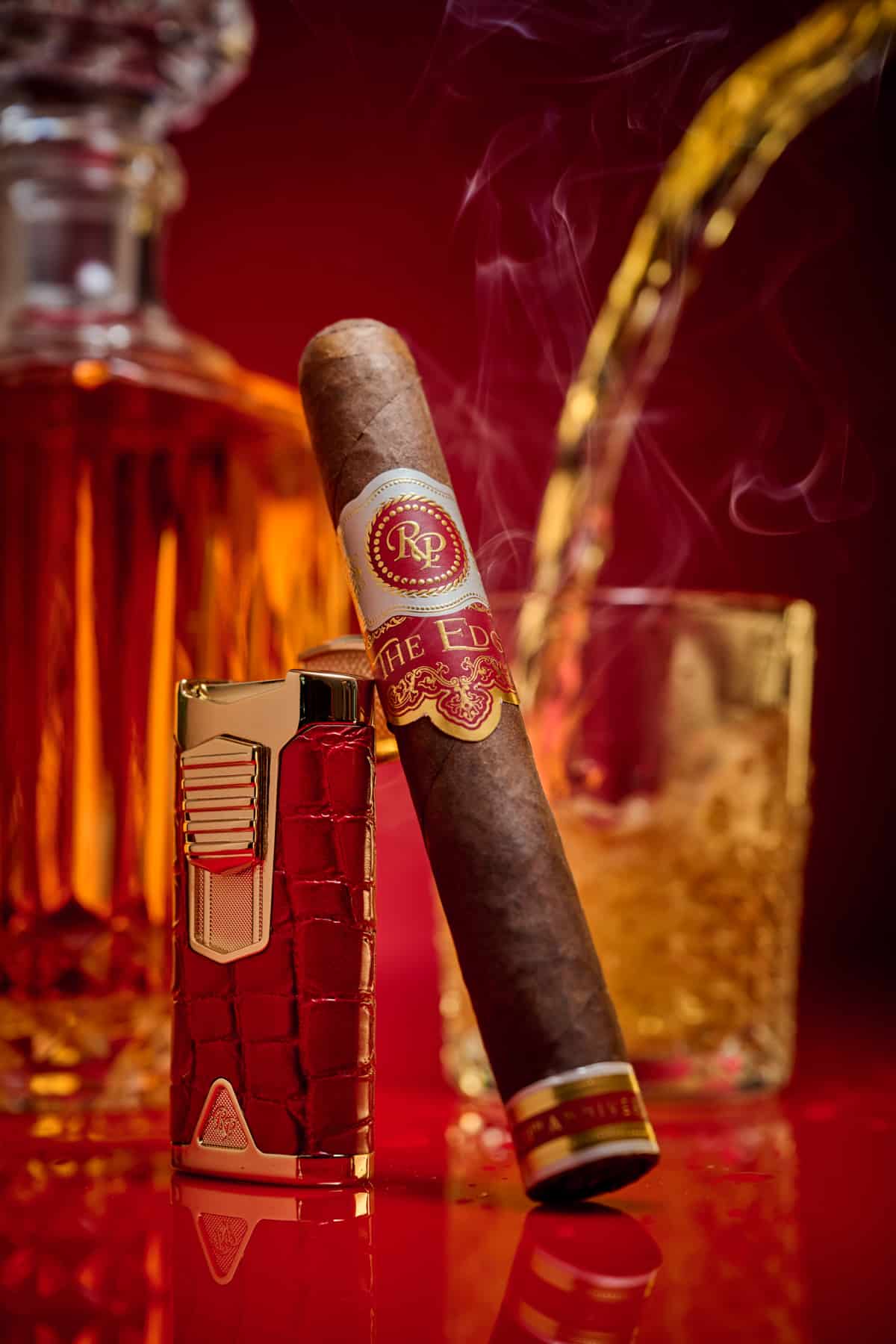
Posted on Leave a comment

Rocky Patel Number 6 vs DBS: Balanced Corojo or Broadleaf Architecture?

Rocky Patel Number 6

Note: This content is intended for adults only. Tobacco products carry health risks.

Introduction – two Rocky Patel cigars built around very different ideas

Put Rocky Patel Number 6 and Rocky Patel DBS next to each other and the visual difference is immediate.

Number 6 suggests balance and accessibility.

DBS appears darker, denser and more mysterious.

Yet the real difference goes much deeper than color.

It lies in the architecture of the blend.

Number 6 is built around Honduran tobacco and a Honduran Corojo wrapper, with Rocky Patel emphasizing a balance between sweetness and pepper.

DBS stands for Double Broadleaf Selection. Interestingly, however, its wrapper is not Broadleaf. The cigar uses a Mexican San Andrés wrapper, while two different Broadleaf tobaccos are incorporated deeper inside the blend.

That gives us a fascinating comparison:

Honduran Corojo and a relatively focused Honduran composition

versus

Mexican San Andrés supported by Pennsylvania and Nicaraguan Broadleaf.

Number 6 teaches us about balance.

DBS teaches us about blend architecture.

And comparing the two can completely change the way we think about premium cigars.

1. Rocky Patel Number 6 – where does the name come from?

The name has an interesting connection to the blending process.

During cigar development, experimental tobacco combinations can be divided into numbered groups or samples. According to Rocky Patel’s description of Number 6, the blend identified as No. 6 impressed the team enough that the development number ultimately became the commercial name.

That tells us something important.

The cigar was not necessarily created simply to fit an existing marketing concept.

The blend came first.

Its identity followed.

This is a useful example of how cigar development and branding can interact.

2. What does DBS actually mean?

DBS stands for:

Double Broadleaf Selection.

The obvious assumption would be that DBS uses a Broadleaf wrapper.

It does not.

The wrapper is Mexican San Andrés.

The Broadleaf component appears underneath:

Pennsylvania Broadleaf is used within the binder structure;

Nicaraguan Broadleaf appears in the filler.

This is one of the reasons DBS is such an interesting cigar from an educational perspective.

It demonstrates an essential principle:

Never judge the entire blend from the wrapper alone.

Sometimes the defining character of a cigar comes from tobacco that we cannot even see.

3. The architecture of Number 6

Number 6 is built around a strongly Honduran identity:

Wrapper: Honduran CorojoBinder: HonduranFiller: HonduranOrigin: HondurasStrength: Medium

Its character is commonly presented around the interaction between:

sweetness and pepper.

This relatively focused architecture is important.

A blend does not need tobacco from four or five countries to become interesting.

A master blender can create complexity through the interaction of different primings, fermentation levels, tobacco characteristics and proportions even within a geographically concentrated blend.

Number 6 is therefore an excellent lesson in coherence.

4. The architecture of DBS

DBS takes almost the opposite approach.

Its composition combines:

Wrapper: Mexican San AndrésBinder: Nicaragua + Pennsylvania BroadleafFiller: Honduras + Nicaraguan Broadleaf

Now we are working across several tobacco traditions.

Mexico contributes San Andrés.

Pennsylvania contributes Broadleaf.

Nicaragua contributes both tobacco and Broadleaf character.

Honduras contributes filler tobacco.

This means the blender must balance far more than flavor alone.

He must consider:

combustion;

elasticity;

tobacco thickness;

strength;

sweetness;

bitterness;

spice;

smoke density;

finish;

construction.

DBS is therefore a particularly good cigar for understanding what we mean by blend architecture.

5. Corojo vs San Andrés – the first major difference

At wrapper level, the comparison is simple:

Number 6 → Honduran Corojo

DBS → Mexican San Andrés

Corojo is often associated with aromatic families such as:

spice;

pepper;

cedar;

tobacco sweetness;

earth.

San Andrés may suggest:

cocoa;

earth;

dark sweetness;

coffee;

mineral notes;

roasted character;

spice.

But these are tendencies, not formulas.

It would be incorrect to say:

Corojo always tastes like pepper.

Or:

San Andrés always tastes like chocolate.

The final cigar is the result of the entire blend.

That is exactly why Number 6 vs DBS is such a useful comparison.

6. Number 6 – understanding sweetness and pepper

Number 6 gives the smoker a relatively clear sensory framework.

Think about two opposing elements:

sweetness ↔ pepper

Then watch how they interact.

Does sweetness dominate the opening?

Does pepper appear primarily on the retrohale?

Does the cigar become earthier in the second third?

Does sweetness remain through the finish?

This makes Number 6 particularly useful for someone learning how to describe cigars.

Instead of trying to identify fifteen different flavors immediately, begin with two fundamental axes.

Then expand.

7. DBS – why one word is not enough

DBS requires a somewhat different approach.

There is San Andrés outside.

Pennsylvania Broadleaf deeper in the construction.

Nicaraguan Broadleaf in the filler.

Honduran and Nicaraguan tobacco interacting inside.

Instead of asking only:

“Is it sweet?”

ask:

“What kind of sweetness?”

Instead of:

“Is it strong?”

ask separately:

“How strong is it?”

“How full is the body?”

“How dense is the flavor?”

This distinction becomes essential as your cigar experience develops.

DBS encourages more analytical smoking.

8. Why the wrapper does not tell the whole story

Many consumers naturally begin with the wrapper.

Connecticut.

Corojo.

Habano.

Maduro.

San Andrés.

Broadleaf.

This is useful, but incomplete.

DBS is almost a perfect demonstration of why.

The cigar is called Double Broadleaf Selection, yet the wrapper itself is San Andrés.

The defining Broadleaf concept sits underneath.

Therefore:

The wrapper is the cover of the book, not the entire book.

Binder and filler influence:

combustion;

body;

strength;

texture;

sweetness;

aromatic density;

finish.

A knowledgeable cigar smoker eventually learns to look beyond color and wrapper terminology.

9. Which is easier for a beginner to understand?

For most people:

Number 6.

Not because DBS is somehow reserved for experts.

Number 6 simply provides a cleaner sensory roadmap.

Medium strength.

Corojo.

Sweetness.

Pepper.

These are relatively easy concepts to follow during a tasting.

Someone moving from milder cigars toward more expressive medium blends can therefore use Number 6 as a reference point.

Once that reference exists, DBS becomes more informative.

10. Which is more interesting for an intermediate smoker?

This is where DBS becomes particularly compelling.

An intermediate smoker begins asking different questions.

Not merely:

“Do I like it?”

but:

“Why does it taste this way?”

Or:

“What is creating this density?”

Or:

“Is that dark sweetness coming from the wrapper or from the Broadleaf underneath?”

DBS provides material for these questions.

Number 6 can then function as the control sample:

focused, balanced, coherent.

DBS becomes:

layered, structural, exploratory.

11. Number 6 Robusto vs DBS Robusto – the ideal comparison

This is one of the most useful aspects of the two lines.

Number 6 Robusto:

5½ × 50

DBS Robusto:

5½ × 50

The nominal dimensions are identical.

That makes them excellent candidates for comparative tasting.

Same manufacturer.

Same format.

Very different blends.

Smoke them on different days under similar conditions.

Now you have minimized one important variable:

vitola geometry.

The remaining differences become much easier to study.

12. Toro vs Toro – studying transitions

The same opportunity exists with Toro:

Number 6 Toro: 6½ × 52

DBS Toro: 6½ × 52

Toro gives the blend more time to develop.

Pay attention to three stages.

First third

What establishes the identity?

Second third

Does the cigar introduce new notes?

Final third

Does strength increase? Does sweetness remain? Does pepper intensify?

Robusto often answers:

“What does this blend taste like?”

Toro can answer:

“How does this blend evolve?”

13. Sixty vs Sixty – studying a larger ring gauge

The comparison continues:

Number 6 Sixty: 6 × 60

DBS Sixty: 6 × 60

This provides a fascinating experiment.

Compare:

Number 6 Robusto vs DBS Robusto.

Then:

Number 6 Toro vs DBS Toro.

Finally:

Number 6 Sixty vs DBS Sixty.

After six separate tasting sessions, you will have explored two variables simultaneously:

blend composition

and

vitola geometry.

That is far more educational than simply smoking six unrelated cigars.

14. Number 6 offers another option: Corona

Number 6 also includes a narrower Corona format:

6 × 44.

A smaller ring gauge changes the mathematical relationship between wrapper surface and internal tobacco volume.

That does not automatically mean:

stronger,

more aromatic,

or better.

It means:

different proportions.

For someone studying Honduran Corojo, comparing Number 6 Corona against Robusto and Toro can be an excellent experiment.

15. Sweetness – not all sweetness is the same

One of the most useful tasting exercises is learning to differentiate types of sweetness.

With Number 6, ask whether the sweetness reminds you of:

honey;

caramel;

cereal;

sweet tobacco;

toasted nuts.

With DBS, you might explore darker associations:

molasses;

brown sugar;

cocoa;

dark chocolate;

roasted coffee.

These descriptors are not mandatory answers.

If you do not taste chocolate, nothing is wrong.

The objective is to move beyond:

“This cigar is sweet.”

toward:

“What kind of sweetness am I experiencing?”

16. Pepper – intensity is only part of the story

Pepper can appear in several ways.

It may be:

immediate;

subtle;

nasal on the retrohale;

persistent on the finish;

increasing toward the final third.

Number 6 provides a particularly useful framework because pepper is part of its recognized sensory identity.

With DBS, examine how spice interacts with darker, denser elements.

Two cigars can deliver similar pepper intensity but feel completely different because of texture and body.

17. Earth, cocoa and roasted notes – exploring DBS

The combination of San Andrés and Broadleaf makes DBS particularly interesting for exploring darker aromatic families.

Look for possible associations with:

earth;

cocoa;

coffee;

dark sweetness;

roasted nuts;

leather;

mineral character;

spice.

Again, these are reference points rather than a checklist.

A tasting note should describe your perception, not reproduce somebody else’s review.

The important question is whether DBS feels:

darker, denser or more layered

than Number 6.

If it does, try to identify exactly what creates that impression.

18. Body – one of the most important comparisons

Body and strength are not the same thing.

Number 6 is positioned in the medium range.

But when comparing Number 6 and DBS, do not simply ask which is stronger.

Create two separate scales.

Strength

How much physiological intensity do you perceive?

Body

How full, dense and weighty does the smoke feel?

Use a simple 1–5 score.

You may discover that a cigar can feel extremely full in flavor while not producing an equally high nicotine impact.

This distinction is fundamental to serious cigar tasting.

19. Strength – avoid assumptions

Dark wrapper does not automatically mean strong cigar.

Broadleaf does not automatically mean strong cigar.

San Andrés does not automatically mean strong cigar.

And a lighter-looking Corojo cigar is not automatically mild.

Strength comes from the entire blend, including tobacco type, priming, processing and proportions.

Therefore, never judge DBS simply by its darker visual identity.

Smoke it.

Evaluate it.

Separate:

strength

from:

body

and:

flavor intensity.

20. Complexity – does DBS automatically win?

No.

A cigar containing tobacco from more countries is not automatically more complex.

Complexity means meaningful development.

Ask:

Does the profile change?

Are there transitions?

Do different notes appear and disappear?

Does the finish evolve?

Does the cigar remain coherent?

Number 6 can create complexity through balance.

DBS can create complexity through layering.

The relevant question is not:

“How many tobaccos are listed?”

It is:

“How much meaningful evolution do I experience?”

21. Complexity vs consistency

These concepts are also different.

A cigar can be highly complex but somewhat unpredictable.

Another can be less dramatic but extremely coherent from beginning to end.

Number 6 is especially interesting because its appeal is strongly tied to balance.

DBS invites the smoker to examine interaction between several distinct tobacco components.

Neither philosophy is inherently superior.

They serve different experiences.

22. Why Number 6 became an important Rocky Patel line

Number 6 has received substantial recognition in the premium cigar world, including a strong Cigar Aficionado evaluation and placement among highly ranked cigars.

That history matters because it demonstrates that balance can be as impressive as raw power.

The lesson is useful:

A premium cigar does not need to be the darkest, strongest or most aggressive cigar in the humidor to become memorable.

Sometimes precision wins.

23. Why the DBS name matters

The name Double Broadleaf Selection forces us to look inside the cigar.

That is important because consumers often shop visually.

They see:

wrapper color,

band design,

size.

DBS challenges this habit.

Its identity tells us to pay attention to tobacco underneath the wrapper.

That makes DBS a particularly useful cigar for understanding:

wrapper → binder → filler

as a system rather than three isolated specifications.

24. Which should you choose as your first medium Rocky Patel?

Between these two, Number 6 is the more straightforward starting point.

Choose it if you want:

a medium profile;

Honduran Corojo;

clear sweetness/pepper interaction;

an approachable but characterful Rocky Patel;

several vitolas for comparative tasting.

It creates a useful baseline.

Once you understand that baseline, more complicated blends become easier to interpret.

25. What should you try after Number 6?

DBS is a logical contrast.

Not necessarily because it is simply “the next level.”

The more important reason is that it changes the architecture.

You move from:

Corojo → San Andrés

and from:

predominantly Honduran construction → multinational blend

and from:

sweetness/pepper balance → Broadleaf-driven structural exploration.

Think of DBS as a different lesson rather than merely a stronger cigar.

26. What if you love Corojo?

Choose Number 6.

Then use the vitolas to educate your palate.

Try:

Corona → Robusto → Toro

or:

Robusto → Toro → Sixty.

Keep notes.

Ask how the same core blend changes with geometry.

Afterward, try DBS.

The contrast with San Andrés becomes much more meaningful when you already know the Corojo reference.

27. What if you want to understand Broadleaf?

Choose DBS.

But remember:

the wrapper itself is not Broadleaf.

The educational exercise is precisely to study how Broadleaf can influence a cigar from underneath the wrapper.

Write down:

Wrapper: Mexican San Andrés

Binder: includes Pennsylvania Broadleaf

Filler: includes Nicaraguan Broadleaf

Then evaluate:

body;

earth;

dark sweetness;

roasted character;

texture;

finish.

This is an exercise in understanding the entire blend.

28. Pairing – what should you drink?

For the first serious comparison:

water.

It is boring only if the objective is entertainment.

For sensory analysis, it is extremely useful.

Once you understand the cigars individually, pairing becomes more interesting.

Number 6

A medium-roast coffee can complement its sweetness and spice.

DBS

A richer coffee may interact well with darker roasted and earthy families.

But always remember:

A pairing changes perception.

Learn the cigar first.

Then learn the pairing.

29. The ideal three-session experiment

Session 1 – Number 6 Robusto

Focus on:

sweetness;

pepper;

body;

finish.

Session 2 – DBS Robusto

Focus on:

dark sweetness;

earth;

texture;

Broadleaf-related depth;

finish.

Session 3 – return to Number 6 Robusto

Why return?

Because sensory memory improves through:

comparison → contrast → return.

You may notice characteristics during the second Number 6 that were invisible during the first.

30. The complete six-cigar experiment

For a more advanced comparison:

Number 6 Robusto

DBS Robusto

Number 6 Toro

DBS Toro

Number 6 Sixty

DBS Sixty

Score every cigar for:

cold draw;

sweetness;

pepper;

earth;

body;

strength;

texture;

complexity;

finish;

combustion;

draw.

Do not smoke them all in one day.

The objective is education, not endurance.

31. Common mistakes when comparing Number 6 and DBS

Mistake 1: “DBS has a Broadleaf wrapper.”

No. DBS uses Mexican San Andrés outside. The Broadleaf concept appears deeper in the blend.

Mistake 2: “Number 6 is simple because it is predominantly Honduran.”

Geographical concentration does not mean aromatic simplicity.

Mistake 3: “More countries automatically mean more complexity.”

They do not.

Mistake 4: “DBS must automatically be stronger.”

Never infer strength solely from color or Broadleaf terminology.

Mistake 5: “Corojo always means pepper.”

Corojo can express many aromatic families.

Mistake 6: “San Andrés automatically means Maduro.”

Variety, origin and processing are separate concepts.

Mistake 7: “One cigar must win.”

Not necessarily.

The two blends serve different purposes.

32. Number 6 vs DBS – quick comparison

Characteristic

Number 6

DBS

Wrapper

Honduran Corojo

Mexican San Andrés

Binder

Honduran

Nicaragua + Pennsylvania Broadleaf

Filler

Honduran

Honduras + Nicaraguan Broadleaf

Core idea

Balance

Layered architecture

Key study

Sweetness vs pepper

San Andrés + Double Broadleaf

Robusto

5½ × 50

5½ × 50

Toro

6½ × 52

6½ × 52

Sixty

6 × 60

6 × 60

Best educational use

Understanding balance

Understanding binder/filler influence

33. FAQ – Rocky Patel Number 6 vs DBS

What does Number 6 mean?

The name comes from the numbered blend sample selected during development.

What does DBS mean?

Double Broadleaf Selection.

Does DBS use a Broadleaf wrapper?

No. It uses a Mexican San Andrés wrapper.

Where is Broadleaf used in DBS?

Pennsylvania Broadleaf appears in the binder structure, while Nicaraguan Broadleaf is incorporated in the filler.

What wrapper does Number 6 use?

Honduran Corojo.

Which is easier for beginners?

Number 6 generally offers a clearer starting point because of its balanced medium profile.

Which is more interesting for experienced smokers?

DBS can be especially educational for smokers interested in understanding the interaction between wrapper, binder and filler.

Do Number 6 and DBS have the same Robusto dimensions?

Yes. Both are offered in 5½ × 50 Robusto formats.

And Toro?

Both are available as 6½ × 52 Toro.

And Sixty?

Both are available as 6 × 60.

Which should I choose if I like Corojo?

Number 6.

Which should I choose if I want to explore Broadleaf?

DBS.

Is darker automatically stronger?

No. Wrapper color is not a reliable measurement of nicotine strength.

Which is better?

The better question is which profile suits your objective.

Choose Number 6 for balance and Corojo expression.

Choose DBS to explore San Andrés and Broadleaf architecture.

34. Mister Tabaco verdict

Choose Number 6 if you want:

Honduran Corojo;

medium character;

sweetness and pepper;

balance;

an accessible introduction to more expressive Rocky Patel cigars.

Choose DBS if you want:

Mexican San Andrés;

Pennsylvania Broadleaf;

Nicaraguan Broadleaf;

a more layered blend architecture;

a cigar that encourages analytical tasting.

Compare both if you want:

to understand how two Rocky Patel cigars of exactly the same nominal vitola can produce very different experiences.

Conclusion – Number 6 explains balance; DBS explains blending

Rocky Patel Number 6 and DBS should not necessarily be viewed as competitors.

They are two different lessons.

Number 6 demonstrates how a premium medium cigar can develop personality through the relationship between:

sweetness and pepper.

DBS demonstrates something equally important:

the identity of a cigar does not live in the wrapper alone.

Binder and filler matter.

Broadleaf hidden underneath San Andrés can matter enormously.

That gives us two memorable formulas:

Number 6 = Corojo + Honduras + balance

DBS = San Andrés + Pennsylvania Broadleaf + Nicaraguan Broadleaf + architecture

And because both lines share Robusto, Toro and Sixty dimensions, they provide an unusually clean comparative experiment.

If you are beginning the journey:

Number 6.

If you already understand wrapper, binder and filler and want to explore deeper:

DBS.

If you want to learn as much as possible:

Number 6 Robusto → DBS Robusto → Number 6 Toro → DBS Toro → Number 6 Sixty → DBS Sixty.

After completing that sequence, you may stop looking at premium cigars merely by wrapper color.

You will start thinking about the entire blend.

CTA – Mister Tabaco

Create your own Rocky Patel comparative tasting at Mister Tabaco.

Start with:

Number 6 Robusto → DBS Robusto

or choose the longer format:

Number 6 Toro → DBS Toro.

Keep the humidor conditions, drink and tasting method consistent, then compare:

sweetness, pepper, earth, body, strength, texture, complexity and finish.

Mister TabacoChișinău, str. Drumul Viilor 95+373 79 444 414

Mister Tabaco

At Mister Tabaco, you can turn theory into practical comparisons between blends, vitolas and origins.

Continue the Tobacco Guide

What Is Premium Tobacco and How Is It Different from Ordinary Tobacco?

Wrapper, Binder and Filler – the anatomy of a premium cigar

Corojo, Criollo, Connecticut, Habano, Sumatra, Broadleaf and San Andrés – A Guide to the Major Wrapper Families

Maduro Explained Properly – Color, Fermentation, Flavor and the Strength Myth

Ligero, Seco and Volado – how leaf position changes a premium cigar

How Cigar Tobacco Is Grown – From Seed to Harvest

Tobacco Fermentation – The Process That Transforms the Leaf

Tobacco Aging – Why Some Cigar Leaves Are Aged for Years

Nicaragua vs Honduras vs Dominican Republic vs Ecuador vs Mexico – How Terroir Changes Cigar Tobacco and Flavor

How a Master Blender Creates a Cigar

Shade-Grown vs Sun-Grown: How Light Changes a Cigar Wrapper

Long Filler vs Short Filler – The Real Differences in Cigar Construction

Strength vs Body vs Flavor – How to Describe a Cigar Correctly

How Vitola Changes Cigar Flavor: Robusto vs Toro vs Churchill vs Sixty

How to Choose Your First Premium Cigar – A Complete Beginner’s Guide

How to Taste a Premium Cigar and Identify Aromas

How to Store Cigars Properly: Humidor, Temperature and Humidity

Common Mistakes That Can Ruin the Experience of a Premium Cigar

Rocky Patel Guide: Differences Between the Main Collections at Mister Tabaco

Rocky Patel Vintage 1990 vs Vintage 1999: Aged Broadleaf or Delicate Connecticut?

Rocky Patel Number 6 vs DBS: Balanced Corojo or Broadleaf Architecture?

Rocky Patel SIXTY vs A.L.R. Second Edition: Two San Andrés Interpretations, Two Aging Philosophies

Rocky Patel Edge 20th Anniversary and the Role of Aged Tobacco: What Time Can Do to a Premium Wrapper

How to Choose a Rocky Patel by Experience, Strength and Flavor Profile

Explore the Cigar Guide

How to Choose Your First Cigar

Which Rocky Patel Cigar Should You Choose as a Beginner?

How to Smoke a Cigar Properly

Robusto, Toro or Churchill? Cigar Size Guide

How to Store Cigars Properly

Cuba vs Nicaragua vs Dominican Republic vs Honduras

How to Identify Cigar Flavors

Cigar Pairing with Whisky, Rum, Cognac or Coffee

10 Common Cigar Mistakes Beginners Make

How to Choose a Cigar as a Gift or for a Special Occasion

Tobacco products are intended for adults only. Smoking seriously damages your health.
Posted on Leave a comment

Rocky Patel SIXTY vs A.L.R. Second Edition: Two San Andrés Interpretations, Two Aging Philosophies

Rocky Patel SIXTY

Note: For adults only. Tobacco products carry health risks.

Introduction – if both use San Andrés and both are aged for two years, why are they so different?

At first glance, Rocky Patel SIXTY and A.L.R. Second Edition seem remarkably similar.

Both are made in Nicaragua.

Both use a San Andrés wrapper.

Both have an important story built around approximately two years of aging after rolling.

Both are available in the same three core vitolas:

Robusto 5½ × 50Toro 6½ × 52Sixty 6 × 60

They even occupy similarly prestigious positions within the Rocky Patel portfolio.

It would be easy to assume that these are simply two versions of the same concept.

They are not.

SIXTY is positioned in the Medium range and combines a San Andrés wrapper with a Nicaraguan core. Its identity is strongly connected to extended post-roll maturation and Rocky Patel’s 60th birthday concept.

A.L.R. Second Edition moves into Medium-Full territory. Its name means:

Aged. Limited. Rare.

The blend was designed around deliberate aging before release, and the internal recipe is intentionally kept undisclosed.

So the real question is not:

“Which one has more aging?”

The better question is:

“How can two cigars using similar concepts of time and the same wrapper family produce such different smoking experiences?”

That is where the comparison becomes interesting.

1. SIXTY – a cigar built around the 60th birthday concept

SIXTY was developed as an anniversary project connected to Rocky Patel’s 60th birthday.

That concept matters because the cigar’s story revolves around maturity.

Not simply the age of the founder.

The maturity of the tobacco and the finished cigar as well.

After rolling, SIXTY is given extended time to rest before release.

This introduces an important distinction.

There are at least two different forms of “time” involved in premium cigar production:

the time individual leaves spend in curing, fermentation and aging;

the time the finished cigar spends resting after rolling.

The second is often underestimated.

Once wrapper, binder and filler are brought together, the finished cigar can require additional time for its components to integrate.

SIXTY is a very useful example of post-roll maturation.

2. A.L.R. – the philosophy is already inside the name

A.L.R. stands for:

Aged. Limited. Rare.

This is not simply decorative branding.

The line was intentionally developed around limited production and significant aging before release.

The core idea is that time should not merely happen in the background.

It should become part of the identity of the cigar.

If SIXTY says:

“This anniversary blend has been given substantial time to integrate,”

A.L.R. says:

“Aging is so central to this cigar that it belongs in the name.”

That philosophical difference is important.

SIXTY uses aging as part of an anniversary expression.

A.L.R. uses aging as one of the principal reasons the product exists.

3. Their first major similarity: San Andrés

Both cigars use a San Andrés wrapper.

That gives us a particularly clean comparison.

We are not comparing:

Connecticut vs Maduro,

or:

Corojo vs Broadleaf.

We begin with an important external variable held relatively constant.

This teaches a fundamental lesson:

The same wrapper family does not create the same cigar.

Even when two cigars share San Andrés, the internal blend can completely reshape:

strength;

body;

sweetness;

spice;

texture;

combustion;

finish.

San Andrés is the common starting point.

It is not the final answer.

4. What do we know about the SIXTY blend?

SIXTY can be understood in relatively clear structural terms:

Origin: NicaraguaWrapper: San AndrésBinder: NicaraguaFiller: NicaraguaStrength: MediumPost-roll aging: extended maturation before release

This creates a relatively focused architecture.

Mexican San Andrés outside.

Nicaraguan tobacco underneath.

That allows SIXTY to be viewed as:

San Andrés wrapped around a Nicaraguan core that receives extended rest after rolling.

The structure looks straightforward on paper.

But a straightforward composition does not mean a simple flavor experience.

5. What do we know – and not know – about A.L.R.?

A.L.R. Second Edition gives us a different situation.

We know several important things:

it is made in Nicaragua;

it uses San Andrés wrapper;

it is positioned as Medium-Full;

aging before release is central to the project;

it is offered in Robusto, Toro and Sixty;

it was conceived as a limited production project.

But the internal blend is intentionally not fully disclosed.

That matters editorially.

We should not fill in the missing information with assumptions.

We do not need to invent the binder.

We do not need to invent the filler.

Instead, we can analyze what is actually known:

San Andrés + Nicaragua + Medium-Full + aging + box-pressed construction.

The rest remains where the producer intended it to remain:

secret.

6. A.L.R. Second Edition and box-pressed construction

One additional difference is construction.

A.L.R. Second Edition is known for its box-pressed form.

Box pressing takes a traditionally cylindrical cigar and gives it a more squared or rectangular profile.

For the smoker, the most obvious effects are:

different feel in the hand;

different feel between the lips;

greater stability when set down;

a distinct tactile identity.

Some smokers may also perceive draw and combustion differently depending on how the cigar is constructed.

But one oversimplification should be avoided:

“Box-pressed means more flavor.”

Not necessarily.

Box pressing is a construction choice.

It is not an automatic quality or intensity upgrade.

7. Medium vs Medium-Full – the most immediate difference

The simplest official distinction is strength positioning.

SIXTY

Medium

A.L.R. Second Edition

Medium-Full

This matters.

But it should not be interpreted as:

SIXTY = weak.

A.L.R. = strong.

A better way is to think of a progression.

SIXTY sits in a zone where an intermediate smoker can explore a rich San Andrés profile without making nicotine strength the central feature of the session.

A.L.R. moves one step higher.

For a smoker who is sensitive to nicotine impact, that difference may meaningfully affect which cigar should be tasted first.

8. The logical tasting order: SIXTY → A.L.R.

If you are tasting these lines for the first time, a useful sequence is:

SIXTY first.

Then:

A.L.R. Second Edition.

Why?

Because you move:

Medium → Medium-Full.

This makes it easier to notice what A.L.R. adds.

If you begin with the more intense blend and immediately move backward, some of SIXTY’s subtler qualities may be harder to perceive.

Still, do not smoke them back-to-back.

Ideally use:

the same vitola;

similar storage conditions;

the same neutral drink;

separate days.

This creates a much cleaner comparison.

9. Robusto vs Robusto – the ideal starting point

This is one of the greatest advantages of the pair.

SIXTY Robusto:

5½ × 50

A.L.R. Second Edition Robusto:

5½ × 50

The nominal dimensions match.

That allows us to control several variables:

length;

ring gauge;

producer;

wrapper family;

Nicaraguan production;

extended aging concept.

What remains highly interesting is:

blend + construction + strength.

For a serious comparison, this is probably the best starting point.

10. Toro vs Toro – more time to observe transitions

Both are also available in:

Toro 6½ × 52

Toro provides a longer session and therefore more time to study development.

Divide the experience into:

First third

Basic identity.

Second third

Transitions and new layers.

Final third

Concentration and increasing intensity.

Record separately:

sweetness;

pepper;

earth;

coffee;

cocoa;

creaminess;

body;

strength;

finish.

Toro can reveal not just how the cigars begin, but how differently they develop.

11. Sixty vs Sixty – the name SIXTY does not automatically make it superior in 6 × 60

SIXTY naturally offers a Sixty vitola.

But so does A.L.R. Second Edition.

Both can therefore be compared in:

6 × 60.

There is an easy mistake to make here:

“SIXTY must be most authentic in the Sixty size.”

Not necessarily.

SIXTY also exists in Robusto and Toro.

The line name comes from the anniversary concept, not from a requirement to smoke only the 6 × 60.

That gives the enthusiast freedom to study the blend through several geometries.

12. Aging and fermentation are not the same thing

This comparison is a good opportunity to correct another common misunderstanding.

Fermentation and aging are not the same process.

Fermentation is part of transforming tobacco leaf chemically and reducing undesirable compounds.

Aging is a slower period of development and integration.

When discussing the long resting period of SIXTY and A.L.R., we are talking about finished cigars resting after rolling, not the original fermentation of raw tobacco leaves.

That distinction is essential.

A cigar can contain properly fermented tobacco and still benefit from additional rest after construction.

13. What can post-roll aging actually do?

Once the cigar is rolled, wrapper, binder and filler each bring their own characteristics into one structure.

Time can allow those elements to become better integrated.

In sensory terms, you might look for:

smoother transitions;

less aggressive spice;

better-integrated sweetness;

a more coherent finish;

fewer rough edges;

more unified texture.

This does not mean every aged cigar automatically improves.

But SIXTY and A.L.R. are both built around the idea that extended rest after rolling matters.

14. SIXTY – what should you look for aromatically?

SIXTY naturally invites attention toward darker roasted and sweeter families.

Useful reference points include:

caramel;

coffee;

espresso;

cocoa;

earth;

sweet spice;

roasted nuts.

But these should never become mandatory answers.

If you taste:

coffee + wood + pepper

write exactly that.

Do not invent caramel simply because someone else used that word.

A tasting note should describe the cigar you experienced, not the review you remembered.

15. A.L.R. – tasting a blend whose internal recipe is intentionally hidden

A.L.R. becomes particularly interesting because the internal recipe is not fully revealed.

You cannot confidently say:

“This note comes from filler X.”

You do not know.

Instead, analyze what you can actually perceive:

density;

strength;

body;

sweetness;

earth;

spice;

roasted character;

cocoa;

finish;

transitions.

This creates an almost semi-blind tasting situation.

You know the wrapper.

You know the origin.

You know the strength category.

You know the aging concept.

But you do not know every internal component.

That makes A.L.R. especially educational.

16. SIXTY – a study in integration

The central question I would ask with SIXTY is:

“How well are the flavors integrated within a medium-strength cigar?”

I would not chase maximum power.

I would look for:

harmony;

roundness;

sweetness;

smoke texture;

clean transitions;

finish.

SIXTY shows that long resting periods are not reserved only for aggressive full-bodied cigars.

A medium blend can also use time to improve coherence and refinement.

17. A.L.R. – integration under greater intensity

With A.L.R. the question changes:

“Can aging keep a Medium-Full blend controlled and refined?”

The intensity is higher.

Therefore, pay attention to:

whether pepper stays elegant;

whether body increases without harshness;

whether sweetness survives;

whether the finish remains coherent;

whether the final third overheats easily.

A.L.R. is useful for smokers who assume:

Medium-Full must mean aggressive.

It does not.

Strength and harshness are different concepts.

18. Smoothness does not mean mild

This pair perfectly illustrates the difference between:

Strength

Body

Flavor

A cigar can feel very smooth and still be Medium-Full.

Another cigar can be Medium but deliver very high flavor intensity.

Therefore:

SIXTY

Medium strength can still produce substantial body and flavor.

A.L.R.

Medium-Full can remain polished and integrated after significant aging.

Do not estimate strength solely from how “soft” or “smooth” the smoke feels.

19. What does the A.L.R. box press change in practice?

The clearest differences are physical.

A box-pressed cigar:

feels different between the fingers;

rests differently in the mouth;

has a distinctive geometry;

does not roll easily when placed down.

Some smokers also enjoy how box-pressed cigars feel during longer sessions.

But again:

box-pressed does not mean objectively better.

It simply becomes another design variable.

The correct question is:

“Do I personally enjoy this geometry?”

20. Identical high ratings do not mean identical cigars

Both lines have received major recognition and very high scores.

That is interesting context.

But it would be wrong to conclude:

“If both received similar ratings, they must be equally good in the same way.”

Ratings do not work like that.

Two restaurants can receive the same score and serve completely different cuisines.

Two cigars can receive the same numerical evaluation and deliver completely different experiences.

The rating tells you that reviewers found significant quality.

It does not tell you which cigar your palate will prefer.

21. Which one is more complex?

We cannot answer this simply by looking at strength.

A.L.R. is Medium-Full.

That does not automatically make it more complex.

Complexity should be judged through:

layering;

transitions;

development;

finish;

coherence.

SIXTY may deliver a very elegant form of complexity precisely because it stays in a Medium range.

A.L.R. may deliver a denser, more intense form.

The verdict must come from tasting.

22. Which one is more suitable for a beginner?

Between the two:

SIXTY.

Not necessarily for someone who has never smoked a premium cigar before. For a complete beginner, an even milder line such as Vintage 1999 may be a more logical first step.

But for someone who already understands mild and medium cigars, SIXTY is generally a more natural introduction than A.L.R.

The reason is simple:

Medium vs Medium-Full.

A.L.R. can come afterward.

23. Which one is better for an intermediate smoker?

It depends on what the smoker wants to study.

If the goal is:

San Andrés + aging + Medium + integration

→ SIXTY.

If the goal is:

San Andrés + Medium-Full + box press + secret blend + aging

→ A.L.R.

That distinction matters.

This is not simply:

beginner = SIXTY;

expert = A.L.R.

A better question is:

“What do you want to learn from the cigar?”

24. Which one is more interesting for an experienced smoker?

Ideally:

both.

This pair is unusually good for experienced comparative tasting because so many variables can be held relatively constant.

Both involve:

Nicaragua;

San Andrés;

long post-roll aging;

Robusto, Toro and Sixty formats.

But they differ in:

strength;

construction;

blend transparency;

box-pressed vs more traditional geometry.

That is exactly the kind of comparison an experienced palate can learn from.

25. What if I like San Andrés but do not want something too intense?

Choose:

SIXTY.

Its Medium positioning makes it the more logical starting point.

Begin with Robusto.

Then try Toro.

If you enjoy the direction and want more intensity:

move to A.L.R. Robusto.

That creates a coherent progression.

26. What if I specifically want Medium-Full plus aging?

Choose:

A.L.R. Second Edition.

The line explicitly combines:

Aged. Limited. Rare.

with a Medium-Full position and extended aging before release.

It is particularly logical for someone who says:

“I want aging to be a central part of the product, not just a background detail.”

27. How should you taste them properly?

Do not smoke them on the same day if the goal is serious comparison.

Day 1

SIXTY Robusto.

Day 2 or 3

A.L.R. Second Edition Robusto.

Try to keep:

similar RH;

the same neutral water;

a relatively neutral palate;

similar food context;

no aggressive pairing;

the same tasting sheet.

Record:

StrengthBodyFlavor IntensitySweetnessPepperCoffeeCocoaEarthTextureComplexityFinish

Then compare.

28. The full Robusto → Toro → Sixty experiment

For a complete comparison:

SIXTY Robusto

A.L.R. Robusto

SIXTY Toro

A.L.R. Toro

SIXTY Sixty

A.L.R. Sixty

This is one of the cleanest comparative series in the Rocky Patel portfolio because the nominal dimensions align across all three pairings.

After six sessions, you will be able to distinguish more accurately whether your preference comes from:

blend;

strength;

construction;

vitola.

That is far more informative than simply saying:

“I like A.L.R. more.”

29. Pairing – do not start with whisky

If your objective is educational:

water.

Once you understand both cigars individually, pairing becomes more useful.

SIXTY

A medium-to-dark roast coffee can work especially well if you perceive coffee, caramel or roasted sweetness.

A.L.R.

Its Medium-Full structure may support a somewhat more intense pairing.

But pairing should never become a competition.

If the drink dominates completely, you are no longer analyzing the cigar.

30. Common mistakes when comparing SIXTY and A.L.R.

“Both use San Andrés, so they should taste alike”

False.

“Both are aged extensively, so they are almost the same concept”

False.

“A.L.R. is better because it is stronger”

False.

“SIXTY 6 × 60 is the only authentic SIXTY”

False.

“A.L.R. definitely has a specific filler because it is Nicaraguan-made”

Do not assume an undisclosed recipe.

“Box-pressed automatically means more flavor”

False.

“Similar ratings mean I should like both equally”

False.

31. Quick comparison – SIXTY vs A.L.R. Second Edition

Characteristic

SIXTY

A.L.R. Second Edition

Origin

Nicaragua

Nicaragua

Wrapper

San Andrés

San Andrés

Binder

Nicaragua

Undisclosed

Filler

Nicaragua

Undisclosed

Strength

Medium

Medium-Full

Aging concept

Extended post-roll maturation

Extended aging before release

Main concept

60th birthday / maturity

Aged. Limited. Rare.

Shape

Traditional cigar format

Box-pressed

Robusto

5½ × 50

5½ × 50

Toro

6½ × 52

6½ × 52

Sixty

6 × 60

6 × 60

Best educational use

Integration at Medium strength

Integration at Medium-Full strength

32. FAQ – Rocky Patel SIXTY vs A.L.R.

Do both use San Andrés?

Yes.

Are both made in Nicaragua?

Yes.

Which is stronger?

A.L.R. Second Edition is positioned Medium-Full, while SIXTY is Medium.

Is SIXTY aged after rolling?

Yes. Extended post-roll maturation is a central part of the line.

Is A.L.R. aged before release?

Yes. Aging before release is a defining part of the concept.

What does A.L.R. mean?

Aged. Limited. Rare.

Is A.L.R. box-pressed?

Yes.

Is SIXTY weak because it is Medium?

No. Strength and flavor intensity are different dimensions.

Do they share the same core vitolas?

Yes:

Robusto 5½ × 50Toro 6½ × 52Sixty 6 × 60

Which should I taste first?

SIXTY first, then A.L.R., ideally in the same vitola.

Which is more complex?

That cannot be determined properly from specifications alone. Complexity should be evaluated through tasting.

What filler does A.L.R. use?

The full internal recipe is not publicly disclosed.

33. Mister Tabaco Flight – “San Andrés & Time”

For a concise educational tasting:

#1 SIXTY Robusto

Lesson: San Andrés + Medium + aging.

#2 A.L.R. Second Edition Robusto

Lesson: San Andrés + Medium-Full + box press + aging.

Then, for a deeper comparison:

#3 SIXTY Toro

Lesson: same blend, longer evolution.

#4 A.L.R. Toro

Lesson: Medium-Full development over a longer session.

This flight isolates an extremely important distinction:

same wrapper family

versus

different blend philosophy.

34. Mister Tabaco verdict

There is no universal winner.

Choose SIXTY if you want:

San Andrés;

Medium strength;

a Nicaraguan core;

extended post-roll maturation;

integrated flavor;

an approachable introduction to a more sophisticated San Andrés cigar.

Choose A.L.R. Second Edition if you want:

San Andrés;

Medium-Full;

significant aging;

box-pressed construction;

an Aged/Limited/Rare concept;

an intentionally undisclosed internal blend.

Compare both if you want:

to understand why two cigars can share the same wrapper family, origin, aging philosophy and vitolas yet deliver very different experiences.

Conclusion – the same outer leaf, two different ideas about maturity

SIXTY and A.L.R. Second Edition form one of the most interesting comparisons in the Rocky Patel portfolio.

On paper they share a remarkable amount:

Nicaragua.

San Andrés.

Extended aging after rolling.

Robusto, Toro and Sixty.

Yet that is exactly the lesson.

Shared specifications do not guarantee the same experience.

SIXTY can be summarized as:

Medium + San Andrés + Nicaraguan core + anniversary maturity concept.

A.L.R. as:

Medium-Full + San Andrés + secret internal blend + box press + Aged/Limited/Rare.

SIXTY teaches:

balance and integration.

A.L.R. teaches:

how aging can help a more intense blend remain controlled and coherent.

And perhaps the most important idea is this:

Aging is not a flavor.

You cannot literally taste “two years.”

What you can evaluate are the potential effects of time:

integration;

smoother transitions;

fewer rough edges;

texture;

balance;

finish.

So if both cigars are available, do not reduce the question to:

“Which one is better?”

Build the experiment:

SIXTY Robusto → A.L.R. Second Edition Robusto.

Same vitola.

Same wrapper family.

Same production country.

Similar aging philosophy.

But two different blends.

That is where comparative tasting becomes truly educational.

Mister Tabaco

At Mister Tabaco, you can turn theory into practical comparisons between blends, vitolas and origins.

Continue the Tobacco Guide

What Is Premium Tobacco and How Is It Different from Ordinary Tobacco?

Wrapper, Binder and Filler – the anatomy of a premium cigar

Corojo, Criollo, Connecticut, Habano, Sumatra, Broadleaf and San Andrés – A Guide to the Major Wrapper Families

Maduro Explained Properly – Color, Fermentation, Flavor and the Strength Myth

Ligero, Seco and Volado – how leaf position changes a premium cigar

How Cigar Tobacco Is Grown – From Seed to Harvest

Tobacco Fermentation – The Process That Transforms the Leaf

Tobacco Aging – Why Some Cigar Leaves Are Aged for Years

Nicaragua vs Honduras vs Dominican Republic vs Ecuador vs Mexico – How Terroir Changes Cigar Tobacco and Flavor

How a Master Blender Creates a Cigar

Shade-Grown vs Sun-Grown: How Light Changes a Cigar Wrapper

Long Filler vs Short Filler – The Real Differences in Cigar Construction

Strength vs Body vs Flavor – How to Describe a Cigar Correctly

How Vitola Changes Cigar Flavor: Robusto vs Toro vs Churchill vs Sixty

How to Choose Your First Premium Cigar – A Complete Beginner’s Guide

How to Taste a Premium Cigar and Identify Aromas

How to Store Cigars Properly: Humidor, Temperature and Humidity

Common Mistakes That Can Ruin the Experience of a Premium Cigar

Rocky Patel Guide: Differences Between the Main Collections at Mister Tabaco

Rocky Patel Vintage 1990 vs Vintage 1999: Aged Broadleaf or Delicate Connecticut?

Rocky Patel Number 6 vs DBS: Balanced Corojo or Broadleaf Architecture?

Rocky Patel SIXTY vs A.L.R. Second Edition: Two San Andrés Interpretations, Two Aging Philosophies

Rocky Patel Edge 20th Anniversary and the Role of Aged Tobacco: What Time Can Do to a Premium Wrapper

How to Choose a Rocky Patel by Experience, Strength and Flavor Profile

Explore the Cigar Guide

How to Choose Your First Cigar

Which Rocky Patel Cigar Should You Choose as a Beginner?

How to Smoke a Cigar Properly

Robusto, Toro or Churchill? Cigar Size Guide

How to Store Cigars Properly

Cuba vs Nicaragua vs Dominican Republic vs Honduras

How to Identify Cigar Flavors

Cigar Pairing with Whisky, Rum, Cognac or Coffee

10 Common Cigar Mistakes Beginners Make

How to Choose a Cigar as a Gift or for a Special Occasion

Tobacco products are intended for adults only. Smoking seriously damages your health.