
Note: This content is intended for adults only. Tobacco products carry health risks.
Introduction – two Rocky Patel cigars built around very different ideas
Put Rocky Patel Number 6 and Rocky Patel DBS next to each other and the visual difference is immediate.
Number 6 suggests balance and accessibility.
DBS appears darker, denser and more mysterious.
Yet the real difference goes much deeper than color.
It lies in the architecture of the blend.
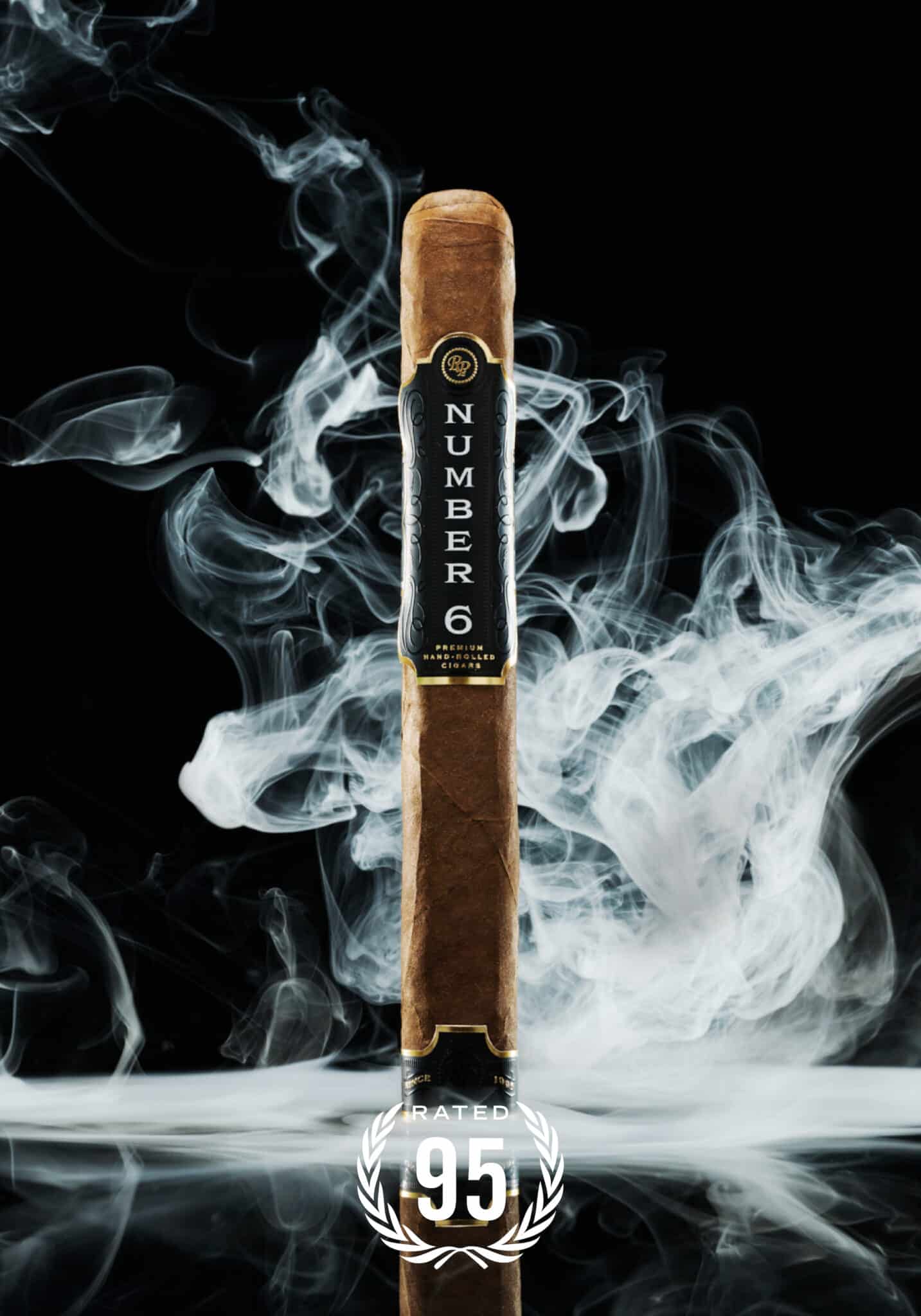
Number 6 is built around Honduran tobacco and a Honduran Corojo wrapper, with Rocky Patel emphasizing a balance between sweetness and pepper.
DBS stands for Double Broadleaf Selection. Interestingly, however, its wrapper is not Broadleaf. The cigar uses a Mexican San Andrés wrapper, while two different Broadleaf tobaccos are incorporated deeper inside the blend.
That gives us a fascinating comparison:
Honduran Corojo and a relatively focused Honduran composition
versus
Mexican San Andrés supported by Pennsylvania and Nicaraguan Broadleaf.
Number 6 teaches us about balance.
DBS teaches us about blend architecture.
And comparing the two can completely change the way we think about premium cigars.
1. Rocky Patel Number 6 – where does the name come from?
The name has an interesting connection to the blending process.
During cigar development, experimental tobacco combinations can be divided into numbered groups or samples. According to Rocky Patel’s description of Number 6, the blend identified as No. 6 impressed the team enough that the development number ultimately became the commercial name.
That tells us something important.
The cigar was not necessarily created simply to fit an existing marketing concept.
The blend came first.
Its identity followed.
This is a useful example of how cigar development and branding can interact.
2. What does DBS actually mean?
DBS stands for:
Double Broadleaf Selection.
The obvious assumption would be that DBS uses a Broadleaf wrapper.
It does not.
The wrapper is Mexican San Andrés.
The Broadleaf component appears underneath:
Pennsylvania Broadleaf is used within the binder structure;
Nicaraguan Broadleaf appears in the filler.
This is one of the reasons DBS is such an interesting cigar from an educational perspective.
It demonstrates an essential principle:
Never judge the entire blend from the wrapper alone.
Sometimes the defining character of a cigar comes from tobacco that we cannot even see.
3. The architecture of Number 6
Number 6 is built around a strongly Honduran identity:
Wrapper: Honduran CorojoBinder: HonduranFiller: HonduranOrigin: HondurasStrength: Medium
Its character is commonly presented around the interaction between:
sweetness and pepper.
This relatively focused architecture is important.
A blend does not need tobacco from four or five countries to become interesting.
A master blender can create complexity through the interaction of different primings, fermentation levels, tobacco characteristics and proportions even within a geographically concentrated blend.
Number 6 is therefore an excellent lesson in coherence.
4. The architecture of DBS
DBS takes almost the opposite approach.
Its composition combines:
Wrapper: Mexican San AndrésBinder: Nicaragua + Pennsylvania BroadleafFiller: Honduras + Nicaraguan Broadleaf
Now we are working across several tobacco traditions.
Mexico contributes San Andrés.
Pennsylvania contributes Broadleaf.
Nicaragua contributes both tobacco and Broadleaf character.
Honduras contributes filler tobacco.
This means the blender must balance far more than flavor alone.
He must consider:
combustion;
elasticity;
tobacco thickness;
strength;
sweetness;
bitterness;
spice;
smoke density;
finish;
construction.
DBS is therefore a particularly good cigar for understanding what we mean by blend architecture.
5. Corojo vs San Andrés – the first major difference
At wrapper level, the comparison is simple:
Number 6 → Honduran Corojo
DBS → Mexican San Andrés
Corojo is often associated with aromatic families such as:
spice;
pepper;
cedar;
tobacco sweetness;
earth.
San Andrés may suggest:
cocoa;
earth;
dark sweetness;
coffee;
mineral notes;
roasted character;
spice.
But these are tendencies, not formulas.
It would be incorrect to say:
Corojo always tastes like pepper.
Or:
San Andrés always tastes like chocolate.
The final cigar is the result of the entire blend.
That is exactly why Number 6 vs DBS is such a useful comparison.
6. Number 6 – understanding sweetness and pepper
Number 6 gives the smoker a relatively clear sensory framework.
Think about two opposing elements:
sweetness ↔ pepper
Then watch how they interact.
Does sweetness dominate the opening?
Does pepper appear primarily on the retrohale?
Does the cigar become earthier in the second third?
Does sweetness remain through the finish?
This makes Number 6 particularly useful for someone learning how to describe cigars.
Instead of trying to identify fifteen different flavors immediately, begin with two fundamental axes.
Then expand.
7. DBS – why one word is not enough
DBS requires a somewhat different approach.
There is San Andrés outside.
Pennsylvania Broadleaf deeper in the construction.
Nicaraguan Broadleaf in the filler.
Honduran and Nicaraguan tobacco interacting inside.
Instead of asking only:
“Is it sweet?”
ask:
“What kind of sweetness?”
Instead of:
“Is it strong?”
ask separately:
“How strong is it?”
“How full is the body?”
“How dense is the flavor?”
This distinction becomes essential as your cigar experience develops.
DBS encourages more analytical smoking.
8. Why the wrapper does not tell the whole story
Many consumers naturally begin with the wrapper.
Connecticut.
Corojo.
Habano.
Maduro.
San Andrés.
Broadleaf.
This is useful, but incomplete.
DBS is almost a perfect demonstration of why.
The cigar is called Double Broadleaf Selection, yet the wrapper itself is San Andrés.
The defining Broadleaf concept sits underneath.
Therefore:
The wrapper is the cover of the book, not the entire book.
Binder and filler influence:
combustion;
body;
strength;
texture;
sweetness;
aromatic density;
finish.
A knowledgeable cigar smoker eventually learns to look beyond color and wrapper terminology.
9. Which is easier for a beginner to understand?
For most people:
Number 6.
Not because DBS is somehow reserved for experts.
Number 6 simply provides a cleaner sensory roadmap.
Medium strength.
Corojo.
Sweetness.
Pepper.
These are relatively easy concepts to follow during a tasting.
Someone moving from milder cigars toward more expressive medium blends can therefore use Number 6 as a reference point.
Once that reference exists, DBS becomes more informative.
10. Which is more interesting for an intermediate smoker?
This is where DBS becomes particularly compelling.
An intermediate smoker begins asking different questions.
Not merely:
“Do I like it?”
but:
“Why does it taste this way?”
Or:
“What is creating this density?”
Or:
“Is that dark sweetness coming from the wrapper or from the Broadleaf underneath?”
DBS provides material for these questions.
Number 6 can then function as the control sample:
focused, balanced, coherent.
DBS becomes:
layered, structural, exploratory.
11. Number 6 Robusto vs DBS Robusto – the ideal comparison
This is one of the most useful aspects of the two lines.
Number 6 Robusto:
5½ × 50
DBS Robusto:
5½ × 50
The nominal dimensions are identical.
That makes them excellent candidates for comparative tasting.
Same manufacturer.
Same format.
Very different blends.
Smoke them on different days under similar conditions.
Now you have minimized one important variable:
vitola geometry.
The remaining differences become much easier to study.
12. Toro vs Toro – studying transitions
The same opportunity exists with Toro:
Number 6 Toro: 6½ × 52
DBS Toro: 6½ × 52
Toro gives the blend more time to develop.
Pay attention to three stages.
First third
What establishes the identity?
Second third
Does the cigar introduce new notes?
Final third
Does strength increase? Does sweetness remain? Does pepper intensify?
Robusto often answers:
“What does this blend taste like?”
Toro can answer:
“How does this blend evolve?”
13. Sixty vs Sixty – studying a larger ring gauge
The comparison continues:
Number 6 Sixty: 6 × 60
DBS Sixty: 6 × 60
This provides a fascinating experiment.
Compare:
Number 6 Robusto vs DBS Robusto.
Then:
Number 6 Toro vs DBS Toro.
Finally:
Number 6 Sixty vs DBS Sixty.
After six separate tasting sessions, you will have explored two variables simultaneously:
blend composition
and
vitola geometry.
That is far more educational than simply smoking six unrelated cigars.
14. Number 6 offers another option: Corona
Number 6 also includes a narrower Corona format:
6 × 44.
A smaller ring gauge changes the mathematical relationship between wrapper surface and internal tobacco volume.
That does not automatically mean:
stronger,
more aromatic,
or better.
It means:
different proportions.
For someone studying Honduran Corojo, comparing Number 6 Corona against Robusto and Toro can be an excellent experiment.
15. Sweetness – not all sweetness is the same
One of the most useful tasting exercises is learning to differentiate types of sweetness.
With Number 6, ask whether the sweetness reminds you of:
honey;
caramel;
cereal;
sweet tobacco;
toasted nuts.
With DBS, you might explore darker associations:
molasses;
brown sugar;
cocoa;
dark chocolate;
roasted coffee.
These descriptors are not mandatory answers.
If you do not taste chocolate, nothing is wrong.
The objective is to move beyond:
“This cigar is sweet.”
toward:
“What kind of sweetness am I experiencing?”
16. Pepper – intensity is only part of the story
Pepper can appear in several ways.
It may be:
immediate;
subtle;
nasal on the retrohale;
persistent on the finish;
increasing toward the final third.
Number 6 provides a particularly useful framework because pepper is part of its recognized sensory identity.
With DBS, examine how spice interacts with darker, denser elements.
Two cigars can deliver similar pepper intensity but feel completely different because of texture and body.
17. Earth, cocoa and roasted notes – exploring DBS
The combination of San Andrés and Broadleaf makes DBS particularly interesting for exploring darker aromatic families.
Look for possible associations with:
earth;
cocoa;
coffee;
dark sweetness;
roasted nuts;
leather;
mineral character;
spice.
Again, these are reference points rather than a checklist.
A tasting note should describe your perception, not reproduce somebody else’s review.
The important question is whether DBS feels:
darker, denser or more layered
than Number 6.
If it does, try to identify exactly what creates that impression.
18. Body – one of the most important comparisons
Body and strength are not the same thing.
Number 6 is positioned in the medium range.
But when comparing Number 6 and DBS, do not simply ask which is stronger.
Create two separate scales.
Strength
How much physiological intensity do you perceive?
Body
How full, dense and weighty does the smoke feel?
Use a simple 1–5 score.
You may discover that a cigar can feel extremely full in flavor while not producing an equally high nicotine impact.
This distinction is fundamental to serious cigar tasting.
19. Strength – avoid assumptions
Dark wrapper does not automatically mean strong cigar.
Broadleaf does not automatically mean strong cigar.
San Andrés does not automatically mean strong cigar.
And a lighter-looking Corojo cigar is not automatically mild.
Strength comes from the entire blend, including tobacco type, priming, processing and proportions.
Therefore, never judge DBS simply by its darker visual identity.
Smoke it.
Evaluate it.
Separate:
strength
from:
body
and:
flavor intensity.
20. Complexity – does DBS automatically win?
No.
A cigar containing tobacco from more countries is not automatically more complex.
Complexity means meaningful development.
Ask:
Does the profile change?
Are there transitions?
Do different notes appear and disappear?
Does the finish evolve?
Does the cigar remain coherent?
Number 6 can create complexity through balance.
DBS can create complexity through layering.
The relevant question is not:
“How many tobaccos are listed?”
It is:
“How much meaningful evolution do I experience?”
21. Complexity vs consistency
These concepts are also different.
A cigar can be highly complex but somewhat unpredictable.
Another can be less dramatic but extremely coherent from beginning to end.
Number 6 is especially interesting because its appeal is strongly tied to balance.
DBS invites the smoker to examine interaction between several distinct tobacco components.
Neither philosophy is inherently superior.
They serve different experiences.
22. Why Number 6 became an important Rocky Patel line
Number 6 has received substantial recognition in the premium cigar world, including a strong Cigar Aficionado evaluation and placement among highly ranked cigars.
That history matters because it demonstrates that balance can be as impressive as raw power.
The lesson is useful:
A premium cigar does not need to be the darkest, strongest or most aggressive cigar in the humidor to become memorable.
Sometimes precision wins.
23. Why the DBS name matters
The name Double Broadleaf Selection forces us to look inside the cigar.
That is important because consumers often shop visually.
They see:
wrapper color,
band design,
size.
DBS challenges this habit.
Its identity tells us to pay attention to tobacco underneath the wrapper.
That makes DBS a particularly useful cigar for understanding:
wrapper → binder → filler
as a system rather than three isolated specifications.
24. Which should you choose as your first medium Rocky Patel?
Between these two, Number 6 is the more straightforward starting point.
Choose it if you want:
a medium profile;
Honduran Corojo;
clear sweetness/pepper interaction;
an approachable but characterful Rocky Patel;
several vitolas for comparative tasting.
It creates a useful baseline.
Once you understand that baseline, more complicated blends become easier to interpret.
25. What should you try after Number 6?
DBS is a logical contrast.
Not necessarily because it is simply “the next level.”
The more important reason is that it changes the architecture.
You move from:
Corojo → San Andrés
and from:
predominantly Honduran construction → multinational blend
and from:
sweetness/pepper balance → Broadleaf-driven structural exploration.
Think of DBS as a different lesson rather than merely a stronger cigar.
26. What if you love Corojo?
Choose Number 6.
Then use the vitolas to educate your palate.
Try:
Corona → Robusto → Toro
or:
Robusto → Toro → Sixty.
Keep notes.
Ask how the same core blend changes with geometry.
Afterward, try DBS.
The contrast with San Andrés becomes much more meaningful when you already know the Corojo reference.
27. What if you want to understand Broadleaf?
Choose DBS.
But remember:
the wrapper itself is not Broadleaf.
The educational exercise is precisely to study how Broadleaf can influence a cigar from underneath the wrapper.
Write down:
Wrapper: Mexican San Andrés
Binder: includes Pennsylvania Broadleaf
Filler: includes Nicaraguan Broadleaf
Then evaluate:
body;
earth;
dark sweetness;
roasted character;
texture;
finish.
This is an exercise in understanding the entire blend.
28. Pairing – what should you drink?
For the first serious comparison:
water.
It is boring only if the objective is entertainment.
For sensory analysis, it is extremely useful.
Once you understand the cigars individually, pairing becomes more interesting.
Number 6
A medium-roast coffee can complement its sweetness and spice.
DBS
A richer coffee may interact well with darker roasted and earthy families.
But always remember:
A pairing changes perception.
Learn the cigar first.
Then learn the pairing.
29. The ideal three-session experiment
Session 1 – Number 6 Robusto
Focus on:
sweetness;
pepper;
body;
finish.
Session 2 – DBS Robusto
Focus on:
dark sweetness;
earth;
texture;
Broadleaf-related depth;
finish.
Session 3 – return to Number 6 Robusto
Why return?
Because sensory memory improves through:
comparison → contrast → return.
You may notice characteristics during the second Number 6 that were invisible during the first.
30. The complete six-cigar experiment
For a more advanced comparison:
Number 6 Robusto
DBS Robusto
Number 6 Toro
DBS Toro
Number 6 Sixty
DBS Sixty
Score every cigar for:
cold draw;
sweetness;
pepper;
earth;
body;
strength;
texture;
complexity;
finish;
combustion;
draw.
Do not smoke them all in one day.
The objective is education, not endurance.
31. Common mistakes when comparing Number 6 and DBS
Mistake 1: “DBS has a Broadleaf wrapper.”
No. DBS uses Mexican San Andrés outside. The Broadleaf concept appears deeper in the blend.
Mistake 2: “Number 6 is simple because it is predominantly Honduran.”
Geographical concentration does not mean aromatic simplicity.
Mistake 3: “More countries automatically mean more complexity.”
They do not.
Mistake 4: “DBS must automatically be stronger.”
Never infer strength solely from color or Broadleaf terminology.
Mistake 5: “Corojo always means pepper.”
Corojo can express many aromatic families.
Mistake 6: “San Andrés automatically means Maduro.”
Variety, origin and processing are separate concepts.
Mistake 7: “One cigar must win.”
Not necessarily.
The two blends serve different purposes.
32. Number 6 vs DBS – quick comparison
Characteristic
Number 6
DBS
Wrapper
Honduran Corojo
Mexican San Andrés
Binder
Honduran
Nicaragua + Pennsylvania Broadleaf
Filler
Honduran
Honduras + Nicaraguan Broadleaf
Core idea
Balance
Layered architecture
Key study
Sweetness vs pepper
San Andrés + Double Broadleaf
Robusto
5½ × 50
5½ × 50
Toro
6½ × 52
6½ × 52
Sixty
6 × 60
6 × 60
Best educational use
Understanding balance
Understanding binder/filler influence
33. FAQ – Rocky Patel Number 6 vs DBS
What does Number 6 mean?
The name comes from the numbered blend sample selected during development.
What does DBS mean?
Double Broadleaf Selection.
Does DBS use a Broadleaf wrapper?
No. It uses a Mexican San Andrés wrapper.
Where is Broadleaf used in DBS?
Pennsylvania Broadleaf appears in the binder structure, while Nicaraguan Broadleaf is incorporated in the filler.
What wrapper does Number 6 use?
Honduran Corojo.
Which is easier for beginners?
Number 6 generally offers a clearer starting point because of its balanced medium profile.
Which is more interesting for experienced smokers?
DBS can be especially educational for smokers interested in understanding the interaction between wrapper, binder and filler.
Do Number 6 and DBS have the same Robusto dimensions?
Yes. Both are offered in 5½ × 50 Robusto formats.
And Toro?
Both are available as 6½ × 52 Toro.
And Sixty?
Both are available as 6 × 60.
Which should I choose if I like Corojo?
Number 6.
Which should I choose if I want to explore Broadleaf?
DBS.
Is darker automatically stronger?
No. Wrapper color is not a reliable measurement of nicotine strength.
Which is better?
The better question is which profile suits your objective.
Choose Number 6 for balance and Corojo expression.
Choose DBS to explore San Andrés and Broadleaf architecture.
34. Mister Tabaco verdict
Choose Number 6 if you want:
Honduran Corojo;
medium character;
sweetness and pepper;
balance;
an accessible introduction to more expressive Rocky Patel cigars.
Choose DBS if you want:
Mexican San Andrés;
Pennsylvania Broadleaf;
Nicaraguan Broadleaf;
a more layered blend architecture;
a cigar that encourages analytical tasting.
Compare both if you want:
to understand how two Rocky Patel cigars of exactly the same nominal vitola can produce very different experiences.
Conclusion – Number 6 explains balance; DBS explains blending
Rocky Patel Number 6 and DBS should not necessarily be viewed as competitors.
They are two different lessons.
Number 6 demonstrates how a premium medium cigar can develop personality through the relationship between:
sweetness and pepper.
DBS demonstrates something equally important:
the identity of a cigar does not live in the wrapper alone.
Binder and filler matter.
Broadleaf hidden underneath San Andrés can matter enormously.
That gives us two memorable formulas:
Number 6 = Corojo + Honduras + balance
DBS = San Andrés + Pennsylvania Broadleaf + Nicaraguan Broadleaf + architecture
And because both lines share Robusto, Toro and Sixty dimensions, they provide an unusually clean comparative experiment.
If you are beginning the journey:
Number 6.
If you already understand wrapper, binder and filler and want to explore deeper:
DBS.
If you want to learn as much as possible:
Number 6 Robusto → DBS Robusto → Number 6 Toro → DBS Toro → Number 6 Sixty → DBS Sixty.
After completing that sequence, you may stop looking at premium cigars merely by wrapper color.
You will start thinking about the entire blend.
CTA – Mister Tabaco
Create your own Rocky Patel comparative tasting at Mister Tabaco.
Start with:
Number 6 Robusto → DBS Robusto
or choose the longer format:
Number 6 Toro → DBS Toro.
Keep the humidor conditions, drink and tasting method consistent, then compare:
sweetness, pepper, earth, body, strength, texture, complexity and finish.
Mister TabacoChișinău, str. Drumul Viilor 95+373 79 444 414
Mister Tabaco
At Mister Tabaco, you can turn theory into practical comparisons between blends, vitolas and origins.
Continue the Tobacco Guide
→ What Is Premium Tobacco and How Is It Different from Ordinary Tobacco?
→ Wrapper, Binder and Filler – the anatomy of a premium cigar
→ Maduro Explained Properly – Color, Fermentation, Flavor and the Strength Myth
→ Ligero, Seco and Volado – how leaf position changes a premium cigar
→ How Cigar Tobacco Is Grown – From Seed to Harvest
→ Tobacco Fermentation – The Process That Transforms the Leaf
→ Tobacco Aging – Why Some Cigar Leaves Are Aged for Years
→ How a Master Blender Creates a Cigar
→ Shade-Grown vs Sun-Grown: How Light Changes a Cigar Wrapper
→ Long Filler vs Short Filler – The Real Differences in Cigar Construction
→ Strength vs Body vs Flavor – How to Describe a Cigar Correctly
→ How Vitola Changes Cigar Flavor: Robusto vs Toro vs Churchill vs Sixty
→ How to Choose Your First Premium Cigar – A Complete Beginner’s Guide
→ How to Taste a Premium Cigar and Identify Aromas
→ How to Store Cigars Properly: Humidor, Temperature and Humidity
→ Common Mistakes That Can Ruin the Experience of a Premium Cigar
→ Rocky Patel Guide: Differences Between the Main Collections at Mister Tabaco
→ Rocky Patel Vintage 1990 vs Vintage 1999: Aged Broadleaf or Delicate Connecticut?
→ Rocky Patel Number 6 vs DBS: Balanced Corojo or Broadleaf Architecture?
→ Rocky Patel SIXTY vs A.L.R. Second Edition: Two San Andrés Interpretations, Two Aging Philosophies
→ How to Choose a Rocky Patel by Experience, Strength and Flavor Profile
Explore the Cigar Guide
→ How to Choose Your First Cigar
→ Which Rocky Patel Cigar Should You Choose as a Beginner?
→ How to Smoke a Cigar Properly
→ Robusto, Toro or Churchill? Cigar Size Guide
→ How to Store Cigars Properly
→ Cuba vs Nicaragua vs Dominican Republic vs Honduras
→ How to Identify Cigar Flavors
→ Cigar Pairing with Whisky, Rum, Cognac or Coffee
→ 10 Common Cigar Mistakes Beginners Make
→ How to Choose a Cigar as a Gift or for a Special Occasion
Tobacco products are intended for adults only. Smoking seriously damages your health.