
Note: For adults only. Tobacco products carry health risks.
Introduction – you do not need “the best Rocky Patel”; you need the right Rocky Patel for you
When someone sees several Rocky Patel collections side by side for the first time, the same questions usually appear:
“Which one is the best?”
“Which one is the strongest?”
“Which one is the most premium?”
“Which one has the best ratings?”
The problem is that none of those questions tells us enough about what the smoker actually enjoys.
A cigar can be:
very well constructed,
aged for years,
highly rated,
more expensive,
and still be wrong for your palate.
The correct choice starts with different questions:
What strength level feels comfortable?
What body do you prefer?
Do you enjoy brighter or darker flavor families?
Do you prefer creaminess, sweetness, coffee, cocoa, earth or pepper?
Which wrappers interest you?
How much time do you have?
This article is designed as the central guide to the Rocky Patel series at Mister Tabaco.
It is not a ranking.
It is a selection map.
1. First rule – separate Strength, Body and Flavor
Before choosing a Rocky Patel, three concepts must be separated.
Strength
The physiological impact of the cigar.
Body
The perceived weight and density of the smoke.
Flavor
The intensity and variety of aromas and tastes.
These are not the same.
A cigar can be:
mild in strength
yet:
highly flavorful.
Another can be:
medium-full
yet:
smooth and refined.
Without this distinction, poor recommendations quickly appear:
“You want more flavor? Then you need a stronger cigar.”
No.
Flavor does not automatically require higher strength.
2. Level 1 – your first Rocky Patel
For someone entering premium cigars and looking for a first Rocky Patel, the most logical direction is:
Why?
Because it sits in the more delicate part of the portfolio:
Connecticut Shade;
mild profile;
refined texture;
useful for learning pacing;
useful for learning cutting and lighting;
subtle enough to train the palate.
With the first cigar, the objective should not necessarily be maximum complexity.
The objective is control.
3. What Vintage 1999 should teach you
Vintage 1999 should not be treated only as a “beginner cigar.”
It is better used as a reference point.
Learn to identify:
creaminess;
toast;
nuts;
light wood;
delicate sweetness;
smoke texture;
finish.
Most importantly, learn:
mild does not mean flavorless.
That principle becomes the foundation for the rest of the Rocky Patel journey.
4. Level 2 – more depth without a major jump in strength
After Vintage 1999, a logical next step is:
The biggest conceptual change is the wrapper.
You move from:
Connecticut Shade
to:
aged Honduran Broadleaf.
The result is a deeper profile.
Look for:
earth;
wood;
roasted character;
darker sweetness;
cocoa-like impressions;
fuller body.
But without jumping directly into a very intense blend.
It is a very natural progression:
delicacy → depth.
5. Vintage 1999 or Vintage 1990 – the 15-second decision
Choose Vintage 1999 if you want:
mild strength;
Connecticut;
creaminess;
relaxation;
a brighter profile;
your first Rocky Patel.
Choose Vintage 1990 if you want:
more body;
aged Broadleaf;
a darker profile;
greater depth;
a logical step after 1999.
If you are unsure:
compare them in the same vitola.
That is the most useful method.
6. Level 3 – entering medium territory with Number 6
Once you understand mild and milder-medium cigars, Number 6 becomes an excellent entry into medium.
Now the focus shifts to:
Honduran Corojo
and a profile built around:
sweetness + pepper.
Number 6 matters because it does not force the smoker immediately into excessive density.
It is balanced.
If someone says:
“I want something more expressive than Vintage, but I do not want an aggressive cigar,”
Number 6 is one of the strongest candidates.
7. What Number 6 can teach you
Number 6 is useful for learning:
Corojo;
medium strength;
sweetness;
pepper;
balance;
vitola.
It also offers several formats:
Corona,
Robusto,
Toro,
Sixty.
That creates the experiment:
same blend → different geometry.
You can discover your preferred vitola without changing cigar family.
8. White Label – if you like Connecticut but want more body
Some smokers enjoy Connecticut but eventually say:
“Vintage 1999 is a little too delicate for me.”
That is where White Label becomes interesting.
It demonstrates why:
Connecticut ≠ automatically mild.
The overall direction can remain elegant:
cedar;
cream;
sweet finish;
but with more structure and presence.
So:
Vintage 1999
Connecticut + mild.
White Label
Connecticut + more body.
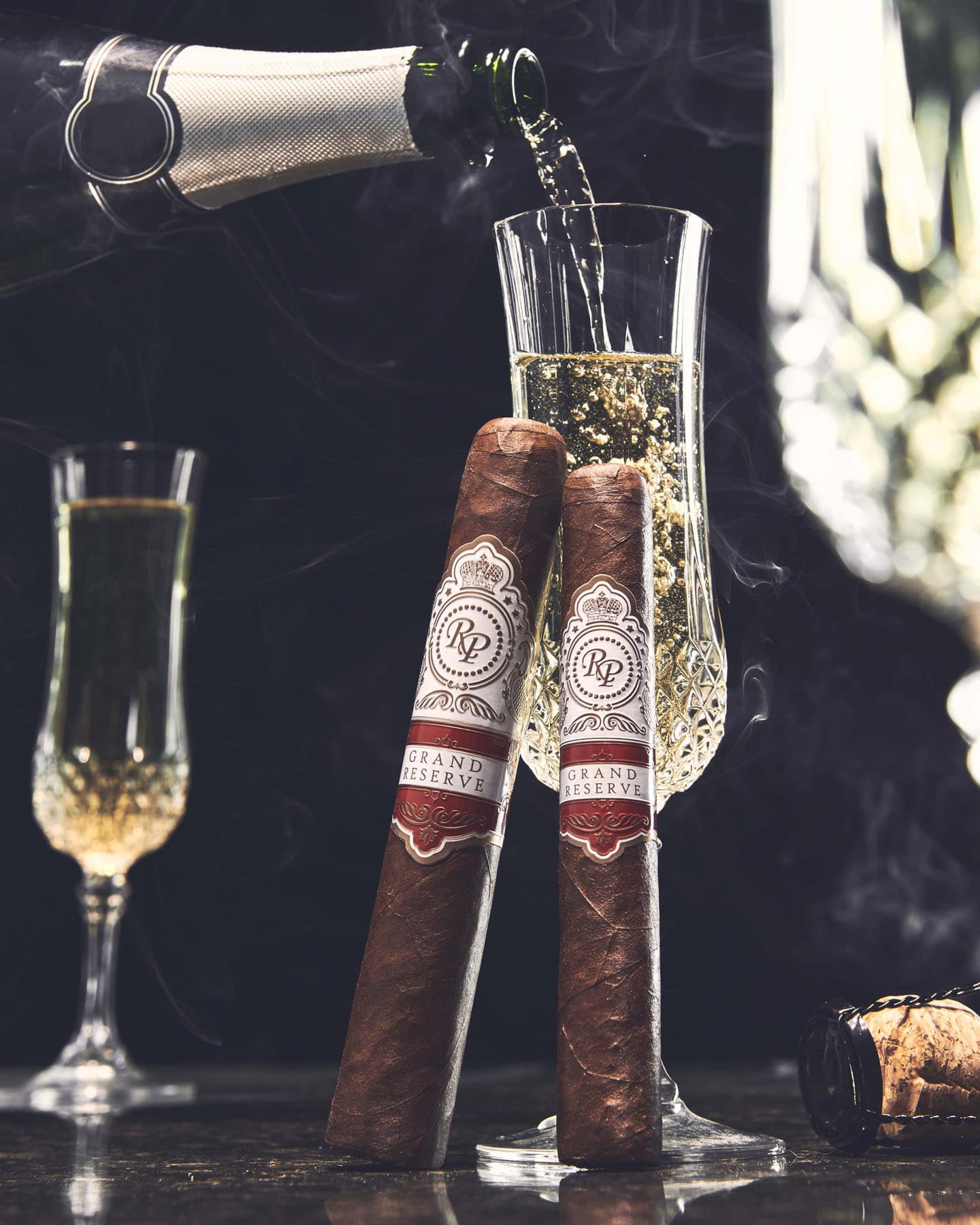
9. Grand Reserve – for someone who wants balance without reading the recipe
Grand Reserve is interesting partly because the complete blend is not emphasized as openly as in some other lines.
That makes it useful for:
blind-style tasting.
If you already have a few reference points, try Grand Reserve without obsessing over the recipe.
Score:
Strength;
Body;
Sweetness;
Spice;
Texture;
Finish.
Then compare it with Number 6 or Vintage 1990.
It is a useful way to test whether your palate works without assistance from the technical sheet.
10. Level 4 – SIXTY: San Andrés without jumping directly to medium-full
If you want to explore San Andrés but do not want to move immediately into a highly intense cigar, SIXTY is a very logical choice.
It brings:
San Andrés wrapper;
Nicaraguan core;
medium strength;
significant post-roll aging;
emphasis on integration.
Useful areas to explore:
caramel;
coffee;
espresso;
cocoa;
earth;
roasted character;
sweetness.
It is a very natural step after Number 6.
11. Number 6 vs SIXTY – when to choose each one
Number 6
Choose it if you prefer:
Corojo;
sweetness + pepper;
a more direct profile;
Honduran identity;
balanced medium strength.
SIXTY
Choose it if you prefer:
San Andrés;
coffee/cocoa/roasted direction;
Nicaragua;
aging as an important concept;
denser integration.
Both can sit around medium.
Yet they can taste completely different.
That is the lesson:
equal strength does not mean equal flavor.
12. Level 5 – when you want medium-full: A.L.R. Second Edition
After SIXTY, a logical progression is:
A.L.R. Second Edition.
There are some shared concepts:
Nicaragua;
San Andrés;
aging;
Robusto/Toro/Sixty.
But A.L.R. moves into:
Medium-Full.
It also introduces:
box-pressed construction;
undisclosed internal blend;
Aged. Limited. Rare. identity.
If SIXTY is a study of integration at medium strength, A.L.R. is a study of integration under greater intensity.
13. SIXTY vs A.L.R. – quick choice
Choose SIXTY if:
you want San Andrés;
you prefer Medium;
you want to explore aging;
you do not seek maximum intensity;
you want a controlled progression.
Choose A.L.R. if:
you want Medium-Full;
you enjoy San Andrés;
you want box-pressed construction;
aging should be central to the concept;
you already know medium cigars.
If possible:
SIXTY Robusto → A.L.R. Robusto.
That is one of the cleanest comparisons in the portfolio.
14. Disciple – when you want more wood, earth and pepper
Disciple moves in a more direct direction.
It makes sense for someone saying:
“I want something darker, earthier and spicier.”
Its broad profile is easier to express through:
wood;
earth;
pepper;
medium-full character.
Disciple can be especially interesting after Number 6 and SIXTY when you want:
more structure and intensity.
15. DBS – when you want to understand blend architecture
DBS is different.
Its value should not be reduced to:
“It is stronger.”
The important lesson is structural.
DBS means:
Double Broadleaf Selection.
Yet the wrapper is San Andrés.
Broadleaf appears deeper in the cigar.
That makes DBS ideal for someone who wants to understand:
wrapper;
binder;
filler;
Pennsylvania Broadleaf;
Nicaraguan Broadleaf;
layering.
DBS is almost a blending laboratory.
16. Number 6 vs DBS – two different lessons
Number 6
Lesson: balance.
DBS
Lesson: architecture.
Number 6:
Corojo + Honduras + sweetness/pepper.
DBS:
San Andrés + Broadleaf layering.
That is why the progression:
Number 6 → DBS
is educational even if the two cigars should not be reduced to a simple strength ladder.
It moves you from:
“What does it taste like?”
to:
“Why does it taste this way?”
17. Edge 20th Anniversary – when you want to study time
Once you understand:
wrapper;
strength;
body;
San Andrés;
Broadleaf;
vitola;
Edge 20th Anniversary adds a more advanced question:
“What can long aging do to a leaf?”
Here you have:
very mature Ecuadorian Sumatra
over:
Nicaragua + Honduras.
Do not choose it only because the tobacco is old.
Use it as an experiment.
Study:
integration;
smoothness;
complexity;
spice;
texture;
finish.
18. Who is Edge 20th Anniversary for?
It makes particular sense for:
intermediate smokers;
aficionados;
people already familiar with several Rocky Patel lines;
smokers interested in Sumatra;
smokers interested in aged tobacco;
people exploring anniversary blends.
It makes less sense as:
the first premium cigar of your life.
Not because a beginner is forbidden from smoking it.
But because much of its educational value requires reference points.
19. Conviction – when rarity becomes part of the experience
Conviction belongs to a different zone.
It makes more sense once the smoker has already explored several parts of the Rocky Patel portfolio.
The concept introduces:
small-batch production;
old tobacco reserves;
San Andrés;
box-pressed construction;
limited production;
medium-plus orientation;
coffee/dessert flavor references.
But avoid the classic mistake:
rare = automatically better.
Rarity adds context.
It does not guarantee preference.
20. Choosing by strength
A simplified map:
Mild
Vintage 1999
Medium leaning milder
Vintage 1990
Medium
Number 6SIXTYGrand ReserveWhite Label
Medium Plus
Conviction
Medium-Full
A.L.R. Second EditionDisciple
DBS and Edge 20th Anniversary are especially useful when evaluated through blend architecture and actual experience rather than forced into one overly simple label.
21. Choosing by wrapper
Connecticut
Vintage 1999White Label
Honduran Broadleaf
Vintage 1990
Honduran Corojo
Number 6
San Andrés
SIXTYA.L.R. Second EditionDiscipleDBSConviction
Ecuadorian Sumatra
Edge 20th Anniversary
This is a useful map if you are learning wrapper families.
But remember:
The wrapper is not the whole cigar.
22. Choosing by flavor profile
I want creaminess and finesse
→ Vintage 1999.
I want Broadleaf and more depth
→ Vintage 1990.
I want sweetness + pepper
→ Number 6.
I want Connecticut with more body
→ White Label.
I want coffee / caramel / roasted character
→ SIXTY.
I want medium-full, aging and San Andrés
→ A.L.R.
I want wood / earth / pepper
→ Disciple.
I want Broadleaf layering
→ DBS.
I want mature Sumatra
→ Edge 20th Anniversary.
I want rarity and old tobacco
→ Conviction.
This is far more useful than:
“Which one has the higher rating?”
23. Choosing brighter flavor families
“Bright” is not an official cigar classification.
It is simply a practical way to organize perception.
If you enjoy:
cream;
toast;
nuts;
light wood;
delicate sweetness;
start with:
Vintage 1999.
If you want a related elegant direction with more body:
White Label.
These can occupy the brighter side of your personal flavor map.
24. Choosing darker flavor families
If you tend to prefer:
cocoa;
coffee;
earth;
roasted notes;
dark sweetness;
leather;
pepper;
you can explore:
Vintage 1990 → SIXTY → DBS → A.L.R. → Disciple
depending on how much intensity you want.
They will not all taste alike.
But they sit farther toward the darker end of the aromatic spectrum than Vintage 1999.
25. Choosing by experience level
Complete beginner
Vintage 1999
Beginner with some cigar experience
Vintage 1990Number 6
Intermediate
White LabelGrand ReserveSIXTYDBS
Intermediate to advanced
A.L.R.Disciple
Aficionado / advanced exploration
Edge 20th AnniversaryConviction
But do not treat this as a mandatory ladder.
An expert may genuinely prefer Vintage 1999.
A newer smoker may prefer Number 6.
Your palate does not follow military ranks.
26. Choosing by available time
Vitola matters almost as much as blend.
Shorter session
Petite Corona / Corona / Robusto.
Medium session
Robusto / Toro.
Longer session
Toro / Churchill.
Very long session
Sixty / larger Churchill.
But vitola is not only about duration.
It also changes:
wrapper-to-filler ratio;
temperature;
smoke volume;
development.
That is why a Robusto and a Sixty from the same line should not be expected to feel identical.
27. Robusto – one of the best formats for comparison
For educational comparisons, Robusto is often ideal.
Why?
The session is not excessively long.
The ring gauge is manageable.
Many collections offer it.
That allows comparisons such as:
Vintage 1999 Robusto vs Vintage 1990 Robusto
Number 6 Robusto vs DBS Robusto
SIXTY Robusto vs A.L.R. Robusto
Those three pairs alone form an excellent Rocky Patel learning program.
28. Toro – when you want to study development
Toro gives you more time.
It is particularly useful for studying:
first-third identity;
transitions;
final concentration;
development;
finish.
Once you know that you like a blend in Robusto, Toro is a logical next step.
Not because it is automatically better.
Because it gives you more of the story.
29. Sixty – do not confuse size with strength
A Sixty can look impressive.
But:
larger ring gauge ≠ automatically greater strength.
A greater volume of filler changes the way the blend is presented.
Sometimes the Sixty may feel:
rounder,
slower,
more voluminous in smoke.
In other cases, the smoker may clearly prefer Robusto.
Vitola is preference.
Not hierarchy.
30. Three Rocky Patel flights for palate education
Flight 1 – from delicate to deeper
Vintage 1999 → Vintage 1990 → Number 6
You study:
Connecticut → Broadleaf → Corojo.
Flight 2 – San Andrés
SIXTY → A.L.R. → DBS
You study:
medium → medium-full → blend architecture.
Flight 3 – Time & Aging
Vintage 1990 → SIXTY → A.L.R. → Edge 20th Anniversary
You study:
aged wrapper → post-roll aging → aged finished cigar → mature Sumatra wrapper.
These flights should be done in separate sessions.
Not in one afternoon.
31. The complete Mister Tabaco Rocky Patel journey
If I were building a full educational sequence, it would look like this:
#1 Vintage 1999
Lesson: mild + Connecticut.
#2 Vintage 1990
Lesson: aged Broadleaf.
#3 Number 6
Lesson: Corojo + balance.
#4 White Label
Lesson: Connecticut does not automatically mean mild.
#5 SIXTY
Lesson: San Andrés + post-roll aging.
#6 DBS
Lesson: binder/filler architecture.
#7 A.L.R. Second Edition
Lesson: medium-full + aging + box press.
#8 Disciple
Lesson: wood + earth + pepper.
#9 Edge 20th Anniversary
Lesson: mature Sumatra.
#10 Conviction
Lesson: rarity + old tobacco reserves.
This is not a ranking of quality.
It is a sequence of learning topics.
32. Common mistakes when choosing Rocky Patel
“I want the strongest one”
Strength alone does not define your preferred flavor.
“The darkest cigar must be the strongest”
False.
“Connecticut is always mild”
False.
“San Andrés is always full strength”
False.
“The most expensive is the best”
False.
“Limited automatically tastes better”
False.
“More years of aging automatically means better”
False.
“Sixty is automatically the best vitola”
False.
“A 96 rating means I must like it”
False.
“If I am experienced, I should only smoke medium-full”
False.
33. Quick Rocky Patel selection table
What you want
Start with
First Rocky Patel
Vintage 1999
More depth
Vintage 1990
Balanced medium
Number 6
Connecticut with more body
White Label
Blind-style medium
Grand Reserve
San Andrés + medium
SIXTY
Medium-full + aging
A.L.R.
Wood / earth / pepper
Disciple
Broadleaf architecture
DBS
Mature Sumatra
Edge 20th Anniversary
Limited / old tobacco
Conviction
This is probably the simplest navigation tool in the entire article.
34. FAQ – how to choose a Rocky Patel
Which Rocky Patel is best for beginners?
Vintage 1999 is one of the most logical starting points.
What should come after Vintage 1999?
Vintage 1990 or Number 6.
What if I want medium strength?
Number 6 and SIXTY are excellent options with very different profiles.
What if I want Connecticut?
Vintage 1999 for greater delicacy; White Label for more structure.
What if I want San Andrés?
SIXTY, A.L.R., Disciple or DBS depending on strength and the experience you want.
Which one is best for learning about aging?
There is no single answer. Vintage 1990, SIXTY, A.L.R. and Edge 20th Anniversary illustrate different uses of time.
What if I like coffee and cocoa?
SIXTY is a useful starting point; DBS and A.L.R. can continue toward denser territory.
What if I like pepper?
Number 6 and Disciple provide two very different reference points.
What if I want something rare?
Conviction is the clearest direction among the lines discussed.
Robusto or Toro?
Robusto for a more compact comparison; Toro for more development.
Is Sixty stronger?
Not automatically.
What if I do not know my preferences?
Start with a progressive flight and record strength, body and flavor separately.
35. Mister Tabaco Decision Tree – choose in 30 seconds
Ask yourself:
1. Do you want mild?
Yes → Vintage 1999
No → continue.
2. Do you want medium?
Yes → Vintage 1990 / Number 6 / White Label / SIXTY / Grand Reserve
Then narrow it down:
Connecticut → White LabelCorojo → Number 6San Andrés → SIXTYBroadleaf → Vintage 1990
3. Do you want medium-full?
Yes → A.L.R. / Disciple
Aging + San Andrés → A.L.R.Wood + earth + pepper → Disciple
4. Want to study blend architecture?
→ DBS
5. Want mature Sumatra?
→ Edge 20th Anniversary
6. Want rarity?
→ Conviction
In less than a minute, you have narrowed the portfolio down to one or two relevant choices.
36. Building your own Rocky Patel profile
After each cigar, record:
Cigar:Vitola:Strength 1–5:Body 1–5:Flavor 1–5:Sweetness 1–5:Pepper 1–5:Creaminess 1–5:Earth 1–5:Coffee/Cocoa 1–5:Texture:Finish:Would I buy it again?
After 8–10 cigars, patterns appear.
You may discover:
“I do not actually like very strong cigars. I like medium San Andrés.”
Or:
“I prefer Connecticut, but with more body.”
Or:
“Corojo + Toro is my combination.”
That information is much more valuable than a general rating.
37. The correct choice is not permanent
Palates change.
Today:
Vintage 1999.
Six months later:
Number 6.
On a long evening:
A.L.R.
For an educational tasting:
Edge 20th Anniversary.
With coffee:
SIXTY.
You do not need to find:
“the one perfect Rocky Patel.”
It is more useful to have:
the right Rocky Patel for different kinds of experiences.
Conclusion – build a map, not a ranking
The Rocky Patel portfolio becomes much easier to understand when we stop treating it like a competition.
Vintage 1999 does not need to defeat A.L.R.
Number 6 does not need to be better than DBS.
SIXTY does not need to beat Edge 20th Anniversary.
Each cigar can occupy a different place on your map.
Vintage 1999 – delicacy.
Vintage 1990 – aged Broadleaf.
Number 6 – Corojo balance.
White Label – Connecticut with greater structure.
Grand Reserve – medium blind-style exploration.
SIXTY – San Andrés and integration.
A.L.R. – aging and medium-full.
Disciple – wood, earth, pepper.
DBS – Broadleaf architecture.
Edge 20th Anniversary – mature Sumatra.
Conviction – rarity and old tobacco.
The right choice comes down to four questions:
What strength do I enjoy?
What flavor profile am I looking for?
What do I want to learn from the cigar?
How much time do I have?
Once you can answer those clearly, the question:
“Which Rocky Patel is best?”
becomes much less important.
Because you can say something far more useful:
“I know which Rocky Patel fits me today.”
Mister Tabaco
At Mister Tabaco, you can turn theory into practical comparisons between blends, vitolas and origins.
Continue the Tobacco Guide
→ What Is Premium Tobacco and How Is It Different from Ordinary Tobacco?
→ Wrapper, Binder and Filler – the anatomy of a premium cigar
→ Maduro Explained Properly – Color, Fermentation, Flavor and the Strength Myth
→ Ligero, Seco and Volado – how leaf position changes a premium cigar
→ How Cigar Tobacco Is Grown – From Seed to Harvest
→ Tobacco Fermentation – The Process That Transforms the Leaf
→ Tobacco Aging – Why Some Cigar Leaves Are Aged for Years
→ How a Master Blender Creates a Cigar
→ Shade-Grown vs Sun-Grown: How Light Changes a Cigar Wrapper
→ Long Filler vs Short Filler – The Real Differences in Cigar Construction
→ Strength vs Body vs Flavor – How to Describe a Cigar Correctly
→ How Vitola Changes Cigar Flavor: Robusto vs Toro vs Churchill vs Sixty
→ How to Choose Your First Premium Cigar – A Complete Beginner’s Guide
→ How to Taste a Premium Cigar and Identify Aromas
→ How to Store Cigars Properly: Humidor, Temperature and Humidity
→ Common Mistakes That Can Ruin the Experience of a Premium Cigar
→ Rocky Patel Guide: Differences Between the Main Collections at Mister Tabaco
→ Rocky Patel Vintage 1990 vs Vintage 1999: Aged Broadleaf or Delicate Connecticut?
→ Rocky Patel Number 6 vs DBS: Balanced Corojo or Broadleaf Architecture?
→ Rocky Patel SIXTY vs A.L.R. Second Edition: Two San Andrés Interpretations, Two Aging Philosophies
→ How to Choose a Rocky Patel by Experience, Strength and Flavor Profile
Explore the Cigar Guide
→ How to Choose Your First Cigar
→ Which Rocky Patel Cigar Should You Choose as a Beginner?
→ How to Smoke a Cigar Properly
→ Robusto, Toro or Churchill? Cigar Size Guide
→ How to Store Cigars Properly
→ Cuba vs Nicaragua vs Dominican Republic vs Honduras
→ How to Identify Cigar Flavors
→ Cigar Pairing with Whisky, Rum, Cognac or Coffee
→ 10 Common Cigar Mistakes Beginners Make
→ How to Choose a Cigar as a Gift or for a Special Occasion
Tobacco products are intended for adults only. Smoking seriously damages your health.
[…] → How to Choose a Rocky Patel by Experience, Strength and Flavor Profile […]