
Two cigars can look remarkably similar from the outside yet be built according to very different principles. One may contain long-filler leaves extending through the body of the cigar. Another may use short filler—small pieces of tobacco also known as picadura or chop. Between them is mixed fill, often called a Cuban sandwich.
This is not merely technical vocabulary. Construction affects burn rate, temperature, ash stability, manufacturing cost and the degree of control available to the blender.
Yet the simplistic equation “long filler good, short filler bad” is also misleading. Long filler is the dominant standard in handmade premium cigars, but leaf quality, fermentation, aging, blending, rolling and storage still determine the final result.
1. What filler means
Filler is the tobacco core inside the binder and wrapper. A fine cigar may contain several filler tobaccos selected for combustion, sweetness, strength, body, spice and complexity.
The Spanish term is tripa.
Long versus short describes the physical form in which those filler tobaccos are used.
2. Long filler – whole leaves as architecture
Long filler consists of whole leaves, or long leaf sections, running through the cigar.
A buncher arranges these leaves inside the binder while controlling density and airflow.
This gives a blender fine control over Seco, Viso and Ligero and over tobaccos from different farms or regions.
Long filler does not mean one enormous leaf. A cigar can contain several distinct long leaves folded and arranged together.
3. Short filler – picadura
Short filler consists of smaller pieces of leaf.
It is common in machine-made cigars and many smaller-format tobacco products.
Because the tobacco is chopped into pieces with more exposed edges, it generally burns faster and hotter than long filler.
That difference can be immediately noticeable in the smoking rhythm.
4. Mixed fill and Cuban sandwiches
A mixed-fill cigar combines long and short filler.
The term Cuban sandwich is also used for this construction.
Mixed fill can reduce cost while preserving part of the structure of long filler.
A well-made mixed-fill cigar can be enjoyable, but it should not be confused with an all-long-filler premium construction.
5. Why long filler dominates premium cigars
Long filler provides control.
A master blender can deliberately select a Seco leaf for burn, a Viso for body, Ligero for strength, Jalapa tobacco for sweetness or Estelí tobacco for structure.
Those leaves remain identifiable components within the bunch.
This precision is one reason premium handmade cigars are typically long filler.
6. Burn rate
Short filler has more cut surfaces and tends to ignite more readily.
Typical effects:
- faster burn;
- higher temperature;
- greater risk of harshness if smoked too quickly.
Long filler generally burns more slowly and steadily.
But neither construction can compensate for poor humidity or bad rolling.
7. Draw and airflow
Long leaves can create natural longitudinal airflow pathways, but only if the bunch is constructed correctly.
Too tight means a difficult draw. Too loose means a cigar that can burn fast and hot.
Rocky Patel describes draw testing the bunch before applying the wrapper as part of its quality-control process.
Short filler may be easier to distribute mechanically, but density still affects airflow.
8. Ash structure
A well-made long-filler cigar often forms a more stable column of ash because the internal leaf structure remains relatively continuous.
Short-filler ash tends to be flakier and more fragile.
This is not a perfect quality test—soil minerals, burn and construction also matter—but the structural tendency is real.
9. Aromatic complexity
Long filler gives the blender the ability to combine recognizable tobacco components with more deliberate internal architecture.
That creates favorable conditions for complexity and transitions.
It does not guarantee them.
Short filler is physically more homogenized. It can still be flavorful, but the construction behaves differently.
10. Does long filler automatically mean handmade?
No.
Most premium handmade cigars use long filler, but handmade mixed-fill cigars also exist.
Look for the actual terminology:
- long filler;
- short filler;
- mixed fill;
- handmade;
- machine-made.
Do not judge solely from appearance.
11. Why long filler costs more
Long-filler production requires intact leaves that have survived growing, harvest, curing, fermentation, sorting, aging and handling.
They must then be prepared and arranged by skilled workers.
Short filler can make efficient use of smaller pieces and can be incorporated into more automated production.
The difference in raw-material handling and labor is reflected in price.
12. Is short filler simply “scrap”?
The term needs context.
Short filler may include pieces left from premium production, but “scrap” does not necessarily mean poor tobacco.
A fragment may come from a high-quality, properly fermented leaf that simply lacks the length or integrity needed for long filler.
Leaf quality and physical format are separate issues.
13. Cigarillos and short filler
Short filler is common in cigarillos and little cigars, where short smoking time and high-volume production make it practical.
Mister Tabaco carries numerous cigarillo and little-cigar styles from brands such as Captain Black, Handelsgold and Clubmaster.
They should not be judged as failed versions of a Rocky Patel Toro.
They are designed for a different purpose:
- shorter duration;
- different price;
- greater convenience;
- different construction.
14. Rocky Patel and premium long filler
Rocky Patel lines such as A.L.R. Second Edition, DBS, Disciple, Edge 20th Anniversary, Grand Reserve, Number 6, SIXTY, Vintage 1990, Vintage 1999 and White Label belong to the premium handmade world where filler architecture, binder, wrapper, terroir and aging all matter.
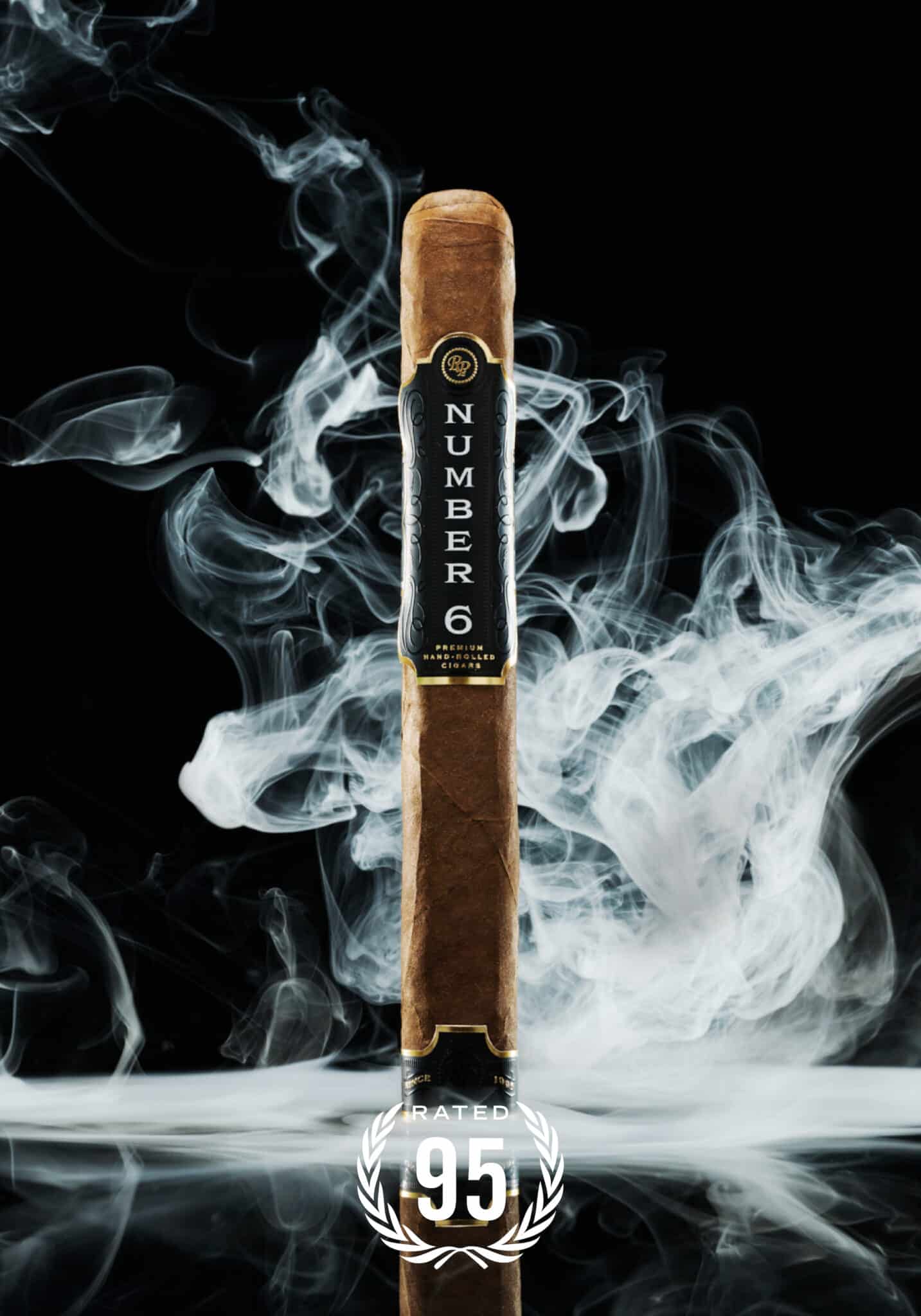
Number 6, for example, is a Honduran puro with Honduran Corojo wrapper, binder and filler.
In cigars like these, “what is inside?” becomes as important as the wrapper name.
15. Long filler and the thirds of a cigar
Premium-cigar tasting is often divided into first, second and final thirds because the experience can evolve as temperature and combustion change.
Long filler does not guarantee transitions, but its architecture gives the blender a sophisticated framework for them.
Short filler often presents a more direct and physically mixed profile, although exceptions exist.
16. Smoking pace
Short filler deserves careful pacing because it can burn quickly.
Smoke too fast and:
- temperature rises;
- bitterness can appear;
- flavor definition falls.
Long filler can also be overheated, but usually offers more thermal inertia.
A practical rule for every cigar: do not smoke it like a cigarette.
17. Common myths
“Long filler guarantees excellence.” No. Tobacco quality and construction still matter.
“Short filler means bad tobacco.” Not necessarily.
“Handmade always means long filler.” No; mixed-fill handmade cigars exist.
“Long ash proves an expensive cigar.” No.
“Short filler cannot be flavorful.” False.
“A cigarillo should be compared directly with a premium Toro.” They serve different purposes.
“Long filler always burns perfectly.” Humidity and construction can still create problems.
18. How to choose
Choose long filler if you want:
- a premium experience;
- slower smoking;
- more opportunity to study terroir and blending;
- greater potential for complexity;
- a 40–90+ minute session.
Choose short filler or cigarillos if you want:
- a shorter session;
- convenience;
- lower entry cost;
- compact formats.
The right answer depends on context.
19. Mister Tabaco experiment
Choose one cigarillo or little cigar and one Rocky Patel Robusto or Toro.
Smoke them on different days.
Compare:
- burn speed;
- smoke temperature;
- ash stability;
- body;
- flavor intensity;
- transitions;
- finish;
- total smoking time.
The useful question is not simply “which is better?” but “how does construction change the experience?”
20. FAQ
What is long filler? Whole or long tobacco leaves running through the cigar.
What is short filler? Chopped pieces of tobacco, also called picadura or chop.
What is mixed fill? A combination of long and short filler.
What is a Cuban sandwich? Another term for a mixed-fill cigar.
Is long filler better? It is the premium standard and gives greater structural control, but it does not guarantee quality by itself.
Does short filler burn faster? Generally yes.
Why? More exposed edges allow easier combustion.
Does long filler produce stronger ash? Often, because of continuous leaf structure.
Is short filler only machine-made? Mainly, but handmade mixed-fill cigars exist.
Are cigarillos always short filler? Many are, but each product should be checked individually.
Does long filler contain more nicotine? Not inherently; strength depends on tobacco types and blend.
Is filler one single leaf? No. Long filler commonly uses several leaves.
21. Conclusion – construction changes the experience
Long filler and short filler are not merely two shapes of tobacco.
They are two different ways of engineering a cigar.
Long filler gives the blender detailed control over leaf selection, primings, proportions and architecture. It supports slower burning and creates excellent conditions for premium-cigar complexity.
Short filler provides efficiency, accessibility and practical formats. It can use aromatic tobacco effectively and works very well in products designed for shorter sessions.
A Rocky Patel Toro and a Handelsgold cigarillo are not trying to deliver the same experience.
Understanding construction explains why they smoke differently.
Mister Tabaco
At Mister Tabaco, you can turn theory into practical comparisons between blends, vitolas and origins.
Continue the Tobacco Guide
→ What Is Premium Tobacco and How Is It Different from Ordinary Tobacco?
→ Wrapper, Binder and Filler – the anatomy of a premium cigar
→ Maduro Explained Properly – Color, Fermentation, Flavor and the Strength Myth
→ Ligero, Seco and Volado – how leaf position changes a premium cigar
→ How Cigar Tobacco Is Grown – From Seed to Harvest
→ Tobacco Fermentation – The Process That Transforms the Leaf
→ Tobacco Aging – Why Some Cigar Leaves Are Aged for Years
→ How a Master Blender Creates a Cigar
→ Shade-Grown vs Sun-Grown: How Light Changes a Cigar Wrapper
→ Long Filler vs Short Filler – The Real Differences in Cigar Construction
→ Strength vs Body vs Flavor – How to Describe a Cigar Correctly
→ How Vitola Changes Cigar Flavor: Robusto vs Toro vs Churchill vs Sixty
→ How to Choose Your First Premium Cigar – A Complete Beginner’s Guide
→ How to Taste a Premium Cigar and Identify Aromas
→ How to Store Cigars Properly: Humidor, Temperature and Humidity
→ Common Mistakes That Can Ruin the Experience of a Premium Cigar
→ Rocky Patel Guide: Differences Between the Main Collections at Mister Tabaco
→ Rocky Patel Vintage 1990 vs Vintage 1999: Aged Broadleaf or Delicate Connecticut?
→ Rocky Patel Number 6 vs DBS: Balanced Corojo or Broadleaf Architecture?
→ Rocky Patel SIXTY vs A.L.R. Second Edition: Two San Andrés Interpretations, Two Aging Philosophies
→ How to Choose a Rocky Patel by Experience, Strength and Flavor Profile
Explore the Cigar Guide
→ How to Choose Your First Cigar
→ Which Rocky Patel Cigar Should You Choose as a Beginner?
→ How to Smoke a Cigar Properly
→ Robusto, Toro or Churchill? Cigar Size Guide
→ How to Store Cigars Properly
→ Cuba vs Nicaragua vs Dominican Republic vs Honduras
→ How to Identify Cigar Flavors
→ Cigar Pairing with Whisky, Rum, Cognac or Coffee
→ 10 Common Cigar Mistakes Beginners Make
→ How to Choose a Cigar as a Gift or for a Special Occasion
Tobacco products are intended for adults only. Smoking seriously damages your health.