
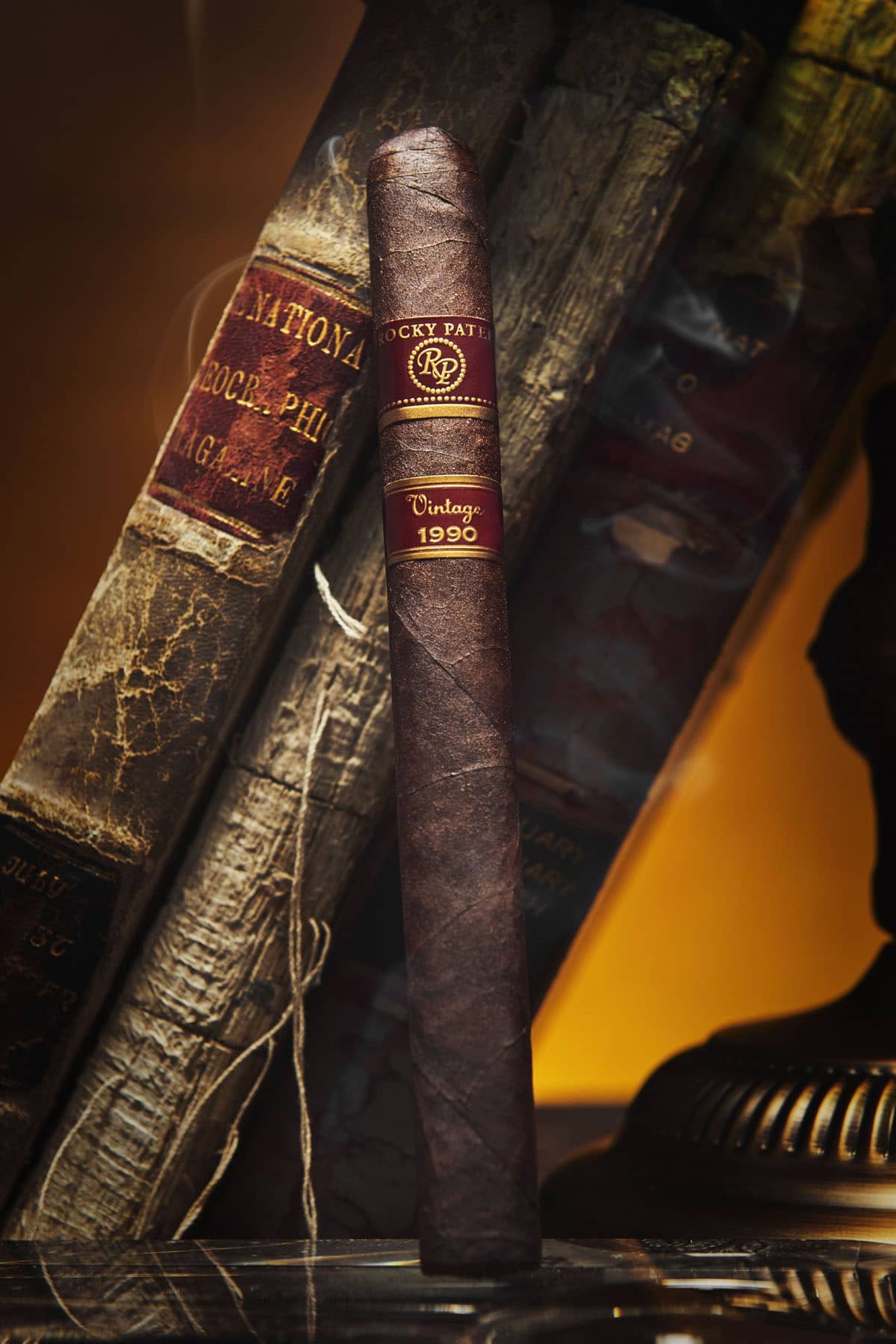
At some point, cigar enthusiasts stop seeing wrappers merely as “light” and “dark” and begin reading names such as Corojo, Criollo, Habano, Connecticut, Sumatra, Broadleaf and San Andrés.
The important complication is that these terms do not all describe the same type of information. Some refer mainly to seed families or genetic heritage, some are inseparable from place, and some may be used as wrapper, binder or filler. The same genetic family can also express itself differently when grown in another terroir.
This is therefore not a flavor dictionary. It is a guide to reading a blend correctly.
1. What does “wrapper family” actually mean?
“Ecuadorian Habano” already gives us two pieces of information: tobacco family and growing country. “Mexican San Andrés” points strongly toward the San Andrés region and the tobacco cultivated there. “Connecticut Shade” is more specific still: true Connecticut Shade means Connecticut-seed tobacco grown under shade in the Connecticut River Valley.
Always ask: genetics, country, light exposure, priming, fermentation, aging and role in the blend.
2. Corojo – historic wrapper heritage
Corojo is historically linked to Cuba and to wrapper production. It became famous for aroma, spice and structure, but disease susceptibility led to modern hybrids and selections such as Corojo ’99.
Modern “Corojo” therefore should not be assumed to be identical to the historic Cuban plant.
Possible tendencies include pepper, wood, spice, earth and occasional reddish sweetness. Corojo does not automatically mean high strength.
3. Criollo – a fundamental and versatile family
Criollo is linked to Cuban-seed tobacco and many modern selections, including Criollo ’98. Rocky Patel even lists Habano and Criollo as seed varieties in its nursery, showing that these terms matter from the agricultural stage onward.
Criollo may serve as wrapper, binder or filler. It can contribute spice, wood, earth, nuts and subtle sweetness, but terroir matters enormously.
4. Corojo vs Criollo
Both have Cuban genetic heritage and both are widely cultivated outside Cuba. Corojo is more strongly associated historically with wrapper; Criollo is exceptionally versatile across cigar components.
Do not reduce the comparison to “Corojo spicy, Criollo sweet.” Read family + country + role + stated strength.
5. Habano – common and often misunderstood
Habano refers to Havana-associated tobacco genetics cultivated in numerous countries. “Ecuadorian Habano” therefore means Habano-family tobacco grown in Ecuador.
Rocky Patel Gold Label is a useful example: Ecuadorian Habano wrapper, Connecticut Shade and Connecticut Broadleaf binders, and aged Nicaraguan filler.
Habano can suggest spice, wood, leather, sweetness and aromatic body, but it does not automatically mean full strength.
6. Connecticut – genetics, region and style in one word
Connecticut is particularly confusing. True Connecticut Shade is Connecticut-seed tobacco grown under shade in the Connecticut River Valley. Connecticut-seed is also grown in Ecuador and elsewhere.
Do not confuse:
- Connecticut Shade;
- Ecuadorian Connecticut;
- Connecticut Broadleaf.
They are materially different tobaccos.
7. Connecticut Shade – finesse and subtlety
Traditional Connecticut Shade is prized for thin, supple leaves with fine veins. Typical associations include cream, bread, nuts, cedar and gentle spice.
Delicacy is not the opposite of complexity. A moderate-strength cigar can be aromatically sophisticated.
8. Connecticut Broadleaf – a different animal
Broadleaf is grown in open sunlight, principally in the Connecticut River Valley. The plant produces very wide leaves that cure dark and are prized for many Maduro wrappers. Traditional Broadleaf is stalk-cut.
Common associations include cocoa, coffee, earth, molasses, dried fruit and dense sweetness.
Broadleaf is not synonymous with Maduro, and Maduro is not synonymous with Broadleaf.
9. Rocky Patel and Broadleaf
DBS means Double Broadleaf Selection, yet its wrapper is Mexican San Andrés. Rocky Patel lists Nicaraguan and Pennsylvania Broadleaf in the binder and Honduran/Nicaraguan Broadleaf in the filler.
The brand name alone therefore does not tell you the wrapper.
10. Sumatra – from Indonesia to Ecuador
Sumatra has Indonesian roots, but Ecuadorian Sumatra has become highly important in premium cigars. Rocky Patel uses it in The Edge Sumatra, Sun Grown, The Edge 20th Anniversary and Decade.
It can contribute sweetness, spice, wood, nuts and coffee. Aging changes the expression dramatically; The Edge 20th Anniversary uses an Ecuadorian Sumatra wrapper aged more than ten years.
11. San Andrés – Mexico’s major wrapper identity
San Andrés is one of the most recognizable modern dark-wrapper origins. Mexican San Andrés tobacco is valued for structure, combustion and its ability to withstand significant fermentation.
Common associations include cocoa, coffee, earth, spice, molasses-like sweetness and dried fruit.
San Andrés and Maduro are not synonyms.
12. Rocky Patel DBS – San Andrés outside, Broadleaf inside
DBS is almost a textbook example for this article. Mexican San Andrés forms the wrapper while Broadleaf plays major internal roles.
It shows why family and position in the cigar must always be read together.
13. Rocky Patel Vintage 2006 San Andreas
Rocky Patel states that Vintage 2006 San Andreas uses an 11-year-old Mexican San Andrés wrapper, Nicaraguan filler and Connecticut Broadleaf binder.
This shows why “San Andrés” cannot be reduced to “dark and strong”: aging and internal composition matter.
14. The seven families at a glance
Corojo: historic wrapper heritage; aromatic spice and structure. Criollo: exceptionally versatile; earth, spice, nuts. Connecticut Shade: fine and supple; cream, bread, cedar. Habano: Havana-seed family grown internationally; spice, wood and sweetness. Sumatra: major Ecuadorian wrapper family; sweetness and spice. Broadleaf: wide, robust, sun-grown leaf; often used in dark, dense blends. San Andrés: Mexican identity; cocoa, coffee, earth and dark sweetness.
These are tendencies, never rigid flavor recipes.
15. Which matters more: seed or terroir?
Neither works alone. Seed provides genetic potential; terroir determines the environment in which that potential develops.
Ecuadorian Habano is not Nicaraguan Habano. Ecuadorian Connecticut is not Connecticut Shade. Ecuadorian Sumatra is not automatically identical to Indonesian-grown Sumatra.
Fermentation and aging add further layers.
16. Choosing by profile
For finesse and creaminess, explore Connecticut Shade or Ecuadorian Connecticut.
For more spice and aromatic presence, explore Habano, Corojo or Sumatra.
For cocoa, coffee, earth and dense sweetness, Broadleaf and San Andrés are excellent directions.
Compare cigars in similar vitolas whenever possible.
17. Mister Tabaco tasting experiment
Taste three styles: A. Ecuadorian Sumatra – e.g. Rocky Patel The Edge 20th Anniversary, subject to availability. B. Mexican San Andrés – Rocky Patel DBS. C. Broadleaf – a cigar where Broadleaf plays a clearly identified role.
Record cold aroma, sweetness, pepper, cocoa/coffee, earth, creaminess, body, strength and finish.
Do not ask only which cigar is “better.” Ask how each family behaves in a different role.
18. Common mistakes
Habano does not automatically mean Cuba. Connecticut does not always mean U.S.-grown. Broadleaf and Maduro are not synonyms. San Andrés and Maduro are not synonyms. Corojo is not automatically very strong. Criollo is not one identical cultivar everywhere. Sumatra does not always mean Indonesian-grown tobacco.
19. FAQ
What is Corojo? A historic tobacco family strongly associated with Cuban wrapper heritage.
What is Criollo? A broad Cuban-seed family used in many modern selections.
What is Connecticut Shade? Connecticut-seed tobacco grown under shade in the Connecticut River Valley.
What is Ecuadorian Connecticut? Connecticut-seed grown in Ecuador.
What is Connecticut Broadleaf? A distinct, wide-leaf, open-sun tobacco from the Connecticut River Valley, often used for dark wrappers.
What is Habano? Havana-associated tobacco genetics cultivated internationally.
What is Ecuadorian Sumatra? Sumatra-family tobacco grown in Ecuador.
What is Mexican San Andrés? Tobacco associated with Mexico’s San Andrés region, widely prized for wrapper.
Is San Andrés always Maduro? No.
Is Broadleaf always Maduro? No.
Which wrapper is strongest? There is no universal answer; filler heavily influences total cigar strength.
Which is best for beginners? Overall blend balance matters more than wrapper family alone.
20. Conclusion – the wrapper name starts a question
A beginner reads “Habano.” An informed smoker asks: Habano grown where? Shade or sun? Which priming? How much aging? Over what filler? In which vitola?
That is the real value of these names.
Do not memorize a rigid list of flavors. Learn to read the architecture.
Mister Tabaco
At Mister Tabaco, you can turn theory into practical comparisons between blends, vitolas and origins.
Continue the Tobacco Guide
→ What Is Premium Tobacco and How Is It Different from Ordinary Tobacco?
→ Wrapper, Binder and Filler – the anatomy of a premium cigar
→ Maduro Explained Properly – Color, Fermentation, Flavor and the Strength Myth
→ Ligero, Seco and Volado – how leaf position changes a premium cigar
→ How Cigar Tobacco Is Grown – From Seed to Harvest
→ Tobacco Fermentation – The Process That Transforms the Leaf
→ Tobacco Aging – Why Some Cigar Leaves Are Aged for Years
→ How a Master Blender Creates a Cigar
→ Shade-Grown vs Sun-Grown: How Light Changes a Cigar Wrapper
→ Long Filler vs Short Filler – The Real Differences in Cigar Construction
→ Strength vs Body vs Flavor – How to Describe a Cigar Correctly
→ How Vitola Changes Cigar Flavor: Robusto vs Toro vs Churchill vs Sixty
→ How to Choose Your First Premium Cigar – A Complete Beginner’s Guide
→ How to Taste a Premium Cigar and Identify Aromas
→ How to Store Cigars Properly: Humidor, Temperature and Humidity
→ Common Mistakes That Can Ruin the Experience of a Premium Cigar
→ Rocky Patel Guide: Differences Between the Main Collections at Mister Tabaco
→ Rocky Patel Vintage 1990 vs Vintage 1999: Aged Broadleaf or Delicate Connecticut?
→ Rocky Patel Number 6 vs DBS: Balanced Corojo or Broadleaf Architecture?
→ Rocky Patel SIXTY vs A.L.R. Second Edition: Two San Andrés Interpretations, Two Aging Philosophies
→ How to Choose a Rocky Patel by Experience, Strength and Flavor Profile
Explore the Cigar Guide
→ How to Choose Your First Cigar
→ Which Rocky Patel Cigar Should You Choose as a Beginner?
→ How to Smoke a Cigar Properly
→ Robusto, Toro or Churchill? Cigar Size Guide
→ How to Store Cigars Properly
→ Cuba vs Nicaragua vs Dominican Republic vs Honduras
→ How to Identify Cigar Flavors
→ Cigar Pairing with Whisky, Rum, Cognac or Coffee
→ 10 Common Cigar Mistakes Beginners Make
→ How to Choose a Cigar as a Gift or for a Special Occasion
Tobacco products are intended for adults only. Smoking seriously damages your health.