Posted on — Leave a comment

Rare Leaf Corojo & Maduro: When the Difference Isn’t the Recipe, It’s the Tobacco Selection

Aganorsa Leaf Rare Leaf Corojo and Maduro

When the difference begins on the farm

The word rare is dangerously easy to use in the premium cigar industry.

Rare tobacco. Rare wrapper. Limited production.

With Rare Leaf, however, Aganorsa makes a specific agricultural claim: the tobacco is selected from special lots from its best farms, with the blend being dominated by Cuban-seed Criollo 98.

That makes Rare Leaf fundamentally a story about:

leaf selection.

Two expressions

Rare Leaf comes in Corojo and Maduro expressions.

The official Corojo blend is:

Wrapper: Nicaragua CaféBinder: Aganorsa Corojo 99, NicaraguaFiller: Aganorsa, Nicaragua.

The Maduro changes the architecture:

Wrapper: Mexican San Andrés MaduroBinder: Aganorsa, NicaraguaFiller: Aganorsa, Nicaragua.

This creates an exceptional comparative tasting opportunity.

Same premium family.

Same producer.

Same special-lot philosophy.

Very different wrapper strategies.

Criollo 98 matters

Aganorsa identifies Cuban-seed Corojo 99 and Criollo 98 among the important genetics behind its signature flavor.

Rare Leaf is especially interesting because Criollo 98 is dominant.

For tasting purposes, look for the interaction between:

earth,

spice,

natural sweetness,

cedar,

body,

and finish.

These are sensory directions, not mandatory flavor claims.

Corojo versus Maduro

Rare Leaf Corojo should not simply be described as the “lighter” version.

Nor should Maduro automatically be called “stronger.”

The more useful distinction is:

Corojo

brighter spice, earth, cedar and natural sweetness.

Maduro

darker roast, cocoa/coffee territory, earth and black-pepper possibilities.

Maduro affects flavor architecture.

It does not automatically determine nicotine strength.

Vitolas

Rare Leaf Corojo currently comes in:

Robusto – 5 × 52Toro – 6 × 54Lonsdale – 6 × 44.

Rare Leaf Maduro comes in:

Robusto – 5 × 52Toro – 6 × 54Torpedo Box Press – 6 × 52.

For a direct Corojo/Maduro comparison, Robusto versus Robusto or Toro versus Toro is ideal.

For wrapper-focused study, the Corojo Lonsdale is particularly interesting.

For geometry, the Maduro Torpedo Box Press offers the most unusual format.

Rare Leaf versus Signature

This comparison teaches an important lesson about rarity.

Signature explicitly contains scarce medio tiempo tobacco. Aganorsa says medio tiempo represents only a tiny fraction of its overall tobacco production.

Rare Leaf has a different proposition:

special-lot selection.

So one can think of:

Signature → botanical scarcity

versus:

Rare Leaf → agricultural lot selection.

Neither concept automatically makes one cigar better than the other.

They represent different ways of creating a premium product.

Rare Leaf versus Aniversario

Aganorsa explicitly positions Aniversario as its ultra-premium line.

Rare Leaf tells a different story.

Aniversario emphasizes refinement, specific formats and special-occasion positioning.

Rare Leaf emphasizes:

the tobacco lot itself.

This is why Rare Leaf is particularly compelling to experienced smokers interested in agriculture and blending rather than luxury presentation alone.

Why Rare Leaf is not a conventional limited edition

Aganorsa says tobacco this scarce would normally create a limited release. Instead, Rare Leaf is supplied year-round through its Aganorsa Select Retail Partners.

Therefore:

rare does not necessarily mean limited edition.

That distinction is worth preserving in product descriptions.

Mister Tabaco tasting

Start with the Corojo Robusto.

Use water.

On another day, smoke the Maduro Robusto under similar conditions.

Score:

ConstructionDrawStrengthBodySweetnessEarthPepperWood/CedarCocoa/RoastComplexityTransitionsBalanceFinishDistinctivenessValue

Then ask the question that matters most:

Which one would I buy again?

Technical sophistication means little if the smoker does not enjoy the cigar.

Price positioning

The supplied Mister Tabaco price is:

MDL 514.

Within the prices you supplied, that places Rare Leaf remarkably close to several JFR and New Cuba products.

That creates a strong upgrade proposition.

The customer is not simply paying for greater strength.

They are moving into:

special-lot tobacco selection.

That is the sales story.

Verdict

Rare Leaf may be one of the best cigars with which to explain what the word Aganorsa actually means.

The company’s advantage begins with tobacco agriculture.

Rare Leaf takes that advantage and narrows the selection further: special lots from selected farms, built around a Criollo 98-dominant concept.

The Corojo expression combines Nicaragua Café with Corojo 99 and an Aganorsa Nicaraguan core.

The Maduro introduces Mexican San Andrés over an Aganorsa Nicaraguan core.

Two wrappers.

Two personalities.

One agricultural philosophy.

And that is ultimately what Rare Leaf should communicate:

before there can be a great cigar, there has to be great leaf.

Mister Tabaco

At Mister Tabaco you’ll find the Aganorsa Leaf range: from flagship lines like Aniversario and Supreme Leaf, to the JFR collections built on the “Just For Retailers” philosophy, to the Guardian of the Farm and Rare Leaf editions. Explore our dedicated series on the brand to compare blends and choose the right cigar for you.

Continue the Aganorsa Series

→ Aganorsa Leaf – From Eduardo Fernández’s Vision to One of Nicaragua’s Most Distinctive Premium Tobacco Producers

→ Aganorsa Terroir: Jalapa vs Estelí vs Condega – How Soil, Climate and Leaf Position Shape Tobacco

→ Corojo 99 vs Criollo 98 vs Corojo 2012 – Understanding the Genetics Behind Aganorsa Leaf

→ Corojo vs Maduro vs Connecticut – How the Wrapper Changes an Aganorsa Cigar

→ Shade-Grown vs Sun-Grown – How Light and Leaf Position Shape a Premium Cigar

→ Signature Corojo vs Signature Maduro – One Premium Philosophy, Two Interpretations of Aganorsa Leaf

→ Supreme Leaf – Why This Line Became One of Aganorsa’s Most Recognizable Corojo Expressions

→ Aniversario Series – From Casa Fernández Miami Aniversario to One of Aganorsa Leaf’s Most Refined Premium Families

→ Guardian of the Farm Apollo Selección de Warped – The Dogs, the Corojo 99 and the Collaboration Behind a Top-10 Cigar

→ Guardian of the Farm NightWatch – How Aganorsa Turned Corojo 99 Into a Proprietary Maduro Wrapper

→ JFR 20th Anniversary – 20 Years of “Just For Retailers,” Mexican San Andrés and Aganorsa Value Philosophy

→ JFR Connecticut – Why a Light Wrapper Can Still Hide a Serious Aganorsa Core

→ JFR Corojo – The Benchmark of the JFR Family and One of the Most Direct Expressions of Aganorsa Style

→ JFR Maduro – Mexican San Andrés Maduro Over an Aganorsa Nicaraguan Core

→ JFR Lunatic Habano – When “Just For Retailers” Becomes Deliberately Excessive

→ JFR Lunatic Loco – Shade-Grown Corojo Maduro Meets Giant Perfecto Geometry

→ JFR Lunatic Maduro – San Andrés Maduro, Aganorsa Nicaragua and the Dark Side of Lunatic

→ JFR Lunatic Torch – The Cigar That Literally Shows You What the Wrapper Does

→ New Cuba Superior – How Aganorsa Turned a Budget Concept Into an Affordable Long-Filler Premium Cigar

→ New Cuba Maduro – How Much Aganorsa Character Can You Put Into a Value Cigar?

→ Rare Leaf Corojo & Maduro: When the Difference Isn’t the Recipe, It’s the Tobacco Selection

Tobacco products are intended for adults only. Smoking seriously damages your health.

Posted on — Leave a comment

New Cuba Maduro – How Much Aganorsa Character Can You Put Into a Value Cigar?

Aganorsa New Cuba Maduro

New Cuba Maduro occupies a very different position from Rare Leaf, Aniversario or the more experimental JFR lines.

Its mission is simple:

Nicaraguan character at value-oriented pricing.

Current specialist retailers describe it as a Nicaraguan cigar using a Nicaraguan Maduro wrapper, Nicaraguan binder and Nicaraguan filler, with a Cuban-sandwich-style internal construction.

The Cuban-sandwich concept

A Cuban sandwich generally combines longer tobacco with shorter filler pieces rather than using an exclusively traditional long-filler bunch.

That distinction matters.

New Cuba Maduro should therefore not be presented as the darker equivalent of New Cuba Superior.

Superior represents the long-filler premium evolution.

Maduro represents:

the darker value expression.

And mixed filler does not automatically mean poor tobacco. It means a different construction strategy.

The Maduro profile

Retail descriptions repeatedly identify flavors in the family of:

cocoa, coffee, earth and pepper, with some also noting cream, cedar or leather.

The important educational point is that Maduro does not automatically mean maximum nicotine strength.

Different retailers classify New Cuba Maduro anywhere around medium through fuller territory, illustrating how subjective strength classifications can be.

Vitolas

The current retail market includes a broad range:

Robusto – 5 × 50Toro – 6 × 50Torpedo – 6 × 52Titan – 6 × 60Churchill – 7 × 48Presidente – 7½ × 50.

That makes New Cuba Maduro surprisingly useful for vitola education.

Start with Robusto.

Compare Robusto 5×50 with Toro 6×50 to isolate the effect of length.

Compare Robusto with Titan 6×60 to explore wrapper-to-filler ratio.

Try Torpedo to study how head geometry and cut can affect draw and smoke concentration.

New Cuba Maduro vs New Cuba Superior

This comparison is fundamental.

Superior: Ecuador Connecticut, Aganorsa Nicaraguan core, all-long-filler construction, approachable profile.

Maduro: Nicaraguan Maduro, Nicaraguan binder/filler, Cuban-sandwich construction, darker flavor register.

“Superior” therefore refers to a structural premium upgrade.

It does not mean every smoker must prefer it.

A Maduro lover may still prefer New Cuba Maduro.

Everyday-cigar philosophy

New Cuba Maduro is repeatedly marketed as an affordable everyday cigar.

That role matters.

A good humidor does not need to contain only special-occasion cigars.

There is room for:

rare cigars,

celebration cigars,

educational cigars,

and:

daily cigars.

New Cuba Maduro belongs naturally in the last category.

Pairing

Coffee is the obvious starting point because coffee and roasted notes already appear repeatedly in the cigar’s reported profile.

Espresso or medium-dark roast can reinforce cocoa and roast.

Cappuccino may soften pepper and highlight creamier impressions.

Bourbon can connect oak and vanilla with cocoa and earth.

A restrained aged rum can also work.

For the first analytical tasting, however:

water first.

Mister Tabaco pricing problem

The supplied Mister Tabaco price is:

MDL 527.

JFR Maduro is listed at:

MDL 539.

Only:

MDL 12 difference.

That is strategically important.

Internationally, New Cuba Maduro is fundamentally positioned as a value/bundle cigar.

At Mister Tabaco, however, its local shelf price sits almost directly beside JFR Maduro.

Therefore I would not artificially reposition New Cuba Maduro as a luxury cigar simply to justify the price.

The better strategy is transparency:

“This is Aganorsa’s value-oriented Maduro concept, using Cuban-sandwich construction and Nicaraguan tobacco.”

That is a stronger story because it is true.

Who should smoke it?

New Cuba Maduro makes sense for Maduro fans, coffee-and-cocoa profile lovers, Nicaraguan tobacco smokers, customers interested in understanding Cuban-sandwich construction, and aficionados looking for a cigar to compare directly against long-filler alternatives.

Common mistakes

Maduro does not automatically mean very strong.

Mixed filler does not mean bad tobacco.

Bundle does not mean machine-made; New Cuba Maduro is marketed as handmade in Nicaragua.

The wrapper is Nicaraguan Maduro, not Ecuadorian Maduro.

And New Cuba Maduro should not be described as all-long-filler like Superior; current descriptions explicitly identify the Cuban-sandwich construction.

Verdict

New Cuba Maduro is not trying to win a rarity contest.

It is trying to answer:

How much Nicaraguan Maduro character can Aganorsa deliver in a value-oriented cigar?

Its architecture is straightforward:

Nicaraguan Maduro wrapper

Nicaraguan binder

Nicaraguan filler

Cuban-sandwich construction.

And its flavor language centers on:

cocoa + coffee + earth + pepper.

That makes it useful not only as an everyday cigar, but as an educational one.

Smoke it beside New Cuba Superior.

Then beside JFR Maduro.

The lesson becomes much bigger than which cigar tastes better.

You begin to understand:

what construction, wrapper processing and positioning actually do to a cigar.

Mister Tabaco

At Mister Tabaco you’ll find the Aganorsa Leaf range: from flagship lines like Aniversario and Supreme Leaf, to the JFR collections built on the “Just For Retailers” philosophy, to the Guardian of the Farm and Rare Leaf editions. Explore our dedicated series on the brand to compare blends and choose the right cigar for you.

Continue the Aganorsa Series

→ Aganorsa Leaf – From Eduardo Fernández’s Vision to One of Nicaragua’s Most Distinctive Premium Tobacco Producers

→ Aganorsa Terroir: Jalapa vs Estelí vs Condega – How Soil, Climate and Leaf Position Shape Tobacco

→ Corojo 99 vs Criollo 98 vs Corojo 2012 – Understanding the Genetics Behind Aganorsa Leaf

→ Corojo vs Maduro vs Connecticut – How the Wrapper Changes an Aganorsa Cigar

→ Shade-Grown vs Sun-Grown – How Light and Leaf Position Shape a Premium Cigar

→ Signature Corojo vs Signature Maduro – One Premium Philosophy, Two Interpretations of Aganorsa Leaf

→ Supreme Leaf – Why This Line Became One of Aganorsa’s Most Recognizable Corojo Expressions

→ Aniversario Series – From Casa Fernández Miami Aniversario to One of Aganorsa Leaf’s Most Refined Premium Families

→ Guardian of the Farm Apollo Selección de Warped – The Dogs, the Corojo 99 and the Collaboration Behind a Top-10 Cigar

→ Guardian of the Farm NightWatch – How Aganorsa Turned Corojo 99 Into a Proprietary Maduro Wrapper

→ JFR 20th Anniversary – 20 Years of “Just For Retailers,” Mexican San Andrés and Aganorsa Value Philosophy

→ JFR Connecticut – Why a Light Wrapper Can Still Hide a Serious Aganorsa Core

→ JFR Corojo – The Benchmark of the JFR Family and One of the Most Direct Expressions of Aganorsa Style

→ JFR Maduro – Mexican San Andrés Maduro Over an Aganorsa Nicaraguan Core

→ JFR Lunatic Habano – When “Just For Retailers” Becomes Deliberately Excessive

→ JFR Lunatic Loco – Shade-Grown Corojo Maduro Meets Giant Perfecto Geometry

→ JFR Lunatic Maduro – San Andrés Maduro, Aganorsa Nicaragua and the Dark Side of Lunatic

→ JFR Lunatic Torch – The Cigar That Literally Shows You What the Wrapper Does

→ New Cuba Superior – How Aganorsa Turned a Budget Concept Into an Affordable Long-Filler Premium Cigar

→ New Cuba Maduro – How Much Aganorsa Character Can You Put Into a Value Cigar?

→ Rare Leaf Corojo & Maduro: When the Difference Isn’t the Recipe, It’s the Tobacco Selection

Tobacco products are intended for adults only. Smoking seriously damages your health.

Posted on — Leave a comment

New Cuba Superior – How Aganorsa Turned a Budget Concept Into an Affordable Long-Filler Premium Cigar

Aganorsa New Cuba Superior

1. How do you upgrade a value brand without destroying its purpose?

That is the central question behind New Cuba Superior.

The original New Cuba occupies Aganorsa’s budget-oriented space. In 2023, Aganorsa introduced New Cuba Superior as a long-filler premium evolution of that concept while deliberately keeping the cigar affordable.

So “Superior” is not simply a new band or box.

The architecture changed.

The philosophy did not.

2. Why Aganorsa created it

At launch, Terence Reilly explained that much of Aganorsa’s portfolio could be too intense for beginners or for smokers who simply preferred something milder. New Cuba Superior was designed specifically to fill that gap.

That means Superior should not be positioned as:

a stronger New Cuba.

It is better understood as:

a more premium New Cuba built for a more approachable palate.

3. Official blend

Aganorsa currently lists:

Wrapper: Ecuador ConnecticutBinder: Aganorsa, NicaraguaFiller: Aganorsa, Nicaragua.

The cigar therefore combines:

Ecuadorian wrapper

with:

Nicaraguan Aganorsa core.

It is not a Nicaraguan puro.

4. Long filler is the defining upgrade

Aganorsa explicitly states that New Cuba Superior is made entirely from long-filler leaf.

Cigar Aficionado contrasted that with the original New Cuba, describing the older line as mixed filler and Superior as the premium long-filler evolution.

That is the technical meaning of the upgrade.

Long filler gives the blender greater control over leaf placement, proportions, combustion and development.

5. Affordable does not mean cheap construction

At launch, U.S. suggested retail pricing for the initial sizes was reported around $6.50–$7.50 per cigar.

The key point is not the historical dollar figure.

It is the strategic intent:

premium long-filler construction at value-oriented pricing.

That makes New Cuba Superior unusual within the broader Aganorsa portfolio.

6. Why Ecuador Connecticut?

Aganorsa currently describes the cigar as light, sweet and approachable for new or casual smokers.

Ecuador Connecticut supports that goal.

Useful tasting directions can include:

cream,

toast,

nuts,

cedar,

light sweetness,

soft spice.

Those are sensory families, not guaranteed notes.

7. Mild does not mean flavorless

The wrapper may make the cigar more approachable, but underneath it remains an Aganorsa Nicaraguan binder and filler core.

That means the objective is not to remove personality.

It is to create:

flavor with less aggression.

For a beginner, that distinction matters enormously.

8. The Nicaraguan tobacco has real terroir behind it

Launch coverage reported Cuban-seed tobacco grown by Aganorsa in Condega, Estelí and Jalapa underneath the Ecuador Connecticut wrapper.

So beneath the easy-going exterior is a multi-region Nicaraguan core.

That makes Superior considerably more interesting than the phrase “mild Connecticut cigar” might suggest.

9. Current sizes

Aganorsa currently lists:

Corona – 5 × 44Robusto – 5 × 50Toro – 6 × 50Titan – 6 × 60.

All are sold in boxes of 25.

The original 2023 launch reporting listed Corona, Robusto and Toro; Titan appears on the current official page as a later extension.

10. Corona – wrapper study

At 44 ring gauge, the Corona provides the highest relative wrapper influence in the current family.

For experienced smokers wanting to study the Ecuador Connecticut contribution, it may be the most interesting size.

11. Robusto – best beginner recommendation

The 5 × 50 Robusto offers:

familiar geometry,

manageable duration,

balanced wrapper/filler ratio,

and an accessible mouthfeel.

For a first premium cigar, it is a very logical format.

12. Toro – same ring gauge, more development

Robusto is 5 × 50.

Toro is 6 × 50.

That gives you a clean experiment:

same diameter,

greater length.

You can study development and duration without materially changing the wrapper/filler ratio.

13. Titan – the filler-driven version

At 6 × 60, Titan moves New Cuba Superior into large-ring territory.

More filler can increase:

smoke volume,

body,

thermal mass,

and the relative importance of the internal blend.

It does not automatically mean greater nicotine strength.

14. Superior vs original New Cuba

This is the essential comparison.

New Cuba: budget-oriented mixed-filler concept.

New Cuba Superior: long-filler premium construction, Ecuador Connecticut wrapper and boxed presentation.

So Superior is not merely a packaging upgrade.

It is a genuine construction upgrade.

15. Superior vs JFR Connecticut

Both use Ecuador Connecticut over Aganorsa Nicaraguan binder and filler according to Aganorsa’s current portfolio information.

Yet they have different missions.

New Cuba Superior was explicitly designed for beginners and smokers wanting a milder profile.

JFR Connecticut retains more of the JFR identity.

This is an excellent demonstration that similar blend summaries do not create identical cigars.

16. Superior vs Aniversario Connecticut

The broader Aganorsa portfolio also includes Aniversario Connecticut.

That creates an excellent educational ladder:

New Cuba Superior – accessible premium

JFR Connecticut – value-oriented expression

La Validación Connecticut – core premium expression

Aniversario Connecticut – higher premium positioning.

Not bad-to-good.

Rather:

different degrees of selection, construction and refinement.

17. What should you taste?

Track:

CreaminessToastNuttinessCedarNatural SweetnessSoft PepperEarthBodyBalanceFinish.

Then ask:

Is it mild without becoming boring?

That is the real test of New Cuba Superior.

18. Who should try it?

Especially:

first-time premium cigar smokers,

Connecticut fans,

smokers who find other Aganorsa blends too intense,

casual aficionados,

customers who want long-filler construction without luxury pricing,

and experienced smokers looking for a relaxed morning or coffee cigar.

19. Mister Tabaco positioning

The supplied price is:

MDL 356.

That places it at the same supplied price as JFR 20th Anniversary and only MDL 58 above JFR Corojo.

This is useful because the recommendation can be based on palate rather than price:

Superior: lighter Connecticut expression.

JFR Corojo: more direct Aganorsa Corojo identity.

20th Anniversary: darker San Andrés direction.

Same general price territory.

Very different experiences.

20. Common mistakes

Superior is not simply New Cuba in a nicer box; the move to all-long-filler construction is a real structural upgrade.

Connecticut does not mean flavorless.

Mild does not mean low quality.

Superior was not designed to be stronger; it was specifically created for smokers seeking a more approachable profile.

It is not a Nicaraguan puro because the wrapper is Ecuadorian.

Titan is not automatically stronger simply because it has a 60 ring gauge.

21. FAQ

When did New Cuba Superior launch? It was introduced in 2023.

What makes it “Superior”? The line is made entirely with long-filler tobacco, unlike the mixed-filler budget orientation of original New Cuba.

Wrapper? Ecuador Connecticut.

Binder? Aganorsa Nicaragua.

Filler? Aganorsa Nicaragua.

Where is the Nicaraguan tobacco grown? Launch reporting specified Cuban-seed tobacco from Aganorsa farms in Condega, Estelí and Jalapa.

Current sizes? Corona 5×44, Robusto 5×50, Toro 6×50 and Titan 6×60.

Best first size? Robusto.

Best for wrapper study? Corona.

Conclusion – premium does not have to mean intimidating

After Corojo Maduro, 80-ring Perfectos and brush-foot experiments, New Cuba Superior looks almost understated.

That is precisely its role.

It combines:

Ecuador Connecticut

with:

Aganorsa Nicaraguan long filler.

And Aganorsa created it specifically for customers who wanted a milder, more approachable entry into its tobacco universe.

That does not make it lesser.

It makes it:

the doorway.

And every serious premium cigar portfolio needs a good doorway.

Mister Tabaco

At Mister Tabaco you’ll find the Aganorsa Leaf range: from flagship lines like Aniversario and Supreme Leaf, to the JFR collections built on the “Just For Retailers” philosophy, to the Guardian of the Farm and Rare Leaf editions. Explore our dedicated series on the brand to compare blends and choose the right cigar for you.

Continue the Aganorsa Series

→ Aganorsa Leaf – From Eduardo Fernández’s Vision to One of Nicaragua’s Most Distinctive Premium Tobacco Producers

→ Aganorsa Terroir: Jalapa vs Estelí vs Condega – How Soil, Climate and Leaf Position Shape Tobacco

→ Corojo 99 vs Criollo 98 vs Corojo 2012 – Understanding the Genetics Behind Aganorsa Leaf

→ Corojo vs Maduro vs Connecticut – How the Wrapper Changes an Aganorsa Cigar

→ Shade-Grown vs Sun-Grown – How Light and Leaf Position Shape a Premium Cigar

→ Signature Corojo vs Signature Maduro – One Premium Philosophy, Two Interpretations of Aganorsa Leaf

→ Supreme Leaf – Why This Line Became One of Aganorsa’s Most Recognizable Corojo Expressions

→ Aniversario Series – From Casa Fernández Miami Aniversario to One of Aganorsa Leaf’s Most Refined Premium Families

→ Guardian of the Farm Apollo Selección de Warped – The Dogs, the Corojo 99 and the Collaboration Behind a Top-10 Cigar

→ Guardian of the Farm NightWatch – How Aganorsa Turned Corojo 99 Into a Proprietary Maduro Wrapper

→ JFR 20th Anniversary – 20 Years of “Just For Retailers,” Mexican San Andrés and Aganorsa Value Philosophy

→ JFR Connecticut – Why a Light Wrapper Can Still Hide a Serious Aganorsa Core

→ JFR Corojo – The Benchmark of the JFR Family and One of the Most Direct Expressions of Aganorsa Style

→ JFR Maduro – Mexican San Andrés Maduro Over an Aganorsa Nicaraguan Core

→ JFR Lunatic Habano – When “Just For Retailers” Becomes Deliberately Excessive

→ JFR Lunatic Loco – Shade-Grown Corojo Maduro Meets Giant Perfecto Geometry

→ JFR Lunatic Maduro – San Andrés Maduro, Aganorsa Nicaragua and the Dark Side of Lunatic

→ JFR Lunatic Torch – The Cigar That Literally Shows You What the Wrapper Does

→ New Cuba Superior – How Aganorsa Turned a Budget Concept Into an Affordable Long-Filler Premium Cigar

→ New Cuba Maduro – How Much Aganorsa Character Can You Put Into a Value Cigar?

→ Rare Leaf Corojo & Maduro: When the Difference Isn’t the Recipe, It’s the Tobacco Selection

Tobacco products are intended for adults only. Smoking seriously damages your health.

Posted on — Leave a comment

JFR Lunatic Torch – The Cigar That Literally Shows You What the Wrapper Does

Aganorsa JFR Lunatic Torch

1. What if you could smoke a cigar before its wrapper joined the blend?

That is the idea behind JFR Lunatic Torch.

The bottom section of the cigar is deliberately left without wrapper, exposing binder and filler. Aganorsa calls this a brush foot and explains that the smoker initially experiences the core tobaccos before the cigar becomes more rounded once the wrapper begins burning.

The sequence is therefore:

core first → wrapper second.

Few commercial cigars teach wrapper influence so directly.

2. Official blend

Aganorsa currently lists:

Wrapper: Aganorsa Corojo, NicaraguaBinder: Aganorsa, NicaraguaFiller: Aganorsa, Nicaragua.

So Torch is a true:

Nicaraguan puro.

And all three principal components are Aganorsa.

3. Historical blend detail

When the line was revamped in 2020, Cigar Aficionado reported greater specificity:

Wrapper: Jalapa Corojo ’99Binder: double binderFiller: tobaccos from Estelí and Jalapa.

That gives the cigar enormous educational value.

The opening portion allows you to experience the binder/filler core before adding a very specific Jalapa Corojo ’99 wrapper.

4. Why the brush foot matters

In most cigars, every component begins burning together.

Torch separates the experience.

Before the wrapper:

binder + filler.

After the wrapper:

binder + filler + Corojo.

Cigar Aficionado described the opening of Torch Imagine as spicy and herbal, then nuttier and sweeter once the wrapper entered combustion.

Those are reference notes rather than mandatory flavors.

The key point is that the transition was clearly perceptible.

5. Wrapper influence without fake percentages

You will often hear claims that the wrapper provides some fixed percentage of cigar flavor.

That is too simplistic.

Wrapper influence changes with:

ring gauge,

blend strength,

wrapper thickness,

filler mass,

binder character,

smoking pace.

Torch offers a better test:

smoke the core, then add the wrapper and observe.

No invented percentage required.

6. Torch history

The line originally appeared in 2016 in a single size. In 2020, Aganorsa revamped it with new packaging and three new large-ring vitolas while discontinuing the original Churchill.

In 2021, the company added the Imagine 5½ × 50, responding to demand for a Robusto format.

The current official range is:

Imagine – 5½ × 50Visionaries – 6½ × 52Dreamlands – 6½ × 60Mad Folk – 4¾ × 70.

All are boxed in tens.

7. Imagine – the best place to start

For the first Torch experience, I would choose:

Imagine 5½ × 50.

Its 50 ring gauge keeps the wrapper-to-filler relationship relatively balanced and makes the brush-foot transition easier to study than on a very large ring cigar.

Cigar Aficionado rated Imagine 92 points.

More important than the number was the review’s emphasis on the sensory transition once the wrapper entered the burn.

8. Visionaries vs Dreamlands

This may be the best size comparison in the range:

Visionaries – 6½ × 52

Dreamlands – 6½ × 60.

Same length.

Different diameter.

That means you can study:

wrapper-to-filler ratio,

smoke volume,

body,

temperature,

and the clarity of the brush-foot transition

while keeping length constant.

Excellent experimental design for an aficionado.

9. Mad Folk – 70 ring gauge

Mad Folk measures 4¾ × 70.

At this size, filler mass becomes far more dominant.

The educational question changes:

Can I still clearly identify the moment when Corojo joins the blend?

That makes Mad Folk less about maximum wrapper influence and more about the relationship between wrapper and a very large core.

10. Torch vs JFR Corojo

JFR Corojo gives you the completed Aganorsa-Corojo system from the first puff.

Torch delays the wrapper.

A useful shorthand:

JFR Corojo = benchmark.

Torch = laboratory.

Both are valuable, but they teach different things.

11. Torch vs Apollo

Guardian Apollo uses a closed foot, temporarily emphasizing wrapper at the start.

Torch does almost the opposite:

it temporarily removes wrapper influence.

So:

Apollo = wrapper first.

Torch = wrapper later.

Two different constructions demonstrating the same principle:

wrapper matters.

12. Torch vs the rest of Lunatic

Lunatic Habano uses Ecuador Habano wrapper.

Torch uses Aganorsa Corojo from Nicaragua.

Loco explores Shade-Grown Corojo Maduro and Perfecto geometry.

Lunatic Maduro explores the darker side of the family.

Together, the subfamily becomes an unusually rich study of:

wrapper origin,

genetics,

processing,

shape,

ring gauge,

and construction.

13. How to light it

Do not trim away the exposed tobacco.

Do not burn forward to the wrapper before you begin.

Light the exposed binder and filler gently and evenly.

Then smoke normally.

The entire point is to experience the first stage before the wrapper joins the combustion.

Removing the shaggy foot destroys the experiment.

14. A proper tasting method

Before the wrapper burns, score:

StrengthBodyPepperHerbal CharacterEarthWoodSweetnessCreaminessFinish.

Once the wrapper enters combustion, score the exact same categories again.

Then ask:

What increased?

What disappeared?

What became sweeter?

What became rounder?

What changed in the finish?

That is far more useful than simply writing “good cigar.”

15. Why the cigar can feel rounder after the wrapper appears

Aganorsa explicitly says the initial spice from the exposed binder and filler settles into a more rounded blend once the wrapper begins burning.

That illustrates a sophisticated point:

a wrapper does not merely add one new flavor.

It can alter the balance of everything underneath it.

Wrapper influence is therefore structural as well as aromatic.

16. Pairing

For the first serious Torch tasting:

water only.

The purpose is to identify the before/after transition.

Coffee, rum or whisky introduce unnecessary variables.

After you understand the cigar, pairings such as espresso, medium-roast coffee, dry bourbon, oak-driven whisky, restrained aged rum or Cognac can work well.

But first:

protect the experiment.

17. Mister Tabaco positioning

The supplied Mister Tabaco price is:

MDL 385.

That puts Torch only MDL 87 above the supplied JFR Corojo price.

Commercially, that is a compelling position because the customer is not merely buying another cigar.

They are buying:

a sensory demonstration of blending.

A simple retail explanation is enough:

“Smoke the exposed tobacco first. When the Corojo wrapper begins burning, pay attention to how the cigar changes.”

The product sells its own story.

18. Who should try it?

Especially:

Corojo fans,

Aganorsa smokers,

customers interested in blending,

aficionados studying wrapper influence,

smokers who already know JFR Corojo,

and curious beginners who want to understand cigar construction rather than simply memorize terminology.

19. Common mistakes

The shaggy foot is not a defect.

Do not cut it off.

Do not pre-burn the cigar all the way to the wrapper.

The first puffs do not represent the complete blend.

Torch is not simply the regular Lunatic blend with unusual construction; the 2020 relaunch material specifically noted that Torch has a different blend from core JFR Lunatic.

Its wrapper is Nicaraguan Aganorsa Corojo, not Ecuador Habano.

It is an all-Nicaraguan cigar.

20. FAQ

What is JFR Lunatic Torch? An all-Nicaraguan Aganorsa cigar with a brush/shaggy foot designed to let the smoker taste binder and filler before the wrapper enters combustion.

Wrapper? Aganorsa Corojo, Nicaragua.

More precise wrapper information? Relaunch reporting identifies Jalapa Corojo ’99.

Binder? Aganorsa Nicaragua; historical reporting specifies a double binder.

Filler? Aganorsa Nicaragua, with Estelí and Jalapa tobaccos reported in the 2020 blend description.

Is it a Nicaraguan puro? Yes.

Current sizes? Imagine 5½ × 50, Visionaries 6½ × 52, Dreamlands 6½ × 60 and Mad Folk 4¾ × 70.

Best first size? Imagine.

Imagine rating? 92 points from Cigar Aficionado.

Conclusion – possibly the best educational cigar in JFR

JFR Corojo teaches you what the Aganorsa baseline tastes like.

Lunatic Habano teaches you about geometry.

Loco teaches you about Corojo Maduro and Perfecto construction.

Torch teaches something even more fundamental:

what the wrapper actually does.

It begins by taking that wrapper away.

You smoke:

binder + filler.

Then the combustion reaches:

Jalapa Corojo ’99.

And the blend changes.

That is why Torch should not be positioned at Mister Tabaco as merely another unusual Lunatic.

It is:

the cigar laboratory.

Mister Tabaco

At Mister Tabaco you’ll find the Aganorsa Leaf range: from flagship lines like Aniversario and Supreme Leaf, to the JFR collections built on the “Just For Retailers” philosophy, to the Guardian of the Farm and Rare Leaf editions. Explore our dedicated series on the brand to compare blends and choose the right cigar for you.

Continue the Aganorsa Series

→ Aganorsa Leaf – From Eduardo Fernández’s Vision to One of Nicaragua’s Most Distinctive Premium Tobacco Producers

→ Aganorsa Terroir: Jalapa vs Estelí vs Condega – How Soil, Climate and Leaf Position Shape Tobacco

→ Corojo 99 vs Criollo 98 vs Corojo 2012 – Understanding the Genetics Behind Aganorsa Leaf

→ Corojo vs Maduro vs Connecticut – How the Wrapper Changes an Aganorsa Cigar

→ Shade-Grown vs Sun-Grown – How Light and Leaf Position Shape a Premium Cigar

→ Signature Corojo vs Signature Maduro – One Premium Philosophy, Two Interpretations of Aganorsa Leaf

→ Supreme Leaf – Why This Line Became One of Aganorsa’s Most Recognizable Corojo Expressions

→ Aniversario Series – From Casa Fernández Miami Aniversario to One of Aganorsa Leaf’s Most Refined Premium Families

→ Guardian of the Farm Apollo Selección de Warped – The Dogs, the Corojo 99 and the Collaboration Behind a Top-10 Cigar

→ Guardian of the Farm NightWatch – How Aganorsa Turned Corojo 99 Into a Proprietary Maduro Wrapper

→ JFR 20th Anniversary – 20 Years of “Just For Retailers,” Mexican San Andrés and Aganorsa Value Philosophy

→ JFR Connecticut – Why a Light Wrapper Can Still Hide a Serious Aganorsa Core

→ JFR Corojo – The Benchmark of the JFR Family and One of the Most Direct Expressions of Aganorsa Style

→ JFR Maduro – Mexican San Andrés Maduro Over an Aganorsa Nicaraguan Core

→ JFR Lunatic Habano – When “Just For Retailers” Becomes Deliberately Excessive

→ JFR Lunatic Loco – Shade-Grown Corojo Maduro Meets Giant Perfecto Geometry

→ JFR Lunatic Maduro – San Andrés Maduro, Aganorsa Nicaragua and the Dark Side of Lunatic

→ JFR Lunatic Torch – The Cigar That Literally Shows You What the Wrapper Does

→ New Cuba Superior – How Aganorsa Turned a Budget Concept Into an Affordable Long-Filler Premium Cigar

→ New Cuba Maduro – How Much Aganorsa Character Can You Put Into a Value Cigar?

→ Rare Leaf Corojo & Maduro: When the Difference Isn’t the Recipe, It’s the Tobacco Selection

Tobacco products are intended for adults only. Smoking seriously damages your health.

Posted on — Leave a comment

JFR Lunatic Maduro – San Andrés Maduro, Aganorsa Nicaragua and the Dark Side of Lunatic

Aganorsa JFR Lunatic Maduro

1. The real question is not whether Maduro is stronger

Lunatic Habano established the formula:

Ecuador Habano,

Aganorsa Nicaraguan tobacco,

large-ring geometry.

Lunatic Maduro changes the wrapper direction toward:

Mexican San Andrés Maduro.

The useful question is therefore not:

“Is it stronger?”

It is:

What happens when San Andrés Maduro is combined with the unusually large filler mass of the Lunatic philosophy?

That is the cigar’s educational value.

2. Maduro is not one tobacco

JFR Maduro and Lunatic Loco already demonstrate this.

A Maduro wrapper can be based on:

Mexican San Andrés

or:

Nicaraguan Corojo.

Same commercial category.

Different origin.

Different tobacco.

Different potential aromatic behavior.

3. Lunatic Maduro is not Lunatic Loco

This distinction matters.

Lunatic Maduro: Mexican San Andrés Maduro direction.

Lunatic Loco: Nicaraguan Shade-Grown Corojo Maduro.

Loco also adds Perfecto geometry.

They should never be presented as interchangeable cigars.

4. San Andrés profile

Useful tasting families can include:

EarthDark SweetnessCocoaCoffeeLeatherRoastPepper.

These are sensory analogies.

They are not ingredients.

The cigar is not chocolate-, coffee- or sugar-flavored simply because those descriptors appear in tasting notes.

5. Geometry is the hidden ingredient

As ring gauge increases, filler mass rises dramatically.

The wrapper therefore represents a smaller proportion of the total tobacco mass.

This can alter:

wrapper influence,

body,

smoke volume,

thermal behavior,

duration,

mouthfeel.

That makes Lunatic Maduro a particularly interesting study of:

wrapper-to-filler ratio.

6. JFR Maduro vs Lunatic Maduro

Both can occupy a San Andrés-over-Aganorsa conceptual space.

But classic JFR and Lunatic use different format philosophies.

The result should not be assumed identical.

A blend sheet tells you the ingredients.

Vitola tells you how those ingredients are proportioned.

Both matter.

7. Lunatic Habano vs Maduro

This is the most direct family comparison.

Habano: Ecuador Habano.

Maduro: Mexican San Andrés Maduro.

Look for shifts between:

nuts / wood / toast / spice

and:

earth / dark sweetness / cocoa / roast / leather.

Do not ask which is objectively better.

Ask:

Which wrapper language works better for my palate?

8. Lunatic Maduro vs Loco

This is more advanced.

Maduro explores San Andrés.

Loco explores Nicaraguan Corojo Maduro plus Perfecto geometry.

So several variables change simultaneously.

It is not a controlled A/B test.

It is a comparison between two Maduro philosophies.

9. Bigger does not mean stronger

Ring gauge measures diameter.

Wrapper darkness measures appearance.

Neither directly measures nicotine strength.

Separate:

Strength

Body

Flavor Intensity

Smoke Volume

Wrapper Color.

A huge, dark cigar can produce enormous body and smoke volume without those qualities being synonymous with nicotine strength.

10. Smoking pace

Large cigars contain substantial thermal mass.

Smoke too quickly and you may produce:

bitterness,

char,

sharp pepper,

loss of sweetness.

Before blaming the blend:

slow down.

A large Lunatic should be smoked patiently.

11. Tasting progression

First third

Track earth, pepper, dark sweetness, coffee and wrapper presence.

Second third

Focus on integration: does San Andrés dominate, or does the Aganorsa core become equally visible?

Final third

Watch temperature carefully. Roast and pepper may intensify as heat accumulates.

The goal is not to finish every millimeter.

Stop when balance disappears.

12. Mister Tabaco Maduro Laboratory

A powerful educational flight would be:

JFR MaduroSan Andrés + classic JFR geometry

↓

Lunatic MaduroSan Andrés + large-ring geometry

↓

Lunatic LocoCorojo Maduro + Perfecto geometry

↓

NightWatchCorojo Maduro + more conventional premium geometry.

This teaches four separate variables:

origin,

genetics,

processing,

geometry.

13. Pairing

For the first serious tasting:

water.

After establishing a baseline:

espresso,

black coffee,

bourbon,

aged rum,

cognac,

oak-driven whisky,

porter or stout

can be useful companions.

But avoid overwhelming the cigar with sweetness.

14. Mister Tabaco price positioning

The supplied price is:

MDL 501.

Compared with the supplied assortment:

JFR Corojo – 298JFR 20th Anniversary – 356JFR Lunatic Torch – 385JFR Connecticut – 404JFR Lunatic Maduro – 501JFR Lunatic Locos – 520JFR Maduro – 539JFR Lunatic Habano – 558.

Interestingly, the supplied Lunatic Maduro price is MDL 38 below classic JFR Maduro.

However, the exact vitolas must be verified before treating this as a direct value comparison.

15. Who should try it?

Especially:

San Andrés fans,

Maduro smokers,

large-ring enthusiasts,

JFR customers moving into Lunatic,

aficionados studying wrapper/filler ratios,

and smokers seeking earthier, roasted, darker aromatic profiles.

16. Common mistakes

Lunatic Maduro and Loco are not the same cigar.

Maduro is not one tobacco varietal.

San Andrés is not synonymous with Maduro.

Dark wrapper does not automatically mean higher nicotine.

Large ring gauge does not automatically mean stronger.

More filler does not automatically mean more complexity.

Cocoa and coffee tasting notes do not mean the cigar is flavored.

17. Conclusion

The obvious story is:

dark wrapper + huge cigar.

The more useful story is:

San Andrés Maduro

×

Aganorsa Nicaraguan tobacco

×

large-ring geometry.

JFR Lunatic Maduro therefore asks one of the most interesting questions in the JFR portfolio:

What happens to a distinctive Maduro wrapper when the amount of filler underneath it becomes unusually large?

That is why Lunatic Maduro should be presented not simply as a larger Maduro, but as:

an experiment in tobacco proportion.

Mister Tabaco

At Mister Tabaco you’ll find the Aganorsa Leaf range: from flagship lines like Aniversario and Supreme Leaf, to the JFR collections built on the “Just For Retailers” philosophy, to the Guardian of the Farm and Rare Leaf editions. Explore our dedicated series on the brand to compare blends and choose the right cigar for you.

Continue the Aganorsa Series

→ Aganorsa Leaf – From Eduardo Fernández’s Vision to One of Nicaragua’s Most Distinctive Premium Tobacco Producers

→ Aganorsa Terroir: Jalapa vs Estelí vs Condega – How Soil, Climate and Leaf Position Shape Tobacco

→ Corojo 99 vs Criollo 98 vs Corojo 2012 – Understanding the Genetics Behind Aganorsa Leaf

→ Corojo vs Maduro vs Connecticut – How the Wrapper Changes an Aganorsa Cigar

→ Shade-Grown vs Sun-Grown – How Light and Leaf Position Shape a Premium Cigar

→ Signature Corojo vs Signature Maduro – One Premium Philosophy, Two Interpretations of Aganorsa Leaf

→ Supreme Leaf – Why This Line Became One of Aganorsa’s Most Recognizable Corojo Expressions

→ Aniversario Series – From Casa Fernández Miami Aniversario to One of Aganorsa Leaf’s Most Refined Premium Families

→ Guardian of the Farm Apollo Selección de Warped – The Dogs, the Corojo 99 and the Collaboration Behind a Top-10 Cigar

→ Guardian of the Farm NightWatch – How Aganorsa Turned Corojo 99 Into a Proprietary Maduro Wrapper

→ JFR 20th Anniversary – 20 Years of “Just For Retailers,” Mexican San Andrés and Aganorsa Value Philosophy

→ JFR Connecticut – Why a Light Wrapper Can Still Hide a Serious Aganorsa Core

→ JFR Corojo – The Benchmark of the JFR Family and One of the Most Direct Expressions of Aganorsa Style

→ JFR Maduro – Mexican San Andrés Maduro Over an Aganorsa Nicaraguan Core

→ JFR Lunatic Habano – When “Just For Retailers” Becomes Deliberately Excessive

→ JFR Lunatic Loco – Shade-Grown Corojo Maduro Meets Giant Perfecto Geometry

→ JFR Lunatic Maduro – San Andrés Maduro, Aganorsa Nicaragua and the Dark Side of Lunatic

→ JFR Lunatic Torch – The Cigar That Literally Shows You What the Wrapper Does

→ New Cuba Superior – How Aganorsa Turned a Budget Concept Into an Affordable Long-Filler Premium Cigar

→ New Cuba Maduro – How Much Aganorsa Character Can You Put Into a Value Cigar?

→ Rare Leaf Corojo & Maduro: When the Difference Isn’t the Recipe, It’s the Tobacco Selection

Tobacco products are intended for adults only. Smoking seriously damages your health.

Posted on — Leave a comment

JFR Lunatic Loco – Shade-Grown Corojo Maduro Meets Giant Perfecto Geometry

Aganorsa JFR Lunatic Locos

JFR Lunatic Loco debuted in 2019 as an extension of the already oversized Lunatic concept. Unlike the Habano line, Loco consists entirely of giant Perfectos, ranging from 60 to 80 ring gauge.

But size is only half the story.

Its defining feature is a proprietary:

Nicaraguan Shade-Grown Corojo Maduro wrapper from Jalapa

surrounding Nicaraguan Aganorsa binder and filler.

It is therefore a genuine:

Nicaraguan puro.

The wrapper is the real story

In 2019, Cigar Aficionado reported that Eduardo Fernández had spent roughly 20 years developing and perfecting this Corojo ’99 shade-grown Maduro wrapper. It was showcased on Lunatic Loco, Guardian of the Farm NightWatch and Aganorsa Signature Maduro.

That transforms the cigar’s positioning.

Loco is not merely:

“Look at this enormous cigar.”

It is:

an extreme-format showcase for an important Aganorsa agricultural project.

The three original Perfectos

El Loquito – 4¾ × 60

El Loco – 4¾ × 70

El Gran Loco – 5½ × 80.

All three were introduced in 10-count boxes.

There is no conventional Robusto or Toro.

The range begins at 60.

That tells you everything about its philosophy.

Why Perfecto matters

A Perfecto changes diameter as it burns.

The cigar begins narrower, expands toward its thickest section and eventually tapers again.

This changes:

burn rate,

temperature,

smoke volume,

aromatic concentration,

and the perception of the blend.

An 80-ring Perfecto is therefore far more than an oversized parejo.

Loco vs JFR Maduro

This is one of the most educational comparisons in the JFR portfolio.

JFR Maduro: Mexican San Andrés Maduro.

Lunatic Loco: Nicaraguan Shade-Grown Corojo Maduro.

Both can be described as Maduro.

They are not the same tobacco.

This is precisely why serious cigar education must go beyond wrapper color.

Loco vs NightWatch and Signature Maduro

Cigar Aficionado reported that the same Corojo ’99 shade-grown Maduro wrapper family was used on NightWatch, Signature Maduro and Lunatic Loco.

That creates a sophisticated tasting exercise:

same wrapper family, different blend architectures and vitolas.

Instead of studying what the wrapper changes, you can study what the rest of the blend changes around that wrapper.

What to taste

Useful categories include:

EarthEspressoCocoaDark SweetnessLeatherBlack PepperWoodRoasted NutsSpiceFinish.

One independent tasting guide reported espresso, dark chocolate and black-pepper directions in El Loquito.

Treat these as reference points, not guaranteed flavors.

Which size first?

Start with:

El Loquito 4¾ × 60.

It still gives you:

Perfecto geometry,

Corojo Maduro,

100% Aganorsa tobacco,

large-ring behavior,

without immediately jumping to 70 or 80.

Then progress:

60 → 70 → 80.

The question is not which one is “best.”

Ask:

At what point does increasing filler mass fundamentally change the blend for me?

El Gran Loco

At 5½ × 80, El Gran Loco is the full experiment.

One reviewer reported smoking an El Gran Loco for roughly three hours without quite finishing it.

That is an individual experience rather than an official smoking-time specification, but the practical message is obvious:

do not light this cigar when time is limited.

Strength is not size

Do not confuse:

ring gauge,

wrapper darkness,

smoke volume,

body,

flavor intensity,

and nicotine strength.

They are different variables.

An 80-ring Maduro cigar may look intimidating, but its dimensions alone cannot tell you its nicotine strength.

Mister Tabaco positioning

The supplied Mister Tabaco price is:

MDL 520.

Before publishing the product page, the exact vitola should be confirmed.

MDL 520 for:

El Loquito,

El Loco,

or El Gran Loco

does not represent the same value proposition because the tobacco mass differs considerably.

Who is it for?

Lunatic Loco makes most sense for experienced smokers who enjoy:

large ring gauges,

Nicaraguan tobacco,

Corojo Maduro,

Perfecto shapes,

unusual construction,

long sessions,

and comparisons with NightWatch or Signature Maduro.

It is not the obvious first cigar for a beginner.

Common mistakes

Loco does not use Mexican San Andrés.

Its wrapper is Nicaraguan Shade-Grown Corojo Maduro.

Maduro is not the varietal; Corojo ’99 identifies the tobacco more precisely.

Perfecto is not merely cosmetic.

80 ring gauge does not automatically mean stronger.

A dark wrapper does not automatically mean high nicotine.

And Loco should not be dismissed as a gimmick: behind the outrageous geometry is a significant Aganorsa wrapper-development story.

Conclusion

At first you see:

Perfecto.

Then:

80 ring gauge.

Then:

Loco.

It looks like pure spectacle.

But underneath that spectacle is:

Corojo ’99

Shade Grown

Jalapa

Maduro

Nicaraguan puro

and Aganorsa-grown tobacco throughout.

That makes JFR Lunatic Loco something much more interesting than a novelty cigar:

it is one of Aganorsa’s most visually extreme demonstrations of its own tobacco agriculture.

Mister Tabaco

At Mister Tabaco you’ll find the Aganorsa Leaf range: from flagship lines like Aniversario and Supreme Leaf, to the JFR collections built on the “Just For Retailers” philosophy, to the Guardian of the Farm and Rare Leaf editions. Explore our dedicated series on the brand to compare blends and choose the right cigar for you.

Continue the Aganorsa Series

→ Aganorsa Leaf – From Eduardo Fernández’s Vision to One of Nicaragua’s Most Distinctive Premium Tobacco Producers

→ Aganorsa Terroir: Jalapa vs Estelí vs Condega – How Soil, Climate and Leaf Position Shape Tobacco

→ Corojo 99 vs Criollo 98 vs Corojo 2012 – Understanding the Genetics Behind Aganorsa Leaf

→ Corojo vs Maduro vs Connecticut – How the Wrapper Changes an Aganorsa Cigar

→ Shade-Grown vs Sun-Grown – How Light and Leaf Position Shape a Premium Cigar

→ Signature Corojo vs Signature Maduro – One Premium Philosophy, Two Interpretations of Aganorsa Leaf

→ Supreme Leaf – Why This Line Became One of Aganorsa’s Most Recognizable Corojo Expressions

→ Aniversario Series – From Casa Fernández Miami Aniversario to One of Aganorsa Leaf’s Most Refined Premium Families

→ Guardian of the Farm Apollo Selección de Warped – The Dogs, the Corojo 99 and the Collaboration Behind a Top-10 Cigar

→ Guardian of the Farm NightWatch – How Aganorsa Turned Corojo 99 Into a Proprietary Maduro Wrapper

→ JFR 20th Anniversary – 20 Years of “Just For Retailers,” Mexican San Andrés and Aganorsa Value Philosophy

→ JFR Connecticut – Why a Light Wrapper Can Still Hide a Serious Aganorsa Core

→ JFR Corojo – The Benchmark of the JFR Family and One of the Most Direct Expressions of Aganorsa Style

→ JFR Maduro – Mexican San Andrés Maduro Over an Aganorsa Nicaraguan Core

→ JFR Lunatic Habano – When “Just For Retailers” Becomes Deliberately Excessive

→ JFR Lunatic Loco – Shade-Grown Corojo Maduro Meets Giant Perfecto Geometry

→ JFR Lunatic Maduro – San Andrés Maduro, Aganorsa Nicaragua and the Dark Side of Lunatic

→ JFR Lunatic Torch – The Cigar That Literally Shows You What the Wrapper Does

→ New Cuba Superior – How Aganorsa Turned a Budget Concept Into an Affordable Long-Filler Premium Cigar

→ New Cuba Maduro – How Much Aganorsa Character Can You Put Into a Value Cigar?

→ Rare Leaf Corojo & Maduro: When the Difference Isn’t the Recipe, It’s the Tobacco Selection

Tobacco products are intended for adults only. Smoking seriously damages your health.
Posted on — Leave a comment

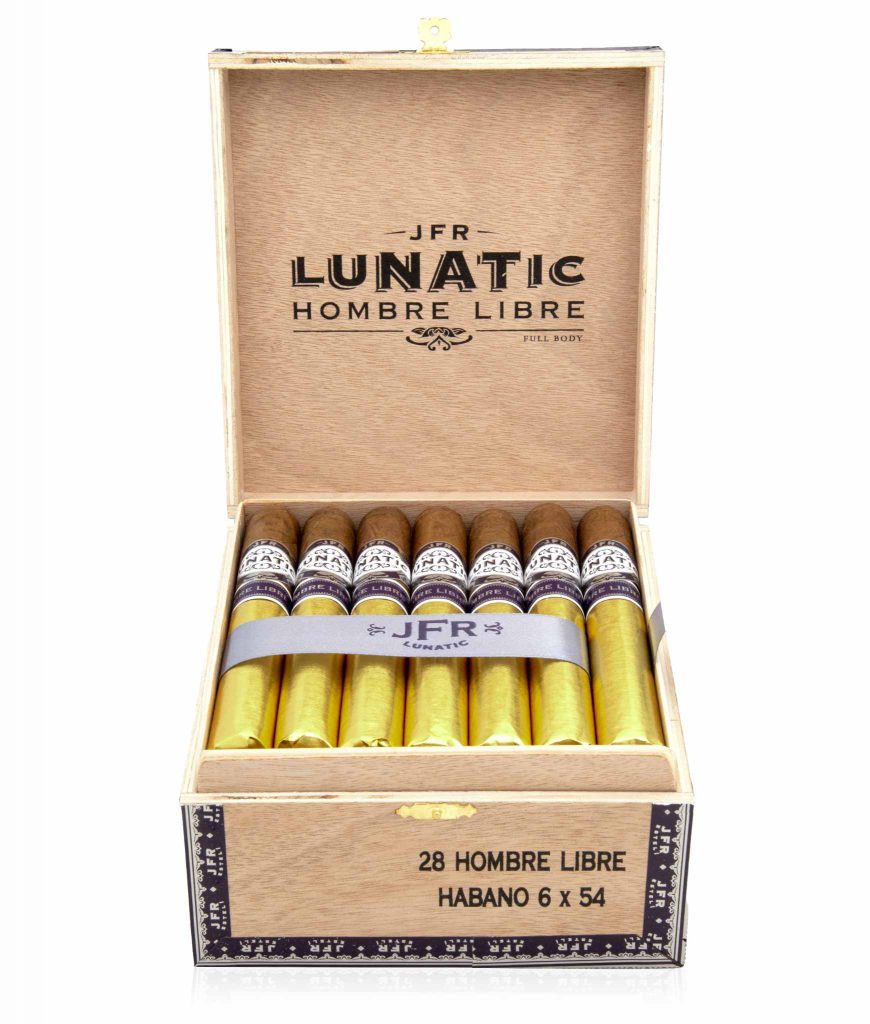
JFR Lunatic Habano – When “Just For Retailers” Becomes Deliberately Excessive

Aganorsa JFR Lunatic Habano

1. How large can a cigar get before it becomes absurd?

JFR Lunatic Habano exists partly to ask that question.

The line launched in 2014 as an extension of JFR and is built around unusually large ring gauges, with Aganorsa’s current range reaching 8 × 80.

The name “Lunatic” is intentional.

Aganorsa itself jokes that you need to be a little crazy to smoke cigars this large.

Yet the line cannot be dismissed as a gimmick.

Its Short Robusto earned 93 points and the No. 7 position in Cigar Aficionado’s Top 25 Cigars of 2018.

That changes the conversation.

2. The blend

Aganorsa currently lists:

Wrapper: Habano, EcuadorBinder: Aganorsa, NicaraguaFiller: Aganorsa, Nicaragua.

So the architecture is:

Ecuador Habano outside

with:

Aganorsa Nicaragua inside.

It is not a Nicaraguan puro.

But the internal engine remains Aganorsa.

3. Habano does not mean Cuban tobacco

The wrapper is explicitly grown in Ecuador.

“Habano” describes the tobacco family/style.

“Ecuador” tells us where it was cultivated.

That distinction matters.

Tobacco terminology and geography are not interchangeable.

4. Why the blend works conceptually

The Ecuador Habano wrapper can steer the cigar toward:

spice,

wood,

nuts,

toast,

natural sweetness.

The Aganorsa core can maintain:

earth,

body,

Nicaraguan structure,

house character.

The cigar therefore sits between the direct Corojo identity of core JFR and the much darker register of San Andrés-based Maduro expressions.

5. Geometry is the second ingredient

Lunatic sizes currently range from 52 to 80 ring gauge.

That matters because ring gauge changes:

wrapper-to-filler ratio,

filler mass,

thermal behavior,

smoke volume,

duration.

So Lunatic is not simply a wrapper study.

It is:

a blend-and-geometry study.

6. Current official sizes

Aganorsa lists:

Mambo – 8 × 80El Grande – 5½ × 80El Chiquito – 4¼ × 70Short Titan – 4¼ × 60Short Robusto – 4¼ × 52Hombre Libre – 6 × 54.

Few premium cigar families offer such a dramatic geometric range.

7. Short Robusto – the rational Lunatic

The Short Robusto is the relatively conventional member of the family.

A historically reviewed version earned 93 points, was rated medium-full and ranked No. 7 for 2018 by Cigar Aficionado.

The review emphasized a nutty profile with cashew, walnut and coffee-bean character.

The key lesson is that the blend does not need an 80 ring gauge to succeed.

8. Value remains central

Cigar Aficionado reported a price of $5.98 for the highly rated Short Robusto at the time of review.

That is classic JFR philosophy:

strong experience relative to price.

The outrageous dimensions make Lunatic memorable.

Value keeps it recognizably JFR.

9. Hombre Libre

In 2021, Aganorsa added Hombre Libre, 6 × 54, giving Lunatic Habano its first fairly conventional Toro-style format.

For a smoker who wants to understand the blend before exploring the extreme sizes, Hombre Libre is arguably the best starting point.

It is large enough to feel like Lunatic, but moderate enough to make the wrapper/filler relationship easier to interpret.

10. Mambo – 8 × 80

Mambo is the concept at its most extreme.

At 8 × 80:

filler mass is enormous,

wrapper influence is proportionally reduced,

smoking duration is long,

thermal management becomes crucial.

This should not be thought of as a Short Robusto enlarged on a photocopier.

It is a different geometric experience.

11. Bigger does not mean stronger

Ring gauge measures diameter.

It does not measure nicotine.

Strength depends on tobacco selection and blend architecture.

A very thick cigar can be moderate.

A thin cigar can be powerful.

Do not use size as a strength scale.

12. Bigger does not mean more complex

More tobacco means more tobacco.

Complexity requires:

development,

layering,

change.

A huge cigar can be rich but linear.

A slim cigar can be extraordinarily complex.

Those are different metrics.

13. JFR Lunatic Habano vs JFR Corojo

JFR Corojo uses Nicaraguan Aganorsa Corojo wrapper over an Aganorsa core.

Lunatic Habano uses Ecuador Habano over an Aganorsa core.

A useful shorthand:

JFR Corojo = direct baseline.

Lunatic Habano = external wrapper + experimental geometry.

14. Lunatic Habano vs Connecticut

Both use Ecuadorian wrappers.

But one is Connecticut and the other Habano.

That can shift texture and aromatic tone substantially, even before geometry enters the equation.

A controlled comparison should therefore use the closest possible dimensions.

Otherwise you are changing wrapper and size simultaneously.

15. Lunatic Habano vs Lunatic Maduro

This is the logical next comparison within the subfamily.

The important question is not:

which is stronger?

It is:

what does the wrapper change while the Lunatic philosophy remains?

That will be the central question of the dedicated Maduro article.

16. Lunatic Habano vs Torch

Lunatic Torch turns wrapper influence into a visible experiment.

Cigar Aficionado describes the cigar as having roughly an inch of exposed binder and filler before the wrapper begins. The opening smoke is more spicy and herbal, then becomes nuttier and sweeter once the wrapper enters combustion.

That makes Torch one of the most educational constructions in the JFR portfolio.

17. Lunatic Habano vs Loco

Loco takes the Lunatic philosophy into fat Perfecto shapes.

Cigar Aficionado reported sizes including 4¾ × 60, 4¾ × 70 and 5½ × 80.

So:

Habano = extreme ring gauge.

Loco = extreme ring gauge + Perfecto geometry.

The second variable changes too.

18. Arsenio Ramos connection

Aganorsa credits master blender Arsenio Ramos with shaping a number of important company cigars, including JFR Lunatic.

That is an important counterpoint to the playful branding.

Behind the oversized format is serious blending heritage.

19. How I would taste the line

Start with:

Hombre Libre 6 × 54

or:

Short Robusto.

Then move to:

Short Titan 60,

El Chiquito 70,

El Grande 80,

Mambo 8 × 80.

That allows you to establish the blend before studying extreme geometry.

20. What to track

Score:

StrengthBodyFlavor IntensityNuttinessCoffee/RoastNatural SweetnessWoodEarthSpicePepperCreaminessComplexityBalanceFinish.

Then add three Lunatic-specific questions:

How visible is the Ecuador Habano wrapper?

At what size does filler begin to dominate my perception?

Did the larger ring gauge add richness, or merely volume?

21. Mister Tabaco positioning

The supplied price is:

MDL 558.

That is among the highest JFR prices in the supplied assortment.

Because Lunatic Habano ranges from 52 to 80 ring gauge, however, the exact Mister Tabaco vitola must be identified before making a meaningful price comparison.

A Short Robusto and an 8 × 80 Mambo contain radically different amounts of tobacco.

22. Who is it for?

Especially:

large-ring smokers,

Aganorsa fans,

Ecuador Habano enthusiasts,

smokers interested in geometry,

customers who enjoy long sessions,

and aficionados wanting to compare a highly rated 52-ring cigar with extreme 70–80 formats.

23. Common mistakes

Lunatic is not simply “larger JFR.”

Habano does not mean Cuban tobacco; the wrapper is Ecuadorian.

80 ring gauge does not mean stronger.

80 ring gauge does not mean more complex.

The line is not merely a gimmick; the Short Robusto earned 93 points and a Top-10 ranking.

The largest size is not automatically the best.

24. FAQ

When did Lunatic launch? 2014.

Wrapper? Ecuador Habano.

Binder? Aganorsa Nicaragua.

Filler? Aganorsa Nicaragua.

Largest size? Mambo, 8 × 80.

What is Hombre Libre? A 6 × 54 format introduced in 2021.

Short Robusto rating? 93 points and No. 7 Cigar of 2018.

Strength of the reviewed Short Robusto? Medium-full.

Conclusion – the joke gets attention; the tobacco makes it work

JFR Lunatic Habano is deliberately excessive.

That is part of the fun.

But beneath the joke is a coherent blend:

Ecuador Habano wrapper

over:

Aganorsa Nicaraguan binder and filler.

And its Short Robusto proved that the idea has substance by earning 93 points and a Top-10 annual ranking.

The best way to understand Lunatic is therefore not:

“the cigar for people who want something enormous.”

It is:

a platform for exploring what happens to an Aganorsa-centered blend as cigar geometry becomes increasingly extreme.

Mister Tabaco

At Mister Tabaco you’ll find the Aganorsa Leaf range: from flagship lines like Aniversario and Supreme Leaf, to the JFR collections built on the “Just For Retailers” philosophy, to the Guardian of the Farm and Rare Leaf editions. Explore our dedicated series on the brand to compare blends and choose the right cigar for you.

Continue the Aganorsa Series

→ Aganorsa Leaf – From Eduardo Fernández’s Vision to One of Nicaragua’s Most Distinctive Premium Tobacco Producers

→ Aganorsa Terroir: Jalapa vs Estelí vs Condega – How Soil, Climate and Leaf Position Shape Tobacco

→ Corojo 99 vs Criollo 98 vs Corojo 2012 – Understanding the Genetics Behind Aganorsa Leaf

→ Corojo vs Maduro vs Connecticut – How the Wrapper Changes an Aganorsa Cigar

→ Shade-Grown vs Sun-Grown – How Light and Leaf Position Shape a Premium Cigar

→ Signature Corojo vs Signature Maduro – One Premium Philosophy, Two Interpretations of Aganorsa Leaf

→ Supreme Leaf – Why This Line Became One of Aganorsa’s Most Recognizable Corojo Expressions

→ Aniversario Series – From Casa Fernández Miami Aniversario to One of Aganorsa Leaf’s Most Refined Premium Families

→ Guardian of the Farm Apollo Selección de Warped – The Dogs, the Corojo 99 and the Collaboration Behind a Top-10 Cigar

→ Guardian of the Farm NightWatch – How Aganorsa Turned Corojo 99 Into a Proprietary Maduro Wrapper

→ JFR 20th Anniversary – 20 Years of “Just For Retailers,” Mexican San Andrés and Aganorsa Value Philosophy

→ JFR Connecticut – Why a Light Wrapper Can Still Hide a Serious Aganorsa Core

→ JFR Corojo – The Benchmark of the JFR Family and One of the Most Direct Expressions of Aganorsa Style

→ JFR Maduro – Mexican San Andrés Maduro Over an Aganorsa Nicaraguan Core

→ JFR Lunatic Habano – When “Just For Retailers” Becomes Deliberately Excessive

→ JFR Lunatic Loco – Shade-Grown Corojo Maduro Meets Giant Perfecto Geometry

→ JFR Lunatic Maduro – San Andrés Maduro, Aganorsa Nicaragua and the Dark Side of Lunatic

→ JFR Lunatic Torch – The Cigar That Literally Shows You What the Wrapper Does

→ New Cuba Superior – How Aganorsa Turned a Budget Concept Into an Affordable Long-Filler Premium Cigar

→ New Cuba Maduro – How Much Aganorsa Character Can You Put Into a Value Cigar?

→ Rare Leaf Corojo & Maduro: When the Difference Isn’t the Recipe, It’s the Tobacco Selection

Tobacco products are intended for adults only. Smoking seriously damages your health.
Posted on — Leave a comment

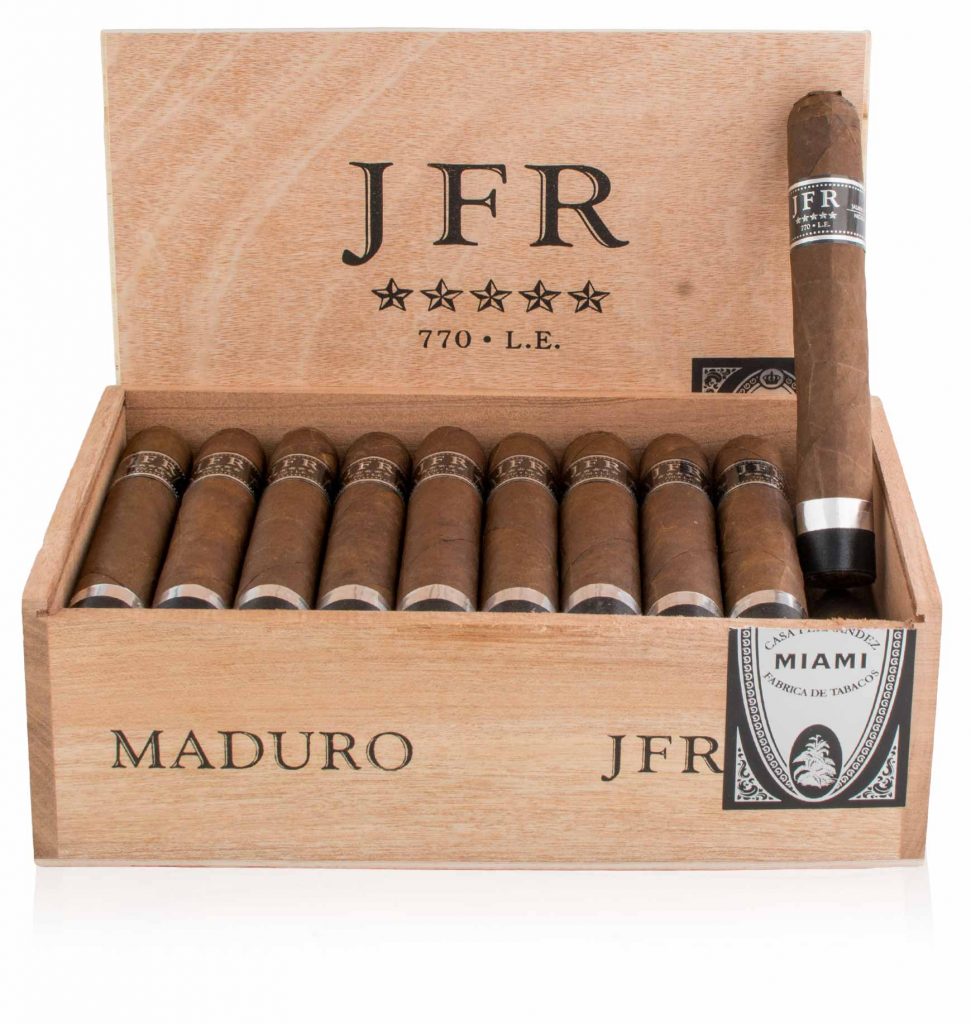
JFR Maduro – Mexican San Andrés Maduro Over an Aganorsa Nicaraguan Core

Aganorsa JFR Maduro

1. First, the most important correction

Aganorsa’s current official specification is clear:

Wrapper: San Andrés Maduro, MexicoBinder: Aganorsa, NicaraguaFiller: Aganorsa, Nicaragua.

So:

JFR Maduro is not wrapped in Aganorsa Corojo Maduro.

It uses Mexican San Andrés Maduro.

That distinction is fundamental.

It separates JFR Maduro from cigars such as NightWatch, where Aganorsa uses a Nicaraguan Corojo Maduro expression.

2. The architecture

JFR Maduro is:

Mexican wrapper

over:

Nicaraguan Aganorsa binder and filler.

That makes it extremely useful for studying how an external wrapper can reshape an Aganorsa core.

It is not a Nicaraguan puro.

But the internal engine remains Aganorsa.

3. San Andrés and Maduro are not synonyms

San Andrés refers to the tobacco’s Mexican regional identity.

Maduro describes the developed wrapper expression.

Therefore:

San Andrés ≠ Maduro

and:

Maduro ≠ San Andrés.

Aganorsa itself demonstrates this distinction by using different Maduro wrapper approaches across its portfolio.

4. JFR Maduro is not simply stronger JFR Corojo

JFR Corojo uses Aganorsa Corojo from Nicaragua as wrapper.

JFR Maduro uses Mexican San Andrés Maduro.

The documented change is the wrapper architecture.

That can shift flavor toward darker registers, but it does not automatically tell us nicotine strength.

5. Useful tasting directions

Corojo may emphasize:

cedar,

natural sweetness,

spice,

earth.

San Andrés Maduro may shift toward:

dark sweetness,

earth,

roast,

leather,

coffee/cocoa,

warm spice.

These are tasting directions.

Not guaranteed flavors.

6. Traditional JFR construction remains

JFR Maduro retains:

pigtail

and:

tucked foot.

The same visual language appears across the Corojo and Connecticut families.

The wrapper changes.

The JFR identity remains.

7. Official sizes

Aganorsa lists:

Junior – 4¾ × 46

Robusto – 5½ × 50

Super Toro – 6½ × 52

Titan – 6 × 60

770 L.E. – 7 × 70.

This closely mirrors the Corojo size structure, which is excellent for controlled comparisons.

8. Super Toro is the key comparative format

Both JFR Corojo and JFR Maduro are available in 6½ × 52 Super Toro.

That gives you:

same length,

same ring gauge,

same family,

Aganorsa core,

different wrapper.

This is one of the cleanest wrapper comparisons in the portfolio.

9. Junior vs Titan

Junior, at 46 ring gauge, increases the relative role of the wrapper.

Titan, at 60, increases filler mass.

So:

Junior = wrapper study.

Titan = core study.

Neither is automatically better or stronger.

10. JFR Maduro vs JFR 20th Anniversary

Both currently use Mexican San Andrés over Aganorsa Nicaraguan binder and fillers.

But they are not the same cigar.

20th Anniversary is:

box pressed,

pigtail-finished,

built with an unfinished foot,

and uses its own anniversary-specific size structure.

Classic JFR Maduro retains the traditional JFR tucked-foot construction and standard family geometry.

This proves an important point:

similar ingredient lists do not create identical cigars.

11. JFR Maduro vs NightWatch

JFR Maduro:

Mexican San Andrés Maduro.

NightWatch:

Nicaraguan Shade Grown Corojo Maduro.

So the comparison becomes:

Mexican Maduro tradition

vs:

Aganorsa-grown Corojo Maduro.

That is a serious Maduro education flight.

12. JFR Maduro vs Rare Leaf Maduro

Both use Mexican San Andrés Maduro over Aganorsa Nicaraguan tobacco.

Rare Leaf, however, is Criollo 98-dominant and built around specially selected lots.

So:

JFR Maduro = value-focused San Andrés.

Rare Leaf Maduro = selected-lot premium San Andrés expression.

13. JFR Maduro vs La Validación Maduro

La Validación Maduro also uses:

Mexican San Andrés Maduro,

Aganorsa Nicaraguan binder,

Aganorsa Nicaraguan filler.

This creates an excellent comparison because the base ingredient descriptions are very close while the product positioning, proportions and formats differ.

Again:

blend summary is not the whole cigar.

14. Tasting framework

Track:

Dark SweetnessEarthRoastLeatherCoffee/CocoaWarm SpicePepperNuttinessCreaminessBodyComplexityBalanceFinish.

Then ask:

How dominant is San Andrés?

How recognizable is the Aganorsa core underneath it?

15. Mister Tabaco positioning

The supplied price is:

MDL 539.

Compared with:

JFR Corojo – 298JFR 20th Anniversary – 356JFR Connecticut – 404.

That makes JFR Maduro substantially more expensive in the supplied assortment.

It should therefore be sold on profile fit and exact vitola—not by implying that price alone means superior quality.

16. The 20th Anniversary comparison matters commercially

The supplied difference between JFR Maduro and JFR 20th Anniversary is MDL 183, while both use Mexican San Andrés over an Aganorsa Nicaraguan core according to current official specifications.

Before publishing the Mister Tabaco product page, the exact SKU and vitola should therefore be verified.

A 770, Toro and Robusto should not be compared as if they were equivalent units.

17. Who should try JFR Maduro?

Especially:

San Andrés fans,

JFR smokers wanting the classic Maduro line,

customers seeking earthier and darker aromatic profiles,

aficionados building wrapper flights,

and smokers wanting an Aganorsa core under a non-Aganorsa cover leaf.

18. Common mistakes

JFR Maduro does not use Corojo Maduro wrapper.

Maduro is not a single varietal.

San Andrés is not synonymous with Maduro.

Maduro does not automatically mean more nicotine.

JFR Maduro and JFR 20th Anniversary are not the same cigar.

JFR Maduro and NightWatch do not use the same wrapper.

A 70 ring gauge is not automatically stronger.

19. FAQ

Wrapper? Mexican San Andrés Maduro.

Binder? Aganorsa Nicaragua.

Filler? Aganorsa Nicaragua.

Nicaraguan puro? No, because the wrapper is Mexican.

Pigtail? Yes.

Tucked foot? Yes.

Sizes? Junior 4¾ × 46, Robusto 5½ × 50, Super Toro 6½ × 52, Titan 6 × 60 and 770 L.E. 7 × 70.

Best Corojo comparison? Super Toro 6½ × 52.

Does 20th Anniversary also use San Andrés? Yes.

Conclusion – JFR Maduro teaches you to stop treating Maduro as one flavor

The important phrase is not simply:

Maduro.

It is:

San Andrés Maduro, Mexico.

Underneath it sit:

Aganorsa Nicaragua binder

and:

Aganorsa Nicaragua filler.

That is JFR Maduro’s identity.

Not:

“the dark JFR.”

Not:

“the stronger JFR.”

But:

the JFR expression in which a Mexican San Andrés Maduro wrapper reframes the Aganorsa Nicaraguan core.

That distinction is exactly what serious cigar education should teach.

Mister Tabaco

At Mister Tabaco you’ll find the Aganorsa Leaf range: from flagship lines like Aniversario and Supreme Leaf, to the JFR collections built on the “Just For Retailers” philosophy, to the Guardian of the Farm and Rare Leaf editions. Explore our dedicated series on the brand to compare blends and choose the right cigar for you.

Continue the Aganorsa Series

→ Aganorsa Leaf – From Eduardo Fernández’s Vision to One of Nicaragua’s Most Distinctive Premium Tobacco Producers

→ Aganorsa Terroir: Jalapa vs Estelí vs Condega – How Soil, Climate and Leaf Position Shape Tobacco

→ Corojo 99 vs Criollo 98 vs Corojo 2012 – Understanding the Genetics Behind Aganorsa Leaf

→ Corojo vs Maduro vs Connecticut – How the Wrapper Changes an Aganorsa Cigar

→ Shade-Grown vs Sun-Grown – How Light and Leaf Position Shape a Premium Cigar

→ Signature Corojo vs Signature Maduro – One Premium Philosophy, Two Interpretations of Aganorsa Leaf

→ Supreme Leaf – Why This Line Became One of Aganorsa’s Most Recognizable Corojo Expressions

→ Aniversario Series – From Casa Fernández Miami Aniversario to One of Aganorsa Leaf’s Most Refined Premium Families

→ Guardian of the Farm Apollo Selección de Warped – The Dogs, the Corojo 99 and the Collaboration Behind a Top-10 Cigar

→ Guardian of the Farm NightWatch – How Aganorsa Turned Corojo 99 Into a Proprietary Maduro Wrapper

→ JFR 20th Anniversary – 20 Years of “Just For Retailers,” Mexican San Andrés and Aganorsa Value Philosophy

→ JFR Connecticut – Why a Light Wrapper Can Still Hide a Serious Aganorsa Core

→ JFR Corojo – The Benchmark of the JFR Family and One of the Most Direct Expressions of Aganorsa Style

→ JFR Maduro – Mexican San Andrés Maduro Over an Aganorsa Nicaraguan Core

→ JFR Lunatic Habano – When “Just For Retailers” Becomes Deliberately Excessive

→ JFR Lunatic Loco – Shade-Grown Corojo Maduro Meets Giant Perfecto Geometry

→ JFR Lunatic Maduro – San Andrés Maduro, Aganorsa Nicaragua and the Dark Side of Lunatic

→ JFR Lunatic Torch – The Cigar That Literally Shows You What the Wrapper Does

→ New Cuba Superior – How Aganorsa Turned a Budget Concept Into an Affordable Long-Filler Premium Cigar

→ New Cuba Maduro – How Much Aganorsa Character Can You Put Into a Value Cigar?

→ Rare Leaf Corojo & Maduro: When the Difference Isn’t the Recipe, It’s the Tobacco Selection

Tobacco products are intended for adults only. Smoking seriously damages your health.

Posted on — Leave a comment

JFR Corojo – The Benchmark of the JFR Family and One of the Most Direct Expressions of Aganorsa Style

Aganorsa JFR Corojo

1. Start here if you want to understand JFR

JFR now exists in multiple expressions.

Connecticut.

Maduro.

20th Anniversary.

Lunatic.

But before comparing external wrappers and extreme formats, you need a baseline.

That baseline is:

JFR Corojo.

Aganorsa’s official blend is:

Aganorsa Corojo Nicaragua wrapper, Aganorsa Nicaragua binder and Aganorsa Nicaragua filler.

No Ecuadorian wrapper.

No Mexican San Andrés.

No external cover leaf changing the frame.

Just:

Aganorsa over Aganorsa over Aganorsa.

2. Why this matters

A blend summary reading “Nicaragua / Nicaragua / Nicaragua” may look simple.

It is not.

Aganorsa works across Nicaragua’s major growing regions, including Jalapa, Estelí and Condega, and cultivates Cuban-seed tobaccos including Corojo ’99, Corojo 2012 and Criollo ’98.

So “Aganorsa Nicaragua” represents an agricultural library rather than one homogeneous tobacco.

3. JFR means Just For Retailers

JFR stands for Just For Retailers and was conceived as a value-oriented brand for brick-and-mortar cigar shops.

That heritage explains the product philosophy.

This is not a museum cigar.

It is intended to be smoked, enjoyed and purchased again.

4. Value does not mean cheap

Aganorsa explicitly markets JFR Corojo around the idea that it delivers an experience normally associated with a significantly higher price.

In premium cigars, value should mean:

convincing tobacco, construction and experience relative to price.

Not simply the lowest number on the shelf.

5. Why Corojo is the family benchmark

Compare:

JFR Connecticut: Ecuador Connecticut over Aganorsa core.

JFR 20th Anniversary: Mexican San Andrés over Aganorsa core.

JFR Corojo: Aganorsa Corojo over Aganorsa core.

If you want to understand what the other wrappers change, Corojo gives you the most direct house reference.

6. Pigtail and tucked foot

JFR Corojo is finished with a pigtail and tucked foot.

These are strong visual identifiers.

The pigtail is primarily a finishing and branding element.

The tucked foot can make the opening moments somewhat wrapper-forward before the entire cross-section settles into combustion.

7. Official sizes

Current official formats include:

Junior – 4¾ × 46

Robusto – 5½ × 50

Super Toro – 6½ × 52

Titan – 6 × 60

770 L.E. – 7 × 70.

That is a remarkably wide geometric range.

8. Junior – wrapper study

At 46 ring gauge, the wrapper represents a relatively larger proportion of the cigar than it does on a 60- or 70-ring format.

That makes Junior particularly useful when studying Corojo influence.

9. Robusto – balanced starting point

The 5½ × 50 Robusto provides a useful middle ground:

enough filler to show the Aganorsa core,

enough wrapper presence to keep Corojo relevant,

manageable duration.

For a first JFR Corojo, it is the pragmatic choice.

10. Super Toro – the comparison format

JFR Connecticut is also available as a 6½ × 52 Super Toro.

That makes:

JFR Corojo Super Toro vs JFR Connecticut Super Toro

an excellent wrapper experiment.

Same dimensions.

Same family.

Different wrapper.

11. Titan and 770

At 60 and 70 ring gauge, filler mass becomes increasingly prominent.

That can change:

smoke volume,

body,

temperature behavior,

wrapper-to-filler ratio.

But remember:

larger does not automatically mean stronger.

Geometry is not a nicotine scale.

12. Corojo is not synonymous with pepper

Corojo can express spice, but it can also express sweetness, aroma, cedar, creaminess and textural depth.

Nicaraguan terroir also matters. Jalapa, for example, has long been associated with elegant wrapper leaf, while Estelí can express a different balance of strength and complexity.

So “Corojo” is not a single tasting note.

13. JFR Corojo vs Connecticut

JFR Corojo uses Nicaraguan Aganorsa Corojo wrapper.

JFR Connecticut uses Ecuadorian Connecticut.

Both retain Aganorsa Nicaraguan binder and filler.

That is a direct lesson in how wrapper changes tone without necessarily erasing the underlying core.

14. JFR Corojo vs 20th Anniversary

The 20th Anniversary expression replaces the Corojo cover leaf with Mexican San Andrés while retaining Aganorsa inside.

Corojo may read brighter, woodier and more aromatic.

San Andrés may shift darker, earthier and more roasted.

These are directions—not rigid outcomes.

15. A clarification about JFR Maduro

Industry reporting identifies the JFR Maduro line with Mexican San Andrés wrapper, while JFR Corojo remains all-Nicaraguan.

That distinction matters, and the dedicated JFR Maduro article should use the exact current blend rather than assuming that “Maduro” means Aganorsa Corojo Maduro.

Precision matters more than convenience.

16. JFR Corojo vs Supreme Leaf

Supreme Leaf is a more boutique, Corojo-dominant concept with periodic vitola releases.

JFR Corojo is the everyday value reference.

A useful shorthand:

JFR Corojo = everyday Corojo benchmark.

Supreme Leaf = Corojo exploration.

17. JFR Corojo vs Guardian Apollo

Guardian Apollo is a more specialized collaboration built around documented Corojo ’99 and Criollo ’98 architecture; Cigar Aficionado awarded it 93 points and ranked it No. 8 for 2017.

JFR is simpler conceptually.

That is precisely why it works so well as a baseline.

18. Mister Tabaco positioning

The supplied price is:

MDL 298.

Compared with the supplied JFR range, that places Corojo at an especially accessible entry point.

This means a customer can begin learning the Aganorsa house style without first committing to a 500+ MDL cigar.

That is commercially powerful.

19. Who should try JFR Corojo?

Especially:

first-time Aganorsa smokers,

Corojo students,

Nicaraguan tobacco fans,

customers seeking repeatable premium value,

aficionados wanting a benchmark before Signature or Supreme Leaf,

and smokers who enjoy classic to large ring gauges.

20. Tasting framework

Track:

StrengthBodyFlavor IntensityNatural SweetnessSpicePepperCedar/WoodEarthToastNuttinessCreaminessComplexityBalanceFinish.

Then ask:

What feels characteristically Aganorsa?

That answer becomes useful when you move to Connecticut, San Andrés or Maduro.

21. Common mistakes

JFR Corojo is not “inferior” because it is the baseline.

Corojo does not automatically mean strong.

Corojo does not mean pepper only.

A Nicaraguan puro does not mean one single terroir.

A Titan is not automatically stronger than a Robusto.

A 770 is not automatically more complex.

Lower price does not automatically mean lower quality.

22. FAQ

Wrapper? Aganorsa Corojo, Nicaragua.

Binder? Aganorsa Nicaragua.

Filler? Aganorsa Nicaragua.

Nicaraguan puro? Yes.

Pigtail? Yes.

Tucked foot? Yes.

Sizes? Junior 4¾ × 46, Robusto 5½ × 50, Super Toro 6½ × 52, Titan 6 × 60 and 770 L.E. 7 × 70.

Best size for comparison with Connecticut? Super Toro 6½ × 52.

What does JFR stand for? Just For Retailers.

Conclusion – learn the language before studying the dialects

Signature is rarer.

Supreme Leaf is more boutique.

Apollo has a more dramatic story.

Aniversario is positioned higher.

But if your objective is:

understand Aganorsa first, then compare it,

JFR Corojo makes enormous sense.

Its architecture is direct:

Aganorsa Corojo + Aganorsa binder + Aganorsa filler.

That makes it less of a spectacle.

And more of a reference.

JFR Corojo is not the final chapter of the Aganorsa story.

It is:

the vocabulary you need before reading the rest.

Mister Tabaco

At Mister Tabaco you’ll find the Aganorsa Leaf range: from flagship lines like Aniversario and Supreme Leaf, to the JFR collections built on the “Just For Retailers” philosophy, to the Guardian of the Farm and Rare Leaf editions. Explore our dedicated series on the brand to compare blends and choose the right cigar for you.

Continue the Aganorsa Series

→ Aganorsa Leaf – From Eduardo Fernández’s Vision to One of Nicaragua’s Most Distinctive Premium Tobacco Producers

→ Aganorsa Terroir: Jalapa vs Estelí vs Condega – How Soil, Climate and Leaf Position Shape Tobacco

→ Corojo 99 vs Criollo 98 vs Corojo 2012 – Understanding the Genetics Behind Aganorsa Leaf

→ Corojo vs Maduro vs Connecticut – How the Wrapper Changes an Aganorsa Cigar

→ Shade-Grown vs Sun-Grown – How Light and Leaf Position Shape a Premium Cigar

→ Signature Corojo vs Signature Maduro – One Premium Philosophy, Two Interpretations of Aganorsa Leaf

→ Supreme Leaf – Why This Line Became One of Aganorsa’s Most Recognizable Corojo Expressions

→ Aniversario Series – From Casa Fernández Miami Aniversario to One of Aganorsa Leaf’s Most Refined Premium Families

→ Guardian of the Farm Apollo Selección de Warped – The Dogs, the Corojo 99 and the Collaboration Behind a Top-10 Cigar

→ Guardian of the Farm NightWatch – How Aganorsa Turned Corojo 99 Into a Proprietary Maduro Wrapper

→ JFR 20th Anniversary – 20 Years of “Just For Retailers,” Mexican San Andrés and Aganorsa Value Philosophy

→ JFR Connecticut – Why a Light Wrapper Can Still Hide a Serious Aganorsa Core

→ JFR Corojo – The Benchmark of the JFR Family and One of the Most Direct Expressions of Aganorsa Style

→ JFR Maduro – Mexican San Andrés Maduro Over an Aganorsa Nicaraguan Core

→ JFR Lunatic Habano – When “Just For Retailers” Becomes Deliberately Excessive

→ JFR Lunatic Loco – Shade-Grown Corojo Maduro Meets Giant Perfecto Geometry

→ JFR Lunatic Maduro – San Andrés Maduro, Aganorsa Nicaragua and the Dark Side of Lunatic

→ JFR Lunatic Torch – The Cigar That Literally Shows You What the Wrapper Does

→ New Cuba Superior – How Aganorsa Turned a Budget Concept Into an Affordable Long-Filler Premium Cigar

→ New Cuba Maduro – How Much Aganorsa Character Can You Put Into a Value Cigar?

→ Rare Leaf Corojo & Maduro: When the Difference Isn’t the Recipe, It’s the Tobacco Selection

Tobacco products are intended for adults only. Smoking seriously damages your health.

Posted on — Leave a comment

JFR Connecticut – Why a Light Wrapper Can Still Hide a Serious Aganorsa Core

Aganorsa JFR Connecticut

1. The biggest Connecticut myth

Many smokers learn a simple rule:

light wrapper = mild cigar.

JFR Connecticut is an excellent cigar for demonstrating why that shortcut fails.

Aganorsa uses an Ecuadorian Connecticut wrapper over Aganorsa Nicaraguan binder and fillers and explicitly markets the result as deeply flavorful and intense.

So the cigar is better introduced as:

JFR reframed through a creamier wrapper.

Not:

the weak JFR.

2. Official blend

Wrapper: Connecticut, EcuadorBinder: Aganorsa, NicaraguaFiller: Aganorsa, Nicaragua.

That gives us:

Ecuadorian exterior

over:

Nicaraguan Aganorsa core.

The wrapper changes.

The internal engine remains Aganorsa.

3. Ecuador Connecticut matters

JFR uses Ecuadorian Connecticut, not simply an unspecified Connecticut wrapper.

That distinction matters because origin, climate and cultivation affect how tobacco develops.

“Connecticut” is not a tasting note.

It is part of the leaf’s identity.

4. The contrast

The wrapper may push perception toward:

creaminess,

toast,

nuts,

cedar,

soft sweetness.

The Nicaraguan core can maintain:

earth,

spice,

body,

structure,

house character.

That creates JFR Connecticut’s central tension:

refined exterior, serious core.

5. Connecticut does not equal mild

Separate:

Color

Strength

Body

Flavor intensity.

A light-colored cigar can still be medium in strength and very full in flavor.

Aganorsa’s own description of JFR Connecticut reinforces precisely this point.

6. JFR value philosophy remains intact

Aganorsa describes both JFR Corojo and Connecticut as delivering an experience that would ordinarily command a higher price.

Connecticut is therefore not a luxury upgrade.

It is another expression of the same value-focused JFR concept.

7. Pigtail and tucked foot

JFR Connecticut retains the recognizable:

pigtail

and:

tucked foot.

Those features are also found on JFR Corojo.

The wrapper changes without losing the visual identity of the brand.

8. Sizes

Aganorsa currently lists:

Junior – 4½ × 46

Robusto – 5½ × 50

Super Toro – 6½ × 52

Titan – 6 × 60.

The range allows a useful study of wrapper-to-filler ratio.

9. Junior – wrapper study

At 46 ring gauge, the Junior offers a relatively higher wrapper-to-filler ratio than the Titan.

That makes it particularly interesting if the purpose is to study how the Ecuador Connecticut cover leaf influences the cigar.

10. Robusto – balanced starting point

The 5½ × 50 Robusto offers enough filler to display the Aganorsa core while still keeping the wrapper clearly relevant.

For a first JFR Connecticut, it is the safest general recommendation.

11. Super Toro – best direct comparison

Both JFR Connecticut and JFR Corojo are offered as 6½ × 52 Super Toro.

That creates an excellent comparative tasting:

same family,

same dimensions,

related Aganorsa core,

different wrapper.

This is exactly the kind of comparison that teaches wrapper influence.

12. Titan – core study

At 6 × 60, filler mass becomes more prominent.

More filler can change:

body,

smoke volume,

temperature,

wrapper-to-filler balance.

The Titan is therefore more useful for exploring what the Aganorsa core does underneath Connecticut.

13. JFR Connecticut vs Corojo

JFR Corojo uses Aganorsa Corojo wrapper, binder and filler from Nicaragua.

Connecticut keeps the Aganorsa binder/fillers but uses Ecuadorian Connecticut as wrapper.

A useful shorthand:

Corojo = direct house identity.

Connecticut = house identity through a softer wrapper lens.

14. JFR Connecticut vs 20th Anniversary

JFR 20th Anniversary uses Mexican San Andrés over an Aganorsa Nicaraguan core.

So:

Connecticut may emphasize cream, toast and nuts.

San Andrés may emphasize earth, roast and darker sweetness.

The internal Aganorsa philosophy remains.

That makes the two a powerful wrapper comparison.

15. JFR Connecticut vs Aniversario Connecticut

Both officially use Ecuador Connecticut over Aganorsa Nicaraguan binder/filler.

But positioning differs dramatically:

JFR = value oriented.

Aniversario = ultra-premium, box pressed and size-tuned.

That makes the comparison useful for understanding how selection, construction and proportions matter beyond the blend summary.

16. JFR Connecticut vs La Validación Connecticut

La Validación Connecticut also uses Ecuador Connecticut over Aganorsa Nicaragua binder/filler.

That enables a particularly useful flight:

JFR Connecticut

→ La Validación Connecticut

→ Aniversario Connecticut.

Same broad wrapper concept.

Three different positioning philosophies.

17. What to look for

Track:

CreaminessToastNuttinessNatural sweetnessCedarEarthNicaraguan spicePepperFinish.

The key question is:

Does Connecticut cover the Aganorsa core—or simply reshape how you perceive it?

18. Mister Tabaco positioning

The supplied price is:

JFR Connecticut – MDL 404.

Compared with:

JFR Corojo – MDL 298JFR 20th Anniversary – MDL 356JFR Maduro – MDL 539.

That means Connecticut should be sold by palate preference, not by claiming that higher price equals higher quality.

19. Who should try it?

Especially:

smokers who assume Connecticut is always weak,

Aganorsa fans wanting a different wrapper expression,

smokers who like creamier profiles but still want Nicaraguan structure,

and anyone building a serious wrapper comparison.

20. Common mistakes

Connecticut does not equal weak.

Light color does not equal low nicotine.

JFR Connecticut is not only for beginners.

Ecuador Connecticut is not the same thing as simply saying “Connecticut Shade from the United States.” JFR’s wrapper is explicitly Ecuadorian.

Larger ring gauge does not automatically mean stronger.

Higher price does not automatically mean better.

21. FAQ

Wrapper? Ecuador Connecticut.

Binder? Aganorsa Nicaragua.

Filler? Aganorsa Nicaragua.

Nicaraguan puro? No, because the wrapper is Ecuadorian.

Pigtail? Yes.

Tucked foot? Yes.

Sizes? 4½ × 46, 5½ × 50, 6½ × 52 and 6 × 60.

Best size for Corojo comparison? Super Toro 6½ × 52 because the same dimensions are available in JFR Corojo.

Conclusion – the eye sees mild; the blend says something else

JFR Connecticut looks approachable.

That is useful.

But the light wrapper should not be mistaken for a description of the entire cigar.

Under the Ecuadorian Connecticut cover leaf sit:

Aganorsa Nicaraguan binder

and:

Aganorsa Nicaraguan fillers.

Aganorsa itself emphasizes the intensity of the resulting flavor.

That makes JFR Connecticut one of the best cigars in the portfolio for teaching a fundamental principle:

wrapper color is not a strength rating.

Mister Tabaco

At Mister Tabaco you’ll find the Aganorsa Leaf range: from flagship lines like Aniversario and Supreme Leaf, to the JFR collections built on the “Just For Retailers” philosophy, to the Guardian of the Farm and Rare Leaf editions. Explore our dedicated series on the brand to compare blends and choose the right cigar for you.

Continue the Aganorsa Series

→ Aganorsa Leaf – From Eduardo Fernández’s Vision to One of Nicaragua’s Most Distinctive Premium Tobacco Producers

→ Aganorsa Terroir: Jalapa vs Estelí vs Condega – How Soil, Climate and Leaf Position Shape Tobacco

→ Corojo 99 vs Criollo 98 vs Corojo 2012 – Understanding the Genetics Behind Aganorsa Leaf

→ Corojo vs Maduro vs Connecticut – How the Wrapper Changes an Aganorsa Cigar

→ Shade-Grown vs Sun-Grown – How Light and Leaf Position Shape a Premium Cigar

→ Signature Corojo vs Signature Maduro – One Premium Philosophy, Two Interpretations of Aganorsa Leaf

→ Supreme Leaf – Why This Line Became One of Aganorsa’s Most Recognizable Corojo Expressions

→ Aniversario Series – From Casa Fernández Miami Aniversario to One of Aganorsa Leaf’s Most Refined Premium Families

→ Guardian of the Farm Apollo Selección de Warped – The Dogs, the Corojo 99 and the Collaboration Behind a Top-10 Cigar

→ Guardian of the Farm NightWatch – How Aganorsa Turned Corojo 99 Into a Proprietary Maduro Wrapper

→ JFR 20th Anniversary – 20 Years of “Just For Retailers,” Mexican San Andrés and Aganorsa Value Philosophy

→ JFR Connecticut – Why a Light Wrapper Can Still Hide a Serious Aganorsa Core

→ JFR Corojo – The Benchmark of the JFR Family and One of the Most Direct Expressions of Aganorsa Style

→ JFR Maduro – Mexican San Andrés Maduro Over an Aganorsa Nicaraguan Core

→ JFR Lunatic Habano – When “Just For Retailers” Becomes Deliberately Excessive

→ JFR Lunatic Loco – Shade-Grown Corojo Maduro Meets Giant Perfecto Geometry

→ JFR Lunatic Maduro – San Andrés Maduro, Aganorsa Nicaragua and the Dark Side of Lunatic

→ JFR Lunatic Torch – The Cigar That Literally Shows You What the Wrapper Does

→ New Cuba Superior – How Aganorsa Turned a Budget Concept Into an Affordable Long-Filler Premium Cigar

→ New Cuba Maduro – How Much Aganorsa Character Can You Put Into a Value Cigar?

→ Rare Leaf Corojo & Maduro: When the Difference Isn’t the Recipe, It’s the Tobacco Selection

Tobacco products are intended for adults only. Smoking seriously damages your health.