
Type: Pillar articleRecommended length: 2,800–3,500 wordsLanguage: EnglishSEO intent: Informational + commercialAudience: Adults interested in premium cigars
Recommended Slug: /en/blog/gurkha-cigars-collections-guide/
Primary Keywords: Gurkha cigars, Gurkha Moldova, Gurkha Chisinau, Gurkha Ghost, Gurkha Cellar Reserve, Gurkha HMR, Gurkha Maharaja, Gurkha Dragon, premium cigars Moldova
Note: For adults only. Tobacco products carry health risks.
Gurkha Cigars – why is this brand so different in the world of premium cigars?
Some cigar producers build their reputation almost entirely around terroir.
Others focus on family tradition.
Some put the factory, the master blender or a specific tobacco variety at the center of the story.
And then there is Gurkha.
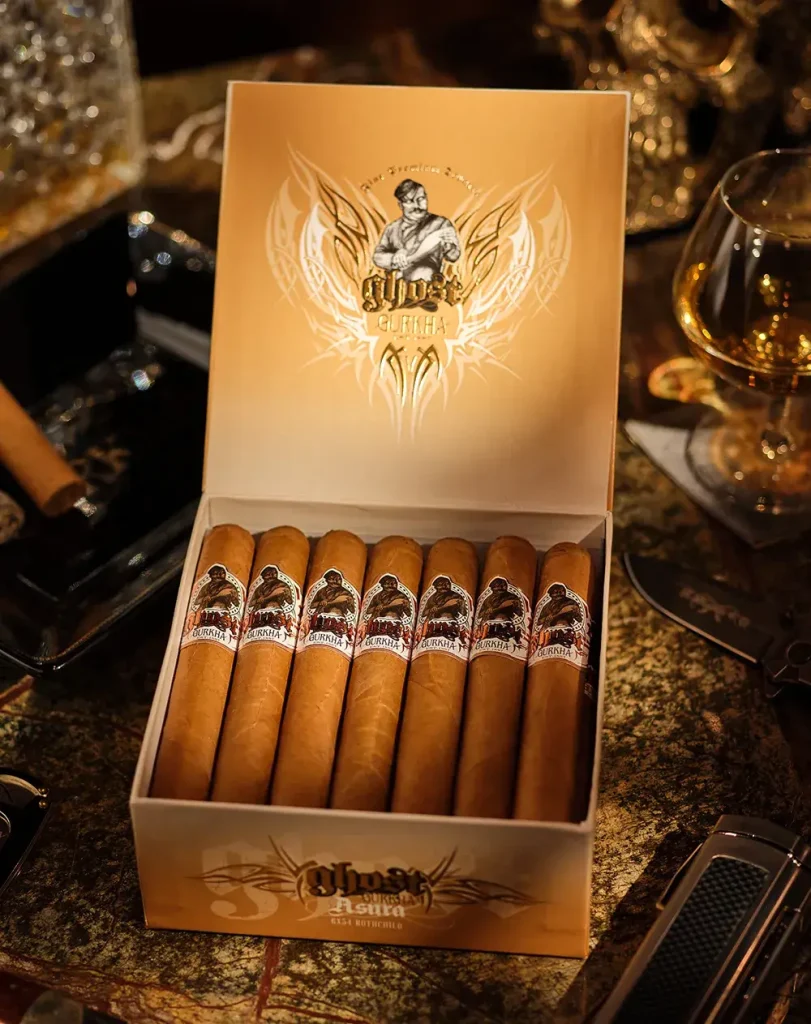
Gurkha has developed a much more theatrical identity. The cigar is not presented only as a tobacco product, but as part of an experience involving luxury, collecting, discovery and presentation.
The collection names already say a great deal:
Ghost.
Cellar Reserve.
Grand Reserve.
Black Dragon.
Maharaja.
HMR.
This is a completely different vocabulary from that used by many traditional manufacturers.
But that creates a challenge for the buyer.
If there are 15 or 20 Gurkha cigars in front of you, how do you choose?
Is Ghost more intense than Ghost Gold?
What is the difference between Ghost Connecticut and Ghost Maduro?
What does Cellar Reserve 15 Year actually mean?
Why are there products called Maharaja, Raja or Sultan?
What are Bourbon Collection and Grand Reserve trying to achieve?
Most importantly:
Which Gurkha fits your own palate?
That is the purpose of this guide.
We are not trying to declare one Gurkha “the best.”
We are building a map of the Gurkha collections available at Mister Tabaco, so the choice starts with experience level, flavor profile and the type of smoking experience you want.
1. Where does the name Gurkha come from?
The brand name refers to the Gurkhas, Nepalese soldiers who developed a formidable military reputation from the nineteenth century onward.
The visual identity of the brand draws on associations with:
courage;
character;
tradition;
exoticism;
prestige.
In the modern history of the company, one of the central figures is Kaizad Hansotia, closely associated with the development of Gurkha as an international premium cigar brand.
Gurkha became known not only for blends, but also for an unusually strong branding strategy within the cigar industry.
Elaborate boxes, striking packaging, limited editions and memorable names became part of the company’s identity.
That is one reason Gurkha is so easy to recognize in a humidor.
2. Gurkha should not be judged by one collection
One of the most common mistakes is asking:
“What are Gurkha cigars like?”
That question is too broad.
The portfolio includes very different directions.
A Ghost Connecticut should not be expected to deliver the same experience as a Ghost Maduro.
A Cellar Reserve 15 Year is built around a different concept from a Year of the Dragon.
A Bourbon Collection begins from a different idea than a Black Dragon.
So Gurkha should be analyzed through:
- Collection
- Wrapper
- Blend
- Strength
- Body
- Vitola
- Aging
- Collection concept
As with premium cigars in general:
Strength ≠ Body ≠ Flavor.
A dark package or an aggressive name does not automatically tell us how strong the cigar will be.
3. What makes Gurkha different?
Four major elements stand out.
Storytelling
Gurkha is very strong at building identity around a cigar.
Ghost suggests mystery.
Dragon suggests power.
Maharaja and Sultan suggest luxury and royalty.
Cellar Reserve emphasizes maturity and aging.
Diversity
The portfolio does not follow one fixed formula.
There are more approachable cigars, as well as products aimed at experienced smokers and collectors.
Presentation
With Gurkha, the box, tube and visual design often become part of the experience.
Experimentation
The brand has explored a wide range of origins, wrappers, aging concepts and special releases.
That makes Gurkha interesting for smokers who do not want the same style every time.
4. Which Gurkha cigars are available at Mister Tabaco?
The current selection provides a strong foundation for exploring the brand.
Among the listed products are:
Gurkha Ghost
Gurkha Private Select
Gurkha Volition America
Gurkha Black Dragon Tubo
Gurkha HMR
Gurkha Maharaja
Gurkha Green Dragon
Gurkha HRH
Gurkha Raja
Gurkha Red Dragon
Gurkha Sultan
Gurkha Year of Snake
Gurkha Year of the Dragon
This selection allows several structured tasting paths.
They do not need to be purchased randomly.
They can be explored as families.
5. The Ghost family – probably the best entry point for understanding Gurkha
If we had to choose one family to explain how flavor profile can change within a brand, Ghost would be one of the best examples.
At Mister Tabaco, the selection includes:
Gurkha Ghost Connecticut – MDL 319
Gurkha Ghost – MDL 332
Gurkha Ghost Gold – MDL 384
Gurkha Ghost Maduro – MDL 505
That gives us four interpretations that can become a genuine comparative tasting exercise.
Instead of asking:
“Which one is the best?”
ask:
“What changes from one Ghost to another?”
6. Gurkha Ghost Connecticut – entering the family
Connecticut is a logical direction for smokers who generally want more elegance and a more approachable expression.
But avoid the false rule:
Connecticut = automatically very mild.
The wrapper is only one component.
Binder, filler, proportions and vitola can change the experience significantly.
Ghost Connecticut is useful precisely because it can become the baseline for comparison with the regular Ghost and Ghost Maduro.
Who is it for?
Someone who wants to explore the Ghost family without starting with the darkest profile.
7. Gurkha Ghost – the central reference point
After Connecticut, move to Ghost.
This can function as the central reference within the family.
During comparative tasting, do not focus only on “stronger” or “weaker.”
Record:
smoke texture;
pepper;
sweetness;
wood;
earth;
cocoa;
finish;
changes between thirds.
That way, Ghost becomes a palate-training tool, not just a product.
8. Gurkha Ghost Gold – a variation that deserves comparison
Ghost Gold becomes more interesting when tasted after Ghost.
Why?
Because you already have a reference.
Instead of evaluating it in isolation, ask:
Is it rounder?
Sweeter?
Spicier?
Denser?
Is the finish longer?
How does the smoke texture change?
That is the difference between simply smoking and comparative tasting.
9. Gurkha Ghost Maduro – exploring the darker side
Maduro is one of the most misunderstood terms in premium cigars.
Many smokers assume:
“Maduro = very strong.”
Not necessarily.
Maduro primarily describes characteristics and processing of the wrapper, not a mandatory nicotine level.
With Ghost Maduro, the more useful tasting direction is toward families such as:
cocoa;
coffee;
earth;
dark sweetness;
spices;
roasted notes.
These are reference points, not a promise that every smoker will perceive exactly the same notes.
Palates differ.
10. Ghost Flight – one of the most interesting Gurkha experiments
A useful tasting sequence would be:
Ghost Connecticut
↓
Ghost
↓
Ghost Gold
↓
Ghost Maduro
Not all in one session.
Ideally:
one cigar per session, under similar conditions.
Score each one:
Criterion
Score 1–5
Strength
Body
Sweetness
Pepper
Creaminess
Earth
Coffee/Cocoa
Complexity
Finish
After four sessions, you stop asking:
“Which Ghost is better?”
and you can ask:
“Which Ghost fits my palate best?”
11. Cellar Reserve 15 Year – when aging becomes the main subject
Gurkha Cellar Reserve 15 Year is one of the names that immediately attracts attention.
The important word is not only “Reserve.”
It is:
15 Year.
In premium cigars, references to tobacco age need careful interpretation.
They do not automatically mean:
“The entire finished cigar sat in a humidor for 15 years.”
Depending on the product, such references may describe aged tobacco used within the blend.
So the reader needs to understand the difference between:
aging of the leaf;
aging of blend components;
post-roll aging of the finished cigar.
These are different processes.
12. What can aging do?
Time is not a magical flavoring ingredient.
It can contribute to:
better integration;
reduced roughness;
greater roundness;
changes in spice;
improved harmony.
But:
older does not automatically mean better.
The original quality of the tobacco matters.
Mediocre leaf does not become extraordinary simply because years pass.
Cellar Reserve should therefore be approached as a study of:
maturity and integration.
13. Bourbon Collection – when cigar culture meets bourbon culture
Gurkha Bourbon Collection appeals to another type of buyer.
The concept connects two worlds:
premium cigar culture
and
bourbon culture.
But avoid a simplistic rule:
“If it says Bourbon, I must drink bourbon with it.”
No.
The more interesting approach is to observe sensory bridges such as:
wood;
vanilla;
caramel;
spice;
roasted notes;
sweetness.
This kind of cigar can become the basis for a separate pairing article.
14. Gurkha Grand Reserve – the “reserve” experience
The word Reserve appears frequently in wine, whisky and cigars.
But in cigars it should not be assumed to have the same legal or technical definition everywhere.
So the buyer should look beyond the name.
For Grand Reserve, the right questions are:
What experience is the collection proposing?
What role does the blend play?
What flavor direction does it offer?
Who is it suited for?
How does it compare with Cellar Reserve?
That final question deserves its own article:
Gurkha Cellar Reserve 15 Year vs Grand Reserve
For SEO and reader education, that comparison is much stronger than two shallow product descriptions.
15. The Dragon family – Black, Green and Red
Mister Tabaco lists three very memorable names:
Black Dragon Tubo – MDL 513
Green Dragon – MDL 482
Red Dragon – MDL 441
The names immediately create a visual family.
But remember an important rule:
Do not infer flavor from the color in the product name or packaging.
Black does not automatically mean strongest.
Red does not automatically mean spiciest.
Green does not automatically mean fresh.
These are commercial names.
The blends need to be analyzed separately.
16. Black Dragon Tubo – why presentation format matters
Black Dragon also includes the word:
Tubo.
The tube has practical and commercial functions.
It may help protect the cigar during handling and transport, and it makes the cigar visually suitable as a gift.
But there is a common mistake:
“It is in a tube, so it does not need a humidor.”
Wrong.
A tube does not make a cigar indefinitely stable in any environment.
Temperature and humidity still matter.
This is an excellent place for internal linking to:
How to Store Cigars: Humidor, Temperature and Humidity.
17. HMR, HRH, Maharaja, Raja and Sultan – the part of Gurkha that needs explanation
For a new customer, names such as:
Gurkha HMR
Gurkha HRH
Gurkha Maharaja
Gurkha Raja
Gurkha Sultan
can look intimidating.
But that gives us an opportunity to turn the catalog into an educational system.
Instead of publishing five nearly identical texts, we should compare them.
The useful questions are:
What is the concept of each collection?
Which wrapper does it use?
Where does the filler come from?
What is the strength?
What is the body?
Which flavor family dominates?
Which vitola is available?
Who is it for?
That naturally leads to a dedicated comparison article:
Gurkha HMR vs HRH vs Maharaja vs Raja vs Sultan – Selection Guide
That can be much stronger for SEO than five generic pages.
18. Private Select – for smokers ready to explore deeper
Gurkha Private Select suggests exclusivity and careful selection by name.
But again, the name should not be confused with a technical specification.
An experienced buyer should still consider:
wrapper;
binder;
filler;
strength;
body;
vitola;
flavor direction.
Private Select becomes more meaningful once you already have a few Gurkha reference points.
For example:
Ghost.
Cellar Reserve.
Grand Reserve.
Then Private Select can be evaluated in context.
19. Volition America – another kind of identity
Gurkha Volition America immediately differentiates itself through its name.
The collection is useful for discussing a broader topic:
what does identity mean in a global cigar industry?
A premium cigar may combine tobaccos from several countries.
The wrapper may come from one region.
The binder from another.
The filler may combine multiple origins.
And the cigar may be rolled in yet another country.
So:
The country referenced in a cigar’s name does not automatically describe the whole blend.
That is an important lesson for any buyer.
20. Year of the Dragon and Year of the Snake – cigars as themed releases
Gurkha Year of the Dragon and Gurkha Year of the Snake belong to an interesting category:
themed / commemorative releases.
These products can appeal to two different audiences:
the smoker
and
the collector.
For the smoker, the important elements are:
blend;
construction;
strength;
flavor;
vitola.
For the collector, additional factors may matter:
edition;
presentation;
year;
availability;
collectibility.
But another mistake should be avoided:
Special edition ≠ automatically better flavor.
Collectible value and flavor preference are different dimensions.
21. How do you choose your first Gurkha?
If you have never tried the brand, I would not recommend starting with:
“Give me the most expensive one.”
Nor:
“Give me the strongest one.”
Instead answer three questions.
1. What strength do you prefer?
Mild / Medium / Medium-Full / Full?
2. What flavor families do you enjoy?
Creamy?
Woody?
Earthy?
Sweet?
Coffee/cocoa?
Pepper?
3. What kind of experience do you want?
A first introduction?
A comparison?
A long session?
A special product?
A gift?
A collectible release?
These answers are far more useful than price.
22. Gurkha for beginners vs Gurkha for aficionados
There is no rigid boundary.
But we can create a practical structure.
For starting out
Look for:
manageable profile;
comfortable strength;
familiar vitola;
easier flavor identification.
Ghost Connecticut can be a logical starting point.
Intermediate
Explore:
Ghost;
Ghost Gold;
Grand Reserve;
Cellar Reserve.
More advanced exploration
Then compare:
Ghost Maduro;
Dragon family;
HMR;
Maharaja;
Year Of releases;
other special collections.
But experience should never be measured by how strong a cigar you can tolerate.
An aficionado can legitimately prefer a delicate profile.
23. How NOT to choose a Gurkha
Mistake #1 – by price
A more expensive cigar is not automatically a better fit for your palate.
Mistake #2 – by wrapper color
Darker does not automatically mean stronger.
Mistake #3 – by packaging
Gurkha has striking packaging, but the cigar should still be judged through the blend and smoking experience.
Mistake #4 – by collection name
“Dragon” does not define strength.
Mistake #5 – by rarity
Rarity and taste are separate criteria.
Mistake #6 – by rating
A rating reflects someone else’s evaluation.
Not your own palate.
Mistake #7 – ignoring vitola
The same blend in different sizes can produce different experiences.
24. Gurkha and pairing – coffee, whisky, rum or cognac?
Pairing should be built through complement or contrast.
Not rigid rules.
With coffee
Profiles involving:
cocoa;
roasted notes;
nuts;
cream;
caramel
can create interesting combinations.
With bourbon
Look for bridges such as:
vanilla;
oak;
caramel;
spice.
Bourbon Collection is naturally an interesting conceptual candidate.
With rum
Perceived sweetness, spice and wood can interact well.
With cognac
A cigar with sufficient body and complexity can stand up to a highly aromatic spirit.
But pairing should remain an experiment.
Not a dogma.
25. How to taste Gurkha comparatively
Keep a tasting sheet.
Cigar:Collection:Vitola:Wrapper:Strength 1–5:Body 1–5:Flavor 1–5:Sweetness 1–5:Pepper 1–5:Creaminess 1–5:Earth 1–5:Wood 1–5:Coffee/Cocoa 1–5:Complexity 1–5:Finish 1–5:Would I smoke it again?
After 6–8 Gurkha cigars, patterns will begin to emerge.
That becomes your personal profile.
26. Three Gurkha tasting flights worth building
Flight #1 – Ghost
Ghost Connecticut → Ghost → Ghost Gold → Ghost Maduro
Objective:
understand how one family changes across different expressions.
Flight #2 – Reserve
Grand Reserve → Cellar Reserve 15 Year → Bourbon Collection
Objective:
explore reserve concepts, aging and pairing.
Flight #3 – Dragon
Red Dragon → Green Dragon → Black Dragon
Objective:
compare three collections without allowing packaging color to bias expectations.
A semi-blind tasting would be even better.
27. Gurkha pricing – what it tells us and what it does not
Within the selection provided, prices range from approximately:
MDL 319 for Ghost Connecticut
to around:
MDL 550 for Maharaja
with many products in between.
But price should not be treated as a quality ladder:
MDL 319 = entry level
and
MDL 550 = automatically superior
would be a poor interpretation.
Price can reflect many factors:
tobacco costs;
production;
aging;
vitola;
packaging;
rarity;
production volume;
brand positioning.
Your personal taste is not included in that list.
28. FAQ – common questions about Gurkha
Is Gurkha a premium cigar brand?
Yes. Gurkha is positioned in the premium segment and is especially known for elaborate presentation and special collections.
Which Gurkha is suitable for a first try?
Ghost Connecticut is one logical direction if you want a more approachable entry into the family.
Is Ghost Maduro automatically the strongest Ghost?
Strength should not be inferred only from the word Maduro.
What does Cellar Reserve 15 Year mean?
The concept is associated with aged tobacco. Exact claims about which components and how long they are aged should always follow the specification of that specific release.
Does Maduro mean very strong?
No. Maduro and strength are different concepts.
Does a Gurkha in a tube still need proper storage?
Yes. Correct storage conditions remain important.
Which is the best Gurkha?
There is no universal answer. It depends on strength, body, flavor profile and the type of experience you want.
Is HMR better than Ghost?
That is not a particularly useful comparison. They have different concepts and positioning.
Are Year of the Dragon and Year of the Snake for smoking or collecting?
They may appeal to both audiences, but smoking quality and collectibility should be evaluated separately.
What is the best way to understand Gurkha?
Comparative tasting within the same family is one of the most effective methods.
29. Quick guide – which Gurkha should I explore?
If you are interested in…
Explore
First contact with Gurkha
Ghost Connecticut
The Ghost family
Ghost
A Ghost variation
Ghost Gold
Maduro profile
Ghost Maduro
Aging
Cellar Reserve 15 Year
Bourbon concept
Bourbon Collection
Reserve concept
Grand Reserve
Tubo presentation
Black Dragon Tubo
Dragon family
Red / Green / Black Dragon
Special premium collections
HMR / HRH
Gurkha royal theme
Maharaja / Raja / Sultan
Themed editions
Year of the Dragon / Year of the Snake
Deeper exploration
Private Select
American concept
Volition America
This is not a quality ranking.
It is a navigation map.
30. Why should Gurkha be explored as a family rather than a single cigar?
Because diversity is one of the brand’s defining characteristics.
If you smoke one Gurkha and say:
“This is what Gurkha tastes like,”
the conclusion may be too simplistic.
It is like tasting one whisky from a broad portfolio and using it to describe the entire distillery.
A better approach is:
Ghost Connecticut → Ghost → Ghost Maduro
or:
Grand Reserve → Cellar Reserve
or:
Red Dragon → Green Dragon → Black Dragon.
Comparison creates context.
And context develops the palate.
Conclusion – Gurkha becomes more interesting once you understand the collections
Gurkha is a brand that immediately attracts attention through naming, design and storytelling.
But the real exploration starts beyond the packaging.
Ghost allows us to study variation within one family.
Cellar Reserve 15 Year opens the discussion about aging.
Bourbon Collection explores the relationship between cigars and pairing.
Grand Reserve introduces the Reserve universe.
Black, Green and Red Dragon create an excellent comparative family.
HMR, HRH, Maharaja, Raja and Sultan lead toward the more spectacular and exclusive side of the portfolio.
Year of the Dragon and Year of the Snake introduce themed and collectible releases.
So the right question is not:
“Which is the best Gurkha?”
It is:
“What kind of Gurkha experience am I looking for today?”
Mister Tabaco
At Mister Tabaco you’ll find a selection of Gurkha cigars, from accessible collections to rarer, long-aged editions. Explore our dedicated series on the brand to compare collections and choose the right blend for you.
Continue the Gurkha Series
→ The Gurkha Story: From a Forgotten Box in Goa to the “Rolls Royce of Cigars”
→ Gurkha Cigars: Brand History, Philosophy and Guide to the Collections Available at Mister Tabaco
→ Gurkha Cellar Reserve 15 Year: What Does 15-Year-Aged Tobacco Really Mean?
→ Bourbon Collection vs Grand Reserve: Two Different Interpretations of Spirits-Inspired Cigars
→ Black Dragon vs Green Dragon vs Red Dragon: Three Names, Three Identities
→ HMR vs HRH vs Maharaja vs Raja vs Sultan
→ GURKHA YEAR OF THE DRAGON vs YEAR OF SNAKE
Tobacco products are intended for adults only. Smoking seriously damages your health.